








For road cyclists, handlebar size directly affects riding posture, handling stability, and long‑distance comfort. This is especially true for carbon integrated handlebars – before purchasing, you need to confirm whether the width suits your body and frame.
So, how are carbon drop bars measured? How should you read road handlebar width?
How is road handlebar width measured?
Typically, road handlebar size refers to the width between the left and right sides. However, different brands may use different measuring methods, such as Center‑to‑Center or Outside‑to‑Outside.
Therefore, when you see numbers like 380mm or 400mm, you cannot rely on the figure alone – you also need to confirm which measuring standard the brand uses.
This is a crucial detail to pay attention to when choosing handlebars.
Why does road bike handlebar sizing matter?
Road bike handlebar sizing affects the rider's shoulder position, steering response, and aerodynamic performance.
Generally, narrower bars allow a more compact riding position and reduce frontal area, making them suitable for riders who prioritise speed and aerodynamics.
Wider bars typically offer better handling stability and greater upper body support.
So, wider is not always better – you should choose based on your shoulder width, riding style, and intended use.
How wide should racing bike handlebars be?
For speed‑focused riders, racing bike handlebars typically emphasise light weight, aerodynamics, and handling efficiency.
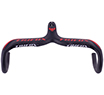
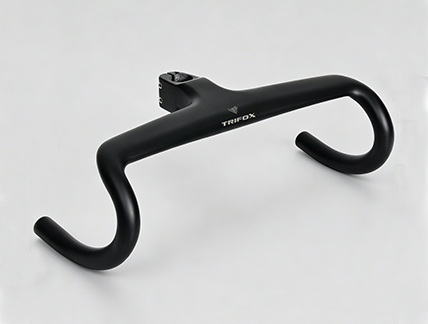
The TRIFOX DHB1000 is available in three widths – 360mm, 380mm, and 400mm – to suit different riders' needs.
If you have narrower shoulders or prioritise aerodynamics and competitive riding, 360mm or 380mm may be suitable.
If you prefer greater stability and comfort, 400mm might be a better fit.
Of course, the final choice should also consider your personal physical dimensions and your current handlebar size.
TRIFOX DHB1000 Carbon Integrated Handlebar
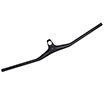
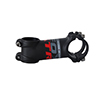
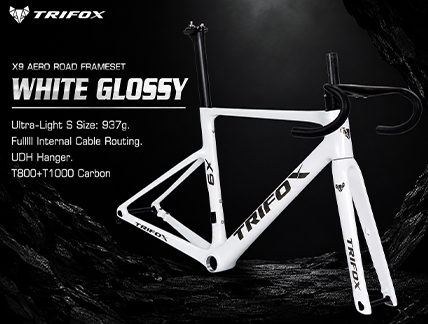
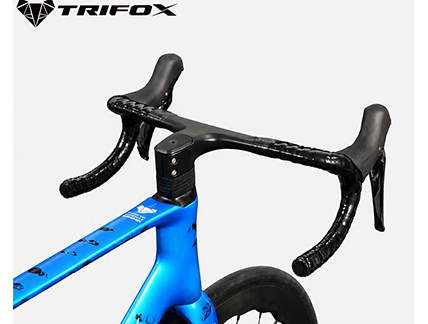
If you are upgrading your road bike handlebars, check out the TRIFOX DHB1000 Fully Internal Cable Routing Aero Integrated Carbon Drop Handlebar.
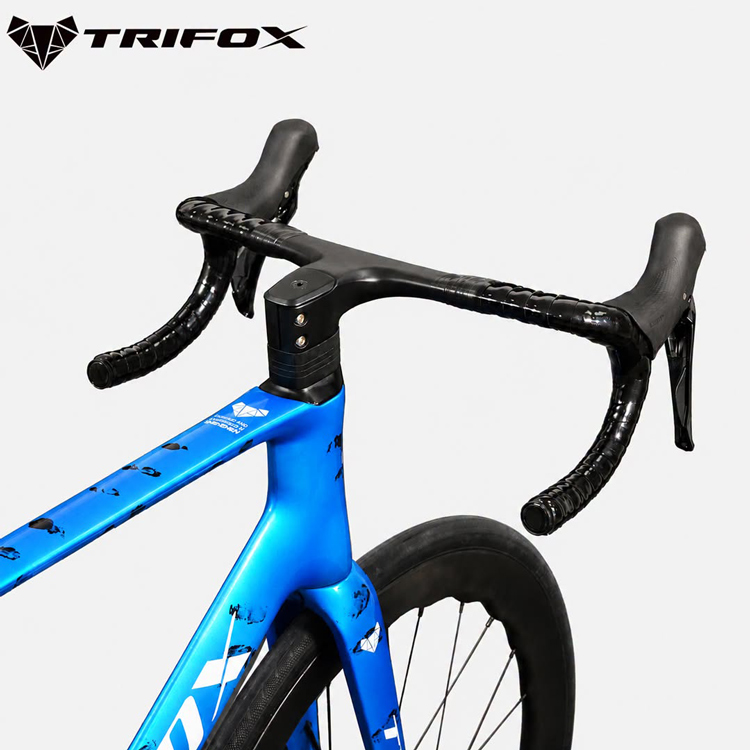
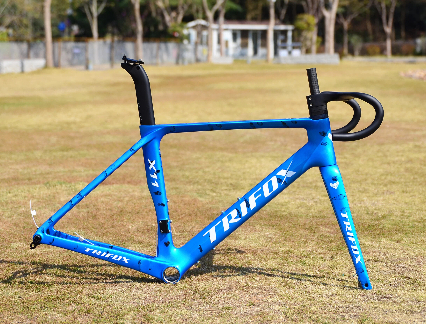
The DHB1000 features a carbon integrated construction that combines the handlebar and stem into one piece, with full internal cable routing that hides brake and shift cables inside the bar.
Compared with traditional separate bar and stem setups, the integrated design gives the front end a cleaner appearance while reducing visual clutter from exposed cables.
Key features include:
- Lightweight carbon construction
- Integrated handlebar and stem design
- Full internal cable routing system
- Aero profile
- Multiple width options: 360mm, 380mm, 400mm
- Suitable for road training, racing, and long‑distance riding
How to choose the right handlebar size for you?
If you are working out your road bike handlebar sizing, start by measuring your current handlebar width and comparing it with your shoulder width.
If you change to a significantly different width, be aware that your riding posture and steering feel may also change.
For competitive riders, narrower bars offer a more aerodynamic position; for everyday and long‑distance riders, comfort and handling stability should take priority.
Conclusion
Understanding how carbon drop bars are measured is an important step before buying a new road handlebar.
Handlebar width not only affects appearance but also influences riding posture, handling, and aerodynamic performance. The TRIFOX DHB1000 offers three size options – 360mm, 380mm, and 400mm – combined with a carbon integrated structure, Aero design, and full internal routing to meet the upgrade needs of different road cyclists.
Whether you are looking for high‑performance racing bike handlebars or aiming to improve your bike's aerodynamics, choosing the correct handlebar size is the key to a genuinely better riding experience.
2026-08-14
Trifox
SHARE:


Comments
Recent Posts
1
1
1
1
1
1
1
1
1
1
1
1
1
1
1
1

1
1
1

1
1
1
1

1



