








There was a time when mountain bikers had to make an impossible choice: set your saddle high for efficient climbing, or drop it low for descending control. You couldn't have both — not without stopping, reaching for a hex key, and manually adjusting your seatpost mid-ride. That compromise is over. The dropper seatpost has revolutionized how we ride, transforming the mountain bike into a truly adaptable machine. If you haven't yet made the switch, here's why every mountain biker — from XC racer to weekend trail rider — should consider adding a dropper to their setup.
The Problem: One Height Doesn't Fit All
Saddle height is one of the most critical variables in mountain biking. Too high on a descent, and you can't shift your weight back far enough, reducing your center of gravity and compromising control. Too low on a climb, and you lose pedaling efficiency, draining energy with every stroke. Before dropper posts, riders had to compromise — sacrificing either climbing efficiency or descending confidence. A dropper post eliminates that trade-off entirely. It allows you to have both positions — and anything in between — on demand, meaning you can transition from technical descending to climbing without pause or loss of efficiency.
The Benefits: Control, Confidence, and Speed
The advantages of a dropper seatpost extend far beyond convenience. Here's what a quality dropper brings to your ride:
1. Improved Descending Control
By lowering your saddle on descents, you can shift your weight back and lower your center of gravity, dramatically improving stability and control. This allows you to tackle steeper, more technical terrain with confidence. You'll find yourself carving through rock gardens and dropping into chutes with a level of agility that feels almost like a different bike.
2. Enhanced Climbing Efficiency
When the trail points upward, you can raise your saddle back to your optimal pedaling height, maintaining full pedaling efficiency without the drag of a lowered post. This means you can climb faster and with less fatigue, arriving at the top with more energy for the descent ahead.
3. Greater Maneuverability and Safety
A dropper post gives you the ability to drop your saddle quickly when you need to put a foot down on a tricky section, improving safety and reducing the risk of falls. It also makes mounting and dismounting the bike easier, especially on uneven terrain. The improved weight distribution and bike handling translate directly to more confidence and a more enjoyable ride.
4. Smoother, More Flowing Rides
Perhaps the most underrated benefit is the flow. With a dropper, you can attack a descent, drop the saddle, flow through the bottom, and raise it again seamlessly as you start the next climb — all without breaking rhythm. The ride becomes smoother, faster, and more engaging.
Choosing the Right Dropper: What to Look For
Not all dropper posts are created equal. When shopping for a bicycle adjustable seatpost, consider these factors:
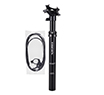
Travel: The amount of drop, typically ranging from 100mm to 200mm. XC riders often prefer 100–125mm, while trail and enduro riders benefit from 125–180mm or more. The Trifox AP309 offers 125mm of travel — a sweet spot that provides enough drop for aggressive descending while remaining compatible with most frame geometries.
Diameter: You must match the post diameter to your frame's seat tube. Common sizes are 27.2mm, 30.9mm, and 31.6mm. The AP309 is a 30.9 external dropper post, making it compatible with a wide range of modern mountain bike frames.
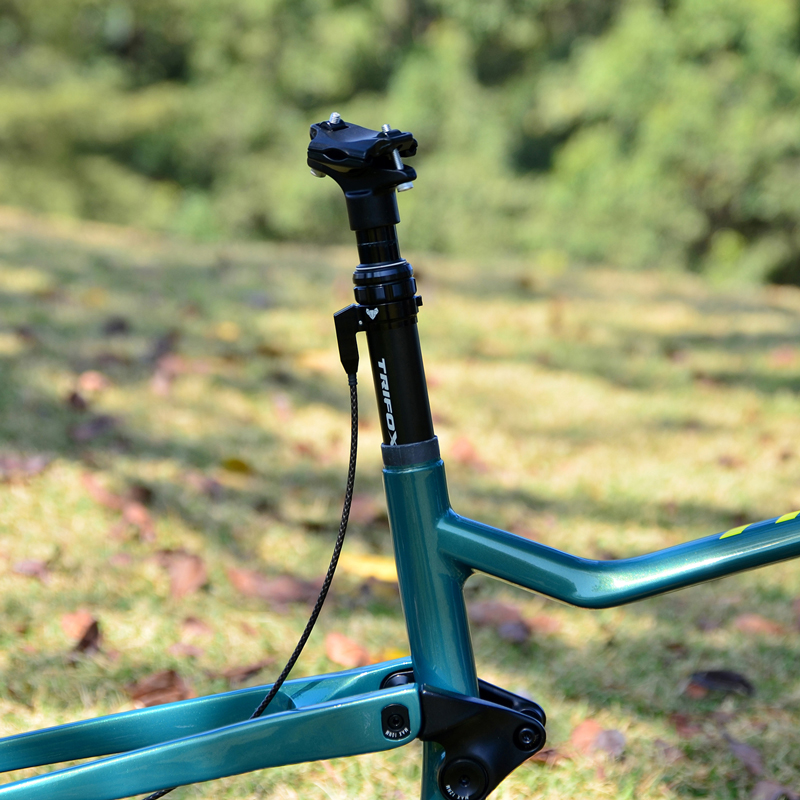
Cable Routing: Dropper posts come with internal or external cable routing. Internal routing offers a cleaner look and better cable protection, while external routing is easier to install and maintain. The AP309 offers versatile external routing options (upper and center), making installation straightforward and reliable. External routing is particularly well-suited for frames without internal cable ports, or for riders who prefer the simplicity of maintenance.
Materials and Build Quality: Look for durable materials like 7075 aluminum, which offer strength without excessive weight. The AP309 is constructed from high-quality AL7075, making it both sturdy and durable, and features a corrosion-resistant stainless steel screw. Weight is also a consideration; the AP309 weighs approximately 783g depending on the routing option, making it lightweight enough for all-day rides.
Why the Trifox AP309 Stands Out
The Trifox AP309 is an excellent example of what a modern dropper post should be. With its 125mm of air-sprung travel, it provides the perfect range for trail, all-mountain, and even aggressive XC riding. Its 30.9mm diameter fits most modern mountain bike frames, and the external cable routing simplifies installation and maintenance. The post features an adjustable return speed dial, allowing you to fine-tune the drop and return speed to match your riding style and the demands of the trail. The responsive remote lever is designed for single-finger operation, with a smooth, consistent action that gives you subconscious confidence on the trail. Riders who have installed the AP309 report a noticeable improvement in control and flow, with one reviewer noting that it "disappears into the ride, becoming an instinctive lever for control".
Conclusion: The Upgrade That Transforms Your Ride
A dropper seatpost is not a luxury — it's a performance upgrade that fundamentally changes how you ride. It gives you the control to descend with confidence, the efficiency to climb with power, and the flow to ride with joy. Whether you're a seasoned enduro racer or a weekend trail rider, a quality bicycle adjustable seatpost like the 30.9 external dropper post AP309 is an investment that pays dividends on every ride. If you've been on the fence, take the leap — your trails will never feel the same again.
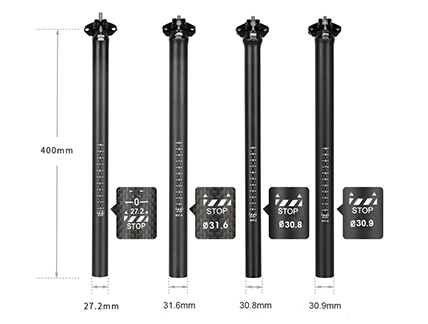
The seatpost is a component most riders overlook—until they notice it. That slight discomfort on rough roads, the creak that develops after a year, or the bike weight that feels just a little too heavy. The choice between a carbon fiber and an aluminum seatpost comes down to balancing weight, comfort, durability, and cost. Here are the seven key differences to help you decide which is right for your ride.
1. Weight
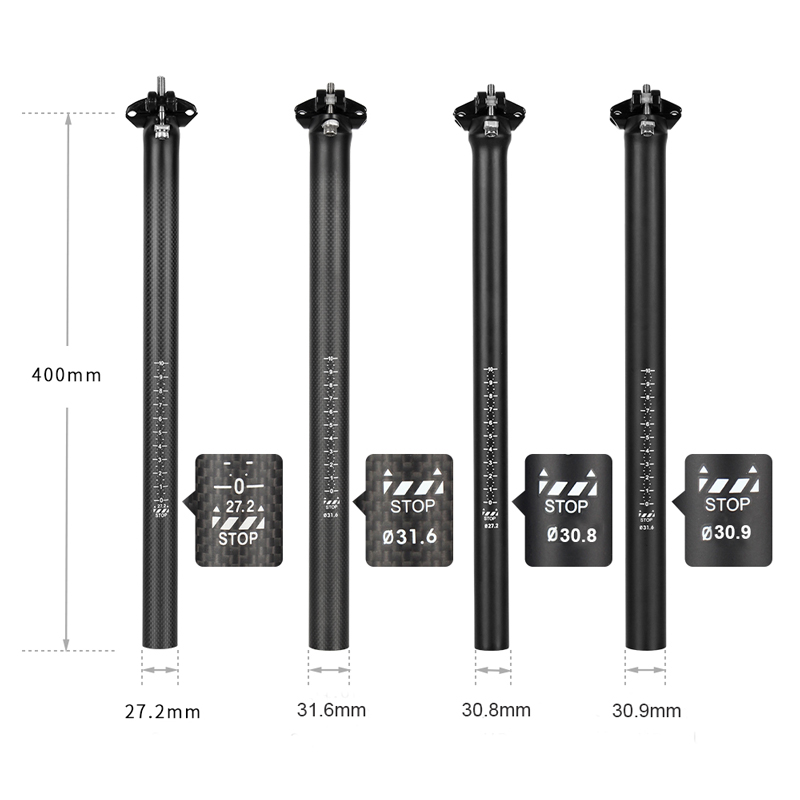
Carbon fiber is significantly lighter. A quality aluminum seatpost can weigh 220-300g. A carbon seatpost like the Trifox SLS21 tips the scale at just 160g (for the 30.8 x 400mm size), offering a weight reduction of 30-40% or more. That savings may seem small, but at the top of the seat tube, it reduces total bike weight and improves the bike’s overall feel.
2. Vibration Damping and Comfort
This is carbon’s strongest advantage. Carbon fiber naturally absorbs high-frequency “road buzz”—the vibration from rough pavement, chip seal, or gravel that causes fatigue over long miles. Aluminum transmits that vibration more directly, which can lead to numbness and discomfort. For long-distance road riders, gravel enthusiasts, or anyone seeking a smoother experience, carbon provides a meaningful increase in ride comfort.
3. Stiffness and Power Transfer
Both materials can be stiff, but carbon offers tunable stiffness. A well-designed carbon post can maintain the rigidity needed for efficient power transfer while still offering vertical compliance to absorb shocks. Aluminum is predictably stiff but cannot offer the same tuned flex characteristics.
4. Durability and Impact Resistance
Here, aluminum has the edge. Aluminum seatposts are tougher and can withstand direct impacts from rocks, crashes, or trail debris. If you regularly ride rocky terrain or subject your bike to hard use, aluminum offers peace of mind. Carbon can be damaged by overtightening or sharp impacts, though modern quality carbon posts are far more durable than early versions.
5. Installation and Maintenance
A carbon seatpost requires careful attention to torque specs and the use of carbon assembly paste (never grease). Carbon paste contains micro-grip particles that increase friction, allowing you to achieve a secure hold at lower torque to prevent slipping without crushing the carbon. An aluminum seatpost can be installed with standard grease and is more tolerant of minor torque variations. That said, an aluminum post in a carbon frame can corrode and seize over time, a problem carbon paste largely prevents. Either way, a torque wrench is recommended for both materials.
6. Aesthetics
Carbon’s UD matte or 3K weave finish looks undeniably premium. Aluminum posts typically have a painted or anodized finish. For builders who care about visual details, carbon offers a distinctive, high-end appearance.
7. Price and Value
Carbon costs more. A quality carbon seatpost typically ranges from $150 to $400, while aluminum options often run $50 to $150. The question becomes: is the weight savings and vibration damping worth the premium? For competitive riders, touring cyclists, or anyone spending long hours in the saddle, the answer is often yes. For casual or budget-conscious riders, aluminum remains a excellent choice.
Making Your Choice
If you prioritize durability and cost, aluminum is a reliable choice. If you value weight reduction, ride comfort, and a premium aesthetic—and you’re willing to install it correctly with a torque wrench and carbon paste—a carbon seatpost like the carbon fiber seatpost SLS21 delivers measurable benefits on every ride. The Trifox SLS21 is available in multiple diameters, including the popular 27.2mm seatpost size for Mtb,road and gravel bikes, and features a 400mm length, T800 carbon construction, and titanium hardware. Upgrading your seatpost is one of the most effective ways to improve both bike performance and rider comfort—without changing how your bike looks from 10 feet away.
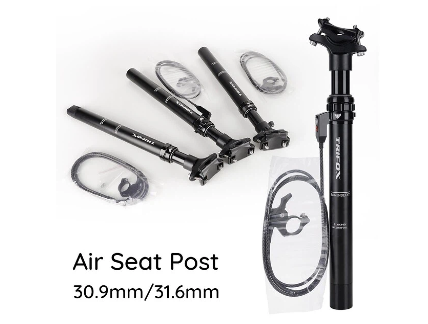
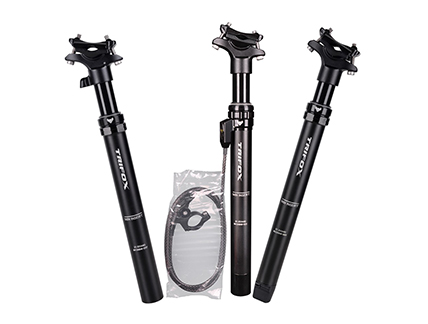
Choosing a dropper post can often feel like a compatibility puzzle. You find a post with the right travel and diameter, only to discover your frame's cable routing doesn't match. The Trifox AP316 eliminates this frustration entirely. Instead of a one-size-fits-all approach, it's engineered with three distinct cable routing options, ensuring that regardless of your frame's design—whether it's an older quick-release model or a modern carbon machine—the AP316 can be installed cleanly and function flawlessly. This adaptability, combined with robust construction, makes it a top contender for the best budget dropper post on the market.
Understanding the Three Routing Options
The AP316 series is available in three specific models, each designed for a different frame interface:
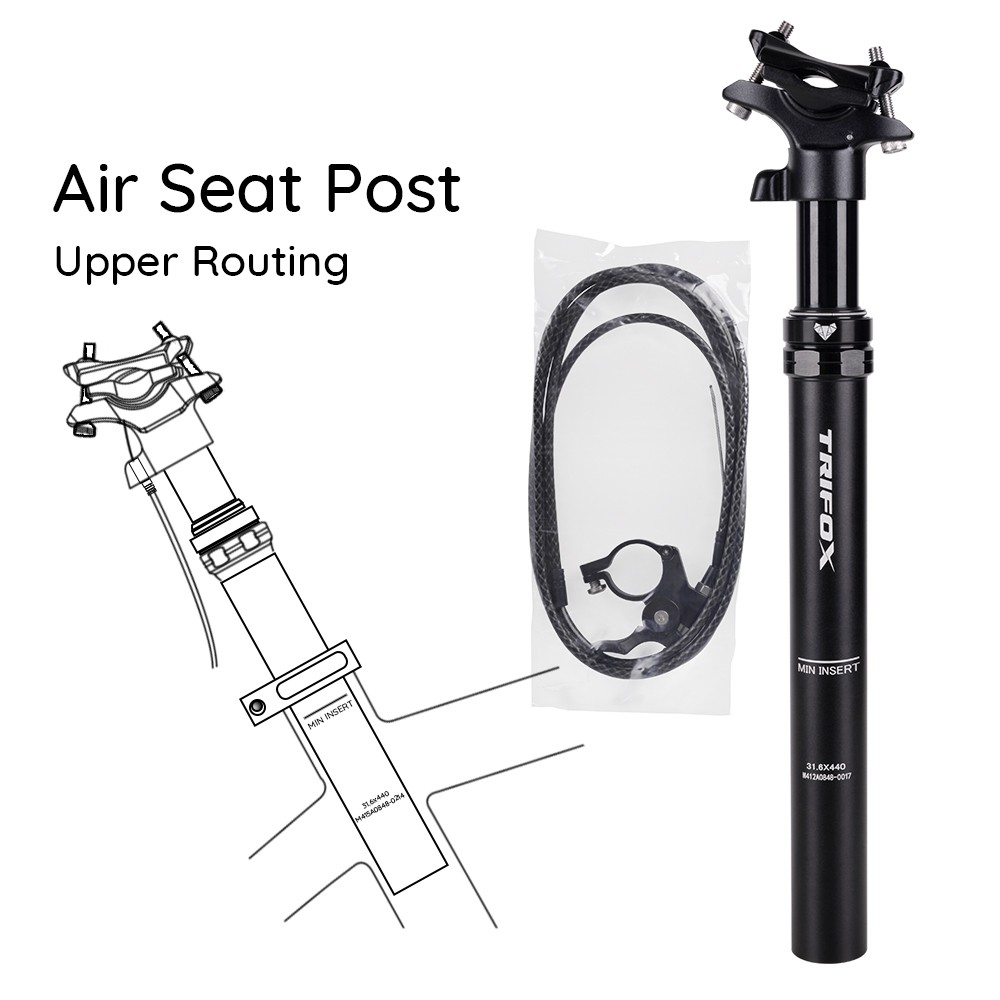
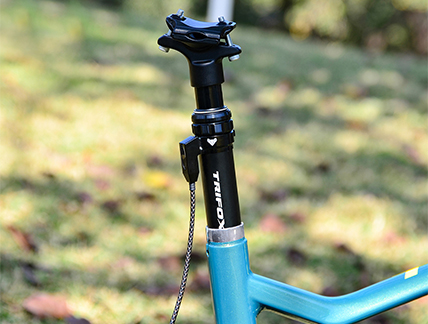
* Upper Routing (APS316): The cable enters near the top of the seatpost. This is ideal for frames with external cable guides positioned high on the seat tube, often found on older or more traditional mountain bike frames. It offers a straightforward, easy-to-install solution for riders seeking a reliable external routed dropper post.
* Center Routing (APM316): The cable entry point is located around the middle of the post. This is a versatile and popular choice, as it aligns well with many modern frame designs that have a guide or port near the middle of the seat tube. It often provides the cleanest external cable line.
* Bottom Routing (APD316): The cable enters at the very bottom of the seatpost. This is designed specifically for frames with full internal cable routing, where the cable or hose runs inside the seat tube and exits near the bottom bracket. This option creates an exceptionally clean, seamless look.
Performance You Can Depend On
Regardless of which routing option you choose, the core performance of the AP316 is identical and impressive. It features 125mm of smooth, adjustable travel, powered by a reliable air-sprung cartridge. This allows you to drop your saddle out of the way on descents and pop it back up for climbs with the simple press of a remote lever. The post is constructed from high-quality aviation-grade 7075 aluminum, a material chosen for its exceptional strength-to-weight ratio. This ensures the post is both lightweight and durable enough to withstand the rigors of trail riding, enduro, and even all-mountain abuse. The 1.5m cable housing provides ample length for any bike setup.
Why the AP316 is the Best Budget Dropper Post
For riders seeking to add a dropper without breaking the bank, the AP316 offers an incredible value proposition. Its combination of 125mm travel, durable 7075 aluminum construction, and—most importantly—its three adaptable routing options, addresses the primary compatibility headaches that plague budget dropper posts. You can confidently purchase the version that matches your frame, knowing you're getting a reliable, functional component. This thoughtful engineering, paired with a sub-$70 price point, firmly establishes the AP316 as a leading candidate for the best budget dropper post, proving that you don't need to spend a fortune to get a dropper that fits perfectly and performs reliably on every ride.
Choosing a dropper post can be a game-changer for your trail riding, but the technical details—travel, diameter, and especially cable routing—can feel overwhelming. The worry of ordering the wrong part for your specific frame is real. Don't stress. This guide will demystify the process, focusing on the crucial choice between internal and external routing to ensure you select the perfect dropper, like the versatile Trifox AP316, for your bike.
The Core Question: What Does Your Frame Allow?
This decision is primarily dictated by your bike frame’s design, not personal preference. You must match the post to your frame's capabilities.
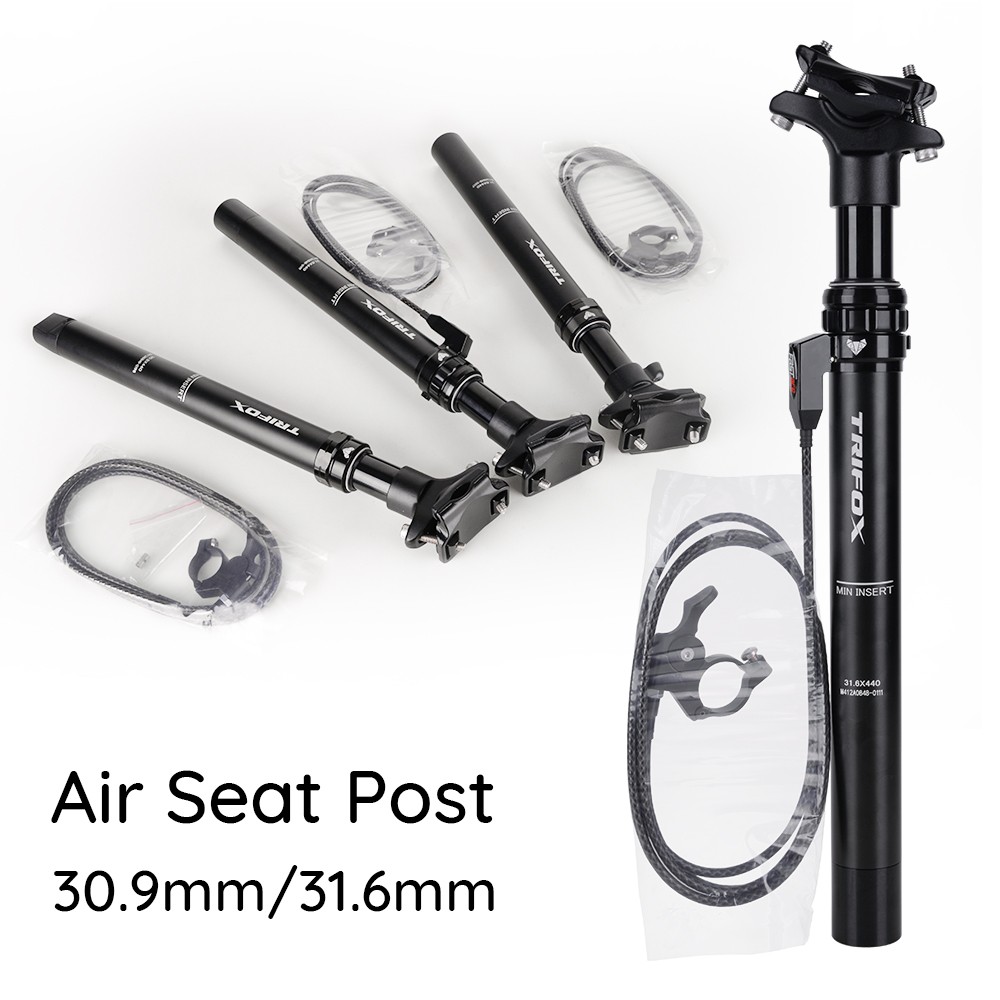
* Internal Routing (Bottom Routing): This style, represented by the APD316 model, is the cleanest and most modern. The cable enters the post at the very bottom and runs entirely inside the frame. Your frame must have a dedicated internal routing port at the bottom of the seat tube to accommodate this. This is common on newer mountain bikes seeking a sleek, protected look.
* External Routing: This is the universal solution and a hallmark of the best budget dropper post. The cable is routed along the outside of the frame. The Trifox AP316 offers two external options to fit different frame geometries and cable guides:
* Upper Routing (APS316): The cable enters the post near the top. Ideal for frames with cable guides on the top tube.
* Center Routing (APM316): The cable enters around the middle of the post. Often the easiest to install and maintain, working with a wide variety of frames.
Your 3-Step Decision Flowchart
Follow this simple process to eliminate guesswork:
1. Inspect Your Frame: Look at the area where your seatpost enters the frame (the seat tube). Are there small cable guide ports near the top or on the top tube? You likely need an external routed dropper post. Is there a clean hole at the very bottom of the seat tube, inside the frame? Your bike is ready for internal routing.
2. Measure Your Seat Tube Diameter: This is non-negotiable. Remove your current seatpost—the diameter (e.g., 31.6mm) is stamped on it. The AP316 comes in 30.9mm and 31.6mm sizes to fit most bikes.
3. Consider Maintenance & Budget: External routing is simpler to install, adjust, and service, making it a reliable and often more affordable choice. Internal routing looks fantastic but can be trickier to set up initially.
Why the Trifox AP316 Solves the Compatibility Puzzle
The AP316 series exemplifies user-friendly design by offering a single performance specification across three routing options. Whether you choose the APS316 (upper), APM316 (center), or APD316 (internal bottom), you get the same reliable core: 125mm of smooth air-suspension travel, a durable 7075 aluminum construction, and a 1.5m cable for flexible setup. This means you don't sacrifice quality or features based on your frame's routing limitations. For riders seeking a high-value, capable upgrade, it stands out as a top contender for the best budget dropper post that doesn’t cut corners.
Making the Final Choice
If your frame has internal routing ports and you value a clean aesthetic, the APD316 is your match. For everyone else—especially those with older frames, complex full-suspension designs, or who prioritize easy maintenance—the external routed dropper post options (APS316 or APM316) are the smart, hassle-free choice. By taking five minutes to inspect your bike and following this guide, you can confidently select the component that will unlock more dynamic, confident, and fun riding on every trail. The right dropper post isn't just a part; it's the key to a more capable and enjoyable bike.
In mountain biking, a dropper post is more than a component; it's an extension of your body, a dynamic tool for reshaping the bike beneath you. While travel length gets the headlines, the true soul of a high-performance dropper lies in two intangible qualities: control and speed. Not just how fast it moves, but the confidence, precision, and consistency of that movement. A post that stutters, lags, or requires a second thought breaks your flow. A truly great post, like the Trifox AP309, disappears into the ride, becoming an instinctive lever for control that directly translates to more speed.
The Anatomy of Perfect Control: Frictionless and Instinctive
Control begins the moment your thumb touches the remote. It should feel like an extension of your will.
The Remote: Your Direct Link
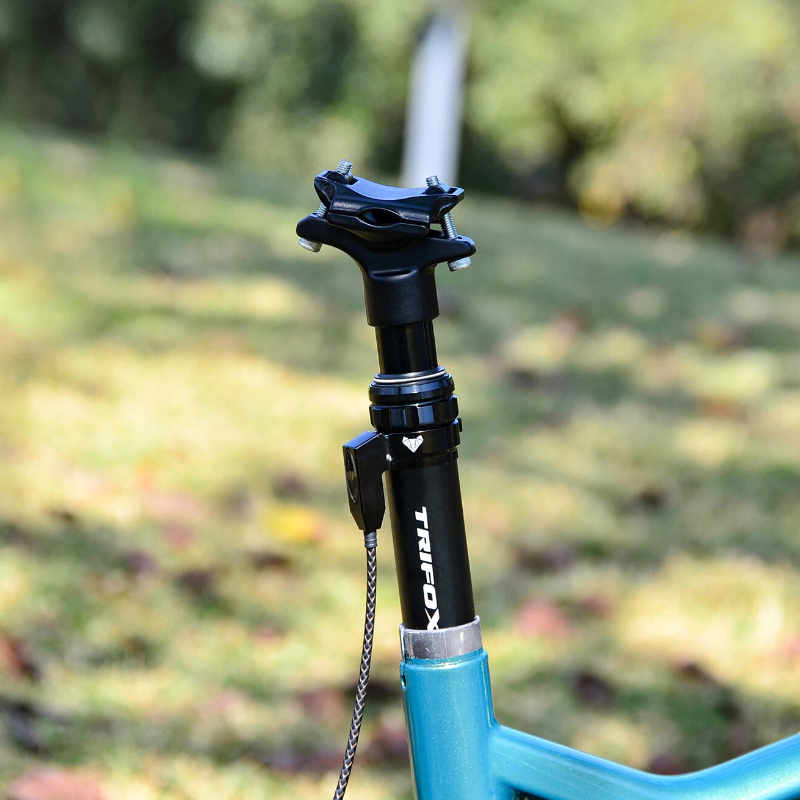
The ergonomics and leverage of the remote are critical. The AP309 features a responsive remote lever designed for single-finger operation. The action is engineered to be smooth, requiring a consistent, manageable force—not a hard punch or a vague mush. This precise mechanical feel gives you subconscious confidence that the command has been received, allowing you to focus entirely on the trail ahead.
Versatile Cable Routing for Reliability
A key aspect of reliable control is how the command is transmitted. The AP309 offers versatile routing to suit any frame and preference:
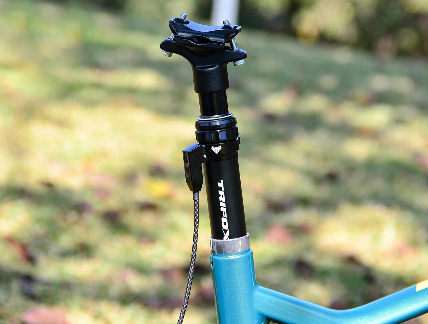
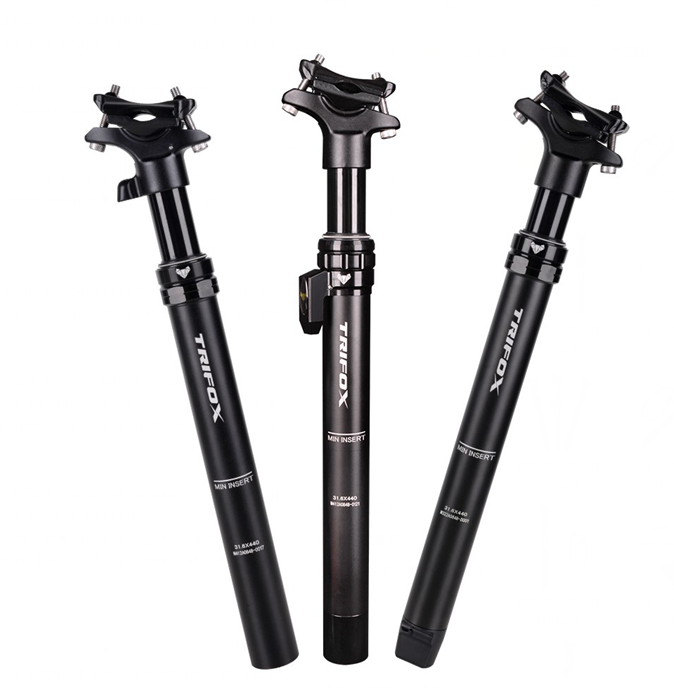
External Routing (Top/Mid): The classic, simplest setup. The cable is routed externally along the frame, offering the easiest installation, maintenance, and most direct cable pull for consistent lever feel. This is the go-to choice for maximum reliability and simplicity.
Internal Routing (Full): For a clean, streamlined look, the cable can be routed internally through the frame. This protects the cable from debris and snags, maintaining a clean aesthetic.
This flexibility ensures you can achieve optimal cable routing on any bike, eliminating sharp bends or friction points that can compromise the smooth "press-and-drop" feel.
The Power of Adjustable Speed: Tailoring Your Descent
Speed isn't just about being fast; it's about being appropriately fast. This is where adjustability becomes a game-changer.
Why Speed Matters: A post that drops too slowly can leave you awkwardly waiting in a technical section. One that snaps up too quickly can be jarring or even unsafe on a climb transition. The ability to fine-tune both the drop speed and return speed allows you to match the post's behavior to your riding style and the trail's demands.
The AP309's Approach: The Trifox AP309 features a user-friendly speed adjustment system. Through a simple dial, you can independently control the post's return speed. Want a lightning-fast drop for quick, repeated features? Dial it for a quick return. Prefer a slightly more controlled, damped rise for smooth XC pedaling transitions? You can set that too. This customization makes the post an active part of your technique, not just a passive tool.
Reliability: The Foundation of Trust
All the control and speed in the world mean nothing without unwavering reliability. A post must work flawlessly, ride after ride.
Robust Construction & Sealed Design: The AP309's 30.9mm diameter provides a solid, torsion-resistant platform. Its core utilizes a reliable air spring system, known for its consistent performance across its 125mm of travel. Crucially, it's equipped with effective dust and moisture seals that protect the sensitive internal mechanism from trail grime, preventing the friction and stickiness that lead to failure.
Consistent Performance Under Load: A true test of a dropper is its performance when the bike is sideways or under lateral load. The AP309's internal valve system is designed to provide consistent, reliable actuation regardless of bike angle, ensuring you get that critical saddle drop even when you need it most in a steep, off-camber section.
The Trifox AP309: Engineered for the Experience
The Trifox AP309 Dropper Post embodies the principles of control and speed. It's not just a lightweight dropper post (a benefit of its efficient air-spring design); it's a thoughtfully engineered control interface. As a versatile 30.9mm external dropper post with multiple routing options, it prioritizes reliable cable actuation above all. By combining this with adjustable action and a robust, sealed build, the AP309 is built to become an invisible, yet indispensable, part of your riding—transforming your bike into a dynamic partner that actively helps you ride faster, smoother, and with more confidence.
Conclusion: The Invisible Advantage
The ultimate compliment for a dropper post is that you forget it's there. You don't think about the cable routing or the mechanics; you simply use it. Your body learns it, trusts it, and incorporates its movement into your flow. When control is immediate, speed is tunable, and reliability is absolute, the post stops being a piece of equipment and starts being a part of your skillset. It is the key to unlocking a more fluid, confident, and ultimately faster ride. Choose a post defined by control and speed, and feel the difference on every trail.
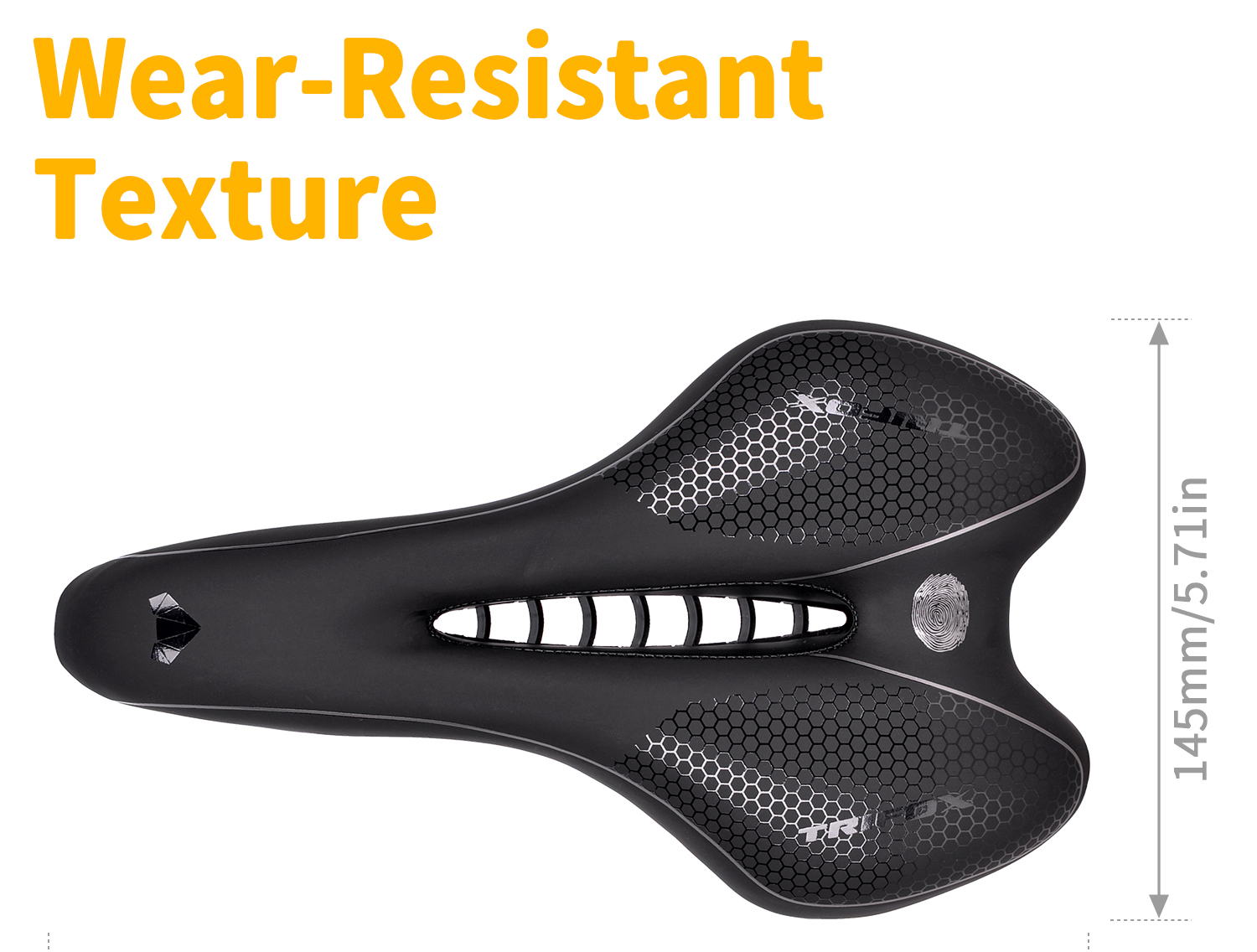
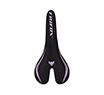
That stock saddle on your road bike? It served its purpose getting you started. But if you're chasing performance, comfort, or simply a more refined ride, upgrading to a full-carbon saddle like the Trifox CS200 is a game-changer. Forget the misconception that carbon is harsh – modern designs blend featherweight efficiency with surprising comfort. Here's why the switch is worth it:
1. The Weight Weenie Wins: This is the obvious one. At a claimed 120 grams, the Trifox CS200 utterly demolishes typical alloy-railed saddles (often 250g+). Shedding 100+ grams directly off your bike, especially high up and at the contact points, makes a tangible difference. It's pure acceleration, easier climbing, and the satisfaction of marginal gains realized. Every watt feels more efficient.
2. Stiffness = Power Transfer: Carbon fiber's inherent stiffness isn't just for weight savings. It means virtually zero flex under power. When you stomp on the pedals, every ounce of energy goes into propelling you forward, not lost compressing padding or flexing the shell. You'll feel a more direct, connected drive, especially during sprints and out-of-the-saddle efforts.
3. Engineered Comfort (Yes, Really!): "Carbon must be hard!" is the biggest myth. Saddles like the CS200 use carefully sculpted shapes, strategic flex zones in the carbon base, and minimal high-density padding precisely where needed. This provides targeted support to your sit bones, reducing pressure on soft tissue. Less padding can actually mean less numbness on long rides, as your weight is correctly distributed. The shape is key, and many find carbon shells conform better over time.
4. Breathability Matters: Ever finished a long ride feeling swampy? Full-carbon bases are inherently perforated or designed with significant cutouts/channels (like the CS200). This promotes airflow, drastically reducing heat and moisture buildup. Enhanced ventilation equals greater comfort and reduced friction, ride after ride.
5. Durability & Low Maintenance: Carbon fiber is incredibly resilient to fatigue and corrosion. Unlike leather or synthetic covers that can degrade, or rails that can rust, a quality carbon saddle shrugs off sweat, weather, and miles. It requires minimal upkeep beyond wiping clean.
The Trifox CS200: A Prime Example
The Trifox CS200 exemplifies these benefits perfectly:
- Ultralight 120g: Significant weight savings.
- Full Carbon Shell & Rails: Maximizes stiffness and durability while minimizing weight.
- Strategic Padding: Minimal, high-rebound foam for targeted comfort without bulk.
- Central Cutout: Enhances breathability and relieves perineal pressure.
- Aerodynamic Shape: Sleek design complements a performance road bike.
Is it for Everyone?
Like any saddle, fit is paramount. A carbon saddle's shape needs to match your anatomy. If the stock shape works for you, upgrading to carbon refines it. If not, focus on finding the right shape first, then consider carbon for the performance benefits. The Trifox CS200 offers a popular, performance-oriented profile.
The Upgrade Verdict:
Upgrading to a carbon saddle isn't just about shaving grams; it's about enhancing the fundamental connection between you and your bike. The blend of dramatic weight reduction, efficient power transfer, surprising comfort through intelligent design, and superior breathability creates a noticeably better riding experience. If you're ready to feel more connected, efficient, and comfortable, especially on demanding rides, a saddle like the Trifox CS200 is a worthy investment. It transforms a crucial contact point from a necessary component into a performance asset. Make the switch and feel the difference!
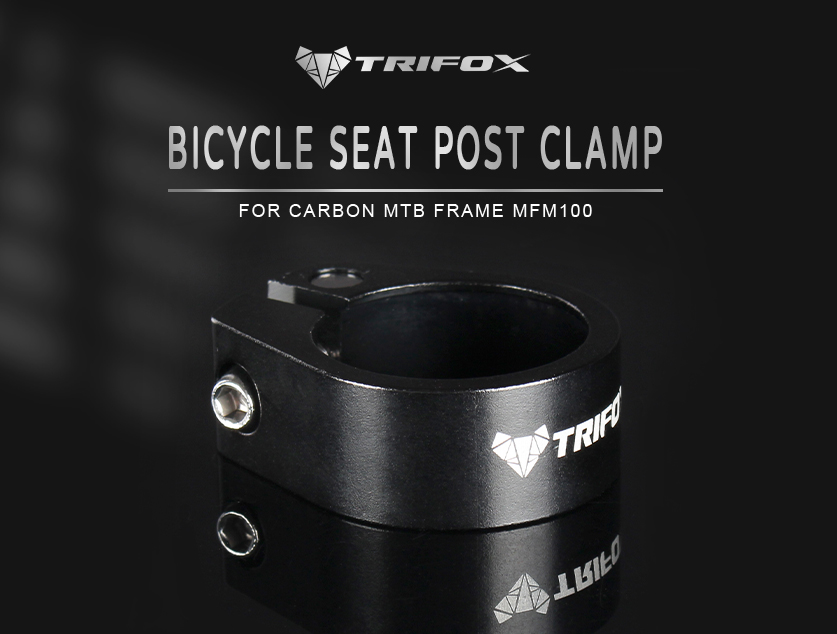
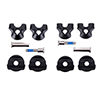
Crushed seat tube? Slipping post? Using the wrong seat clamp size for your 27.2mm seatpost is a recipe for frustration and potential frame damage.
Get it right for secure, reliable height adjustment. Here’s the simple answer:Your clamp's Inner Diameter (ID) must match your seatpost's Outer Diameter (OD). For a 27.2mm seatpost, you need a clamp with a 27.2mm ID.
Why Size Matters:
Too Big (e.g., 28.6mm clamp on 27.2mm post): You'll crank the bolt excessively trying to grip. This risks crushing a lightweight frame's seat tube or still not preventing slippage.
Too Small (e.g., 27.2mm clamp on 30.9mm post): It simply won't fit over the post or seat tube collar.
Just Right (27.2mm clamp): Distributes clamping force evenly, preventing slippage without damaging your frame or post.
Finding Your Frame's Clamp Size:
Check Existing Clamp: Look for a size marking (e.g., "27.2", "⌀27.2") often stamped/engraved on the underside.
Measure the Seatpost: Use calipers! This is the most reliable method. Measure the smooth section that inserts into the frame – it must be 27.2mm.
Consult Frame Specs: Check the manufacturer's website or original documentation for the seatpost diameter (which dictates clamp ID).
Key Considerations:
Frame Material: Carbon frames are especially sensitive to overtightening. Use a correctly sized clamp and a torque wrench!
Clamp Material: Lightweight alloy clamps (like many from Trifox Bike) offer great strength and weight savings. Avoid overtightening cheap alloy.
Shims: If your frame's seat tube is larger (common on some steel/aluminum frames), you need a shim between the tube and the clamp. The clamp ID still matches your seatpost OD (27.2mm). The shim adapts the larger frame tube to the clamp.
Torque: Always follow manufacturer specs. Tighten gradually and evenly.
Ready for a Secure, Lightweight Upgrade?
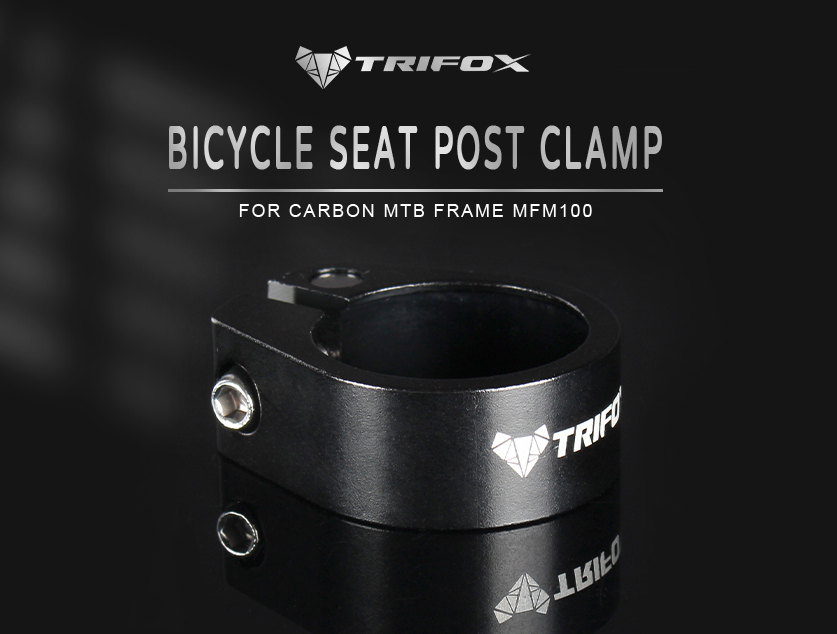
Ensure smooth, reliable saddle adjustments and protect your frame. If you're replacing a clamp or building up a bike, precise sizing is non-negotiable. For a quality, well-fitting 27.2mm seat clamp, check out the selection at Trifox Bike.
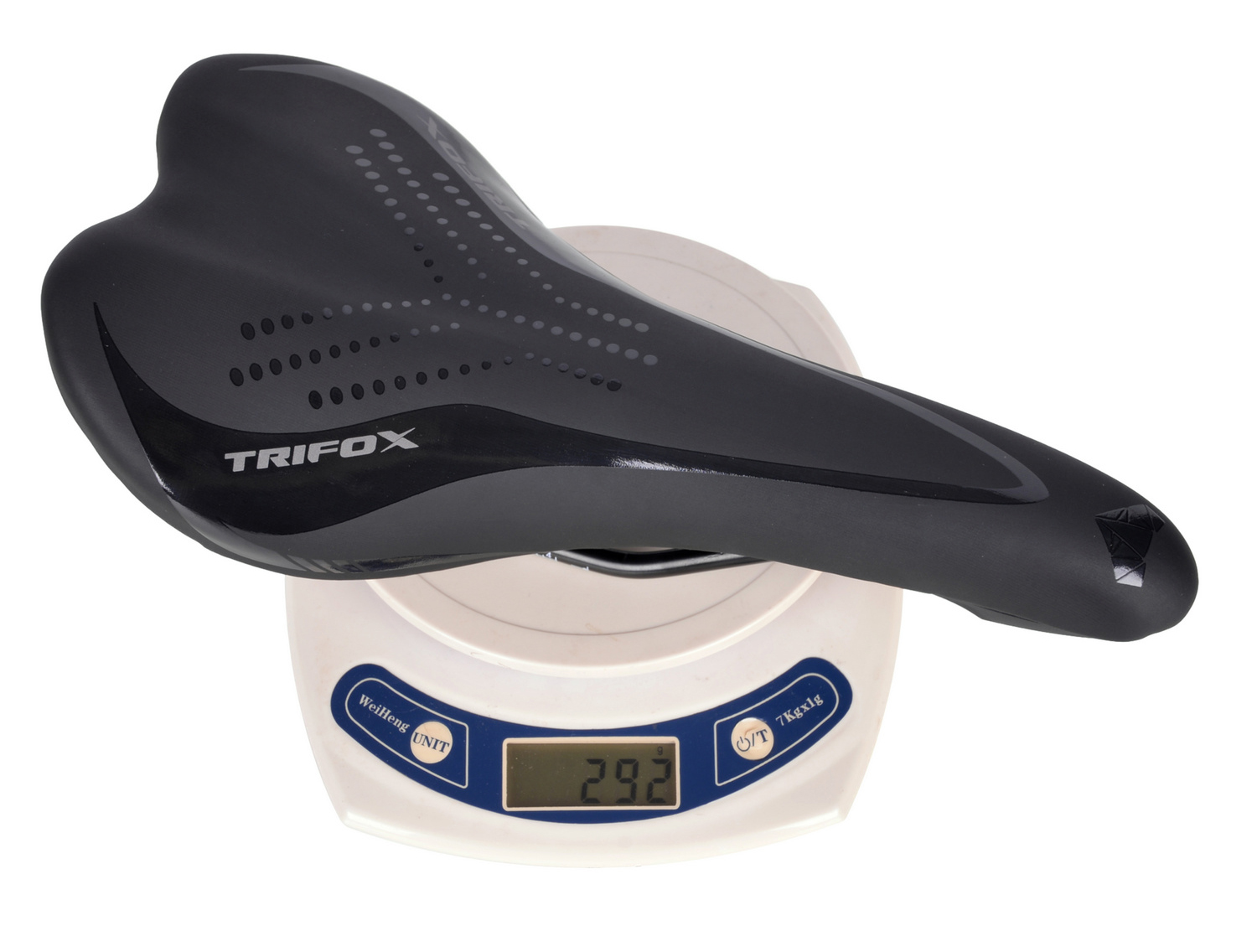
Searching for the "most comfortable" mountain bike saddle is like asking for the best shoe size – there's no single answer. Comfort is deeply personal, depending on your anatomy, riding style, and bike fit.
Why Comfort is Subjective:
1. Sit Bone Width: This is CRITICAL. Your sit bones need proper support. Saddles too narrow or too wide cause pain. Get measured at a shop or use the cardboard-at-home method.
2. Riding Style & Terrain: Aggressive downhillers need different support than long-distance XC riders. More technical terrain often benefits from a shorter nose.
3. Flexibility & Position: Your hip angle and how much you move on the bike influence pressure points.
4. Individual Sensitivity: Some riders need generous padding, others find minimalism better.
Key Features for MTB Comfort:
- Correct Width: Matches your sit bone measurement (usually 2-4cm wider).
- Appropriate Padding: Enough to dampen vibrations but not so much it causes chafing or restricts movement. Too much padding can compress nerves.
- Central Cutout/Relief Channel: Essential for most riders! Reduces soft tissue pressure and numbness on longer rides.
- Shell Flex: A slightly flexible shell absorbs trail buzz better than a completely rigid one.
- Shape: Flat profiles suit aggressive positions; more curved profiles can offer support for upright riding. Short noses improve maneuverability.
Where Do Carbon Saddles Fit In? (Like Trifox Bike's Range)
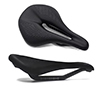
Carbon saddles (like those offered by Trifox Bike at trifoxbike.com/carbon-bike-saddles) excel in specific areas relevant to MTB comfort:
1. Targeted Flex: High-quality carbon shells can be engineered to flex strategically under your sit bones, absorbing impacts and vibrations from rough trails, while remaining supportive and efficient.
2. Lightweight & Efficient: Significant weight savings over traditional saddles, beneficial for climbing and overall bike feel.
3. Durability: Carbon is highly resistant to wear and tear from crashes and the elements.
4. Minimalist Design: Many carbon saddles feature smart padding placement (often just in the rear zone) combined with relief channels, hitting the sweet spot for riders who find bulky saddles uncomfortable.
Is Carbon Right for You?
Carbon saddles can be incredibly comfortable, especially if you value vibration damping, weight savings, and a direct connection to the bike. However, they often have less overall padding than heavily cushioned models. Riders preferring a very plush feel might initially find them firmer, though the flex often compensates brilliantly for trail chatter.
The Verdict & How to Find YOUR Most Comfortable Saddle:
1. Measure Your Sit Bones.
2. Prioritize a Relief Channel/Cutout.
3. Consider Your Riding Style: Aggressive? Look shorter/narrower. Enduro/Trail? Balance is key. XC? Efficiency and weight matter.
4. Consider Carbon (Like Trifox): If you value precise flex, vibration damping, low weight, and durability, explore quality carbon options.
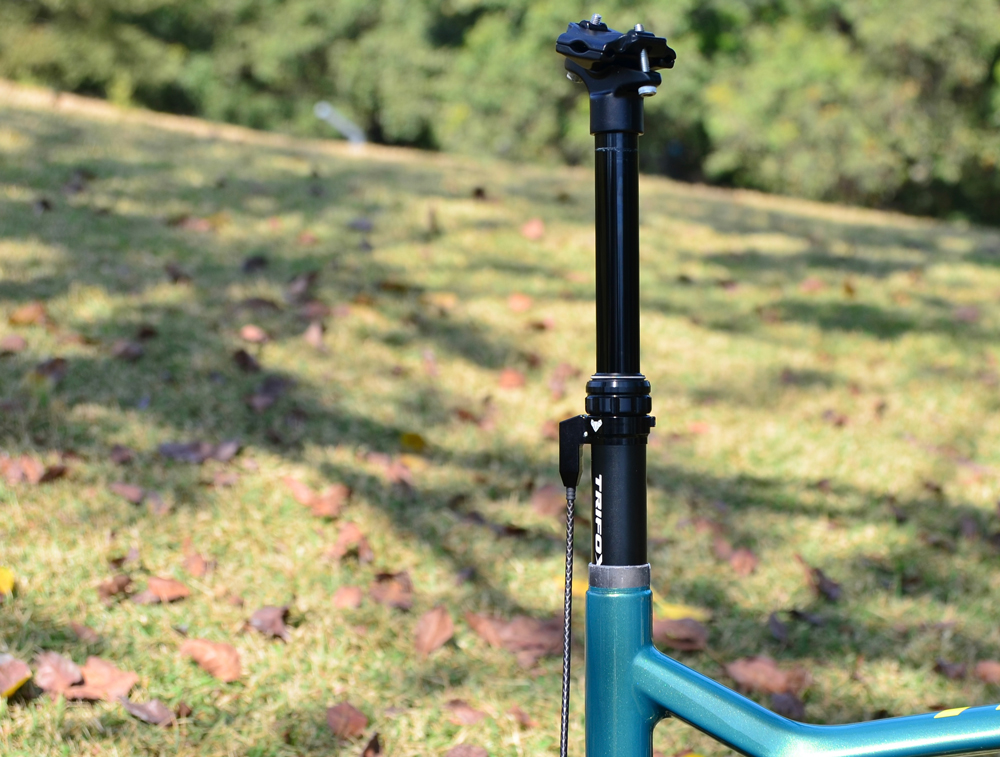
Installing an internally routed dropper post can seem intimidating, but with the right tools and patience, it’s a DIY project any mountain biker can tackle. Below, we’ll walk you through the process.
What You'll Need
- Dropper post and remote lever
- Internal cable routing kit (housing, cable, ferrules, and end caps)
- Allen keys (typically 4mm, 5mm)
- Cable cutters
- Grease or lubricant
- Electrical tape (optional)
Step 1: Prep the Frame
Start by removing the seat post and old cable (if applicable). Identify your frame’s internal routing ports—most modern mountain bikes have dedicated entry/exit points near the seat tube and downtube. Clean any debris from the ports to ensure smooth cable feeding.
Step 2: Thread the Housing
Cut the cable housing to length, allowing extra slack for adjustments. Feed the housing through the frame's internal channels, starting at the seat tube and working toward the downtube or handlebar area. Use a magnetic guide or a flexible fishing tool if the routing is tight. Pro tip: Wrap the housing end with electrical tape to prevent fraying.
Step 3: Attach the Dropper Post
Insert the dropper post into the seat tube, aligning the cable entry port with the housing. Secure the post loosely with the seat clamp bolt. Connect the housing to the post’s actuator mechanism, ensuring there's no binding.
Step 4: Install the Remote Lever
Mount the remote lever on your handlebar (left side for most riders). Route the housing to the lever, trim excess, and secure the cable with the provided clamp. Tighten the lever bolt, but leave room for fine-tuning later.
Step 5: Tension and Test
Pull the cable taut at the dropper post end and tighten the anchor bolt. Test the post’s movement by pressing the remote—it should extend and retract smoothly. If there’s resistance, check for kinks in the housing or misalignment.
Final Adjustments
Adjust saddle height and lever position to your preference. Secure all bolts to manufacturer torque specs, and trim any excess cable. Finally, lube the cable and post mechanism to ensure longevity.
Can Watch the full video tutorial here
With your dropper post installed, you’re ready to enjoy faster descents and seamless transitions on the trail. Happy riding!



