



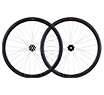
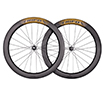
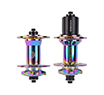
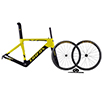
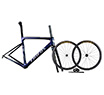





The debate between carbon and aluminum wheels is one of the most persistent in road cycling. Walk into any group ride, and you’ll hear passionate arguments for both sides. Some riders swear by the weight savings and acceleration of carbon. Others point to the durability and value of aluminum. The truth is simpler than the debate suggests: both materials have strengths, but they serve different riders, budgets, and priorities. Here’s how to decide which is right for you — and why the Trifox WT11 carbon disc wheelset represents a compelling case for carbon.
The Carbon Advantage: Weight, Stiffness, and Aerodynamics
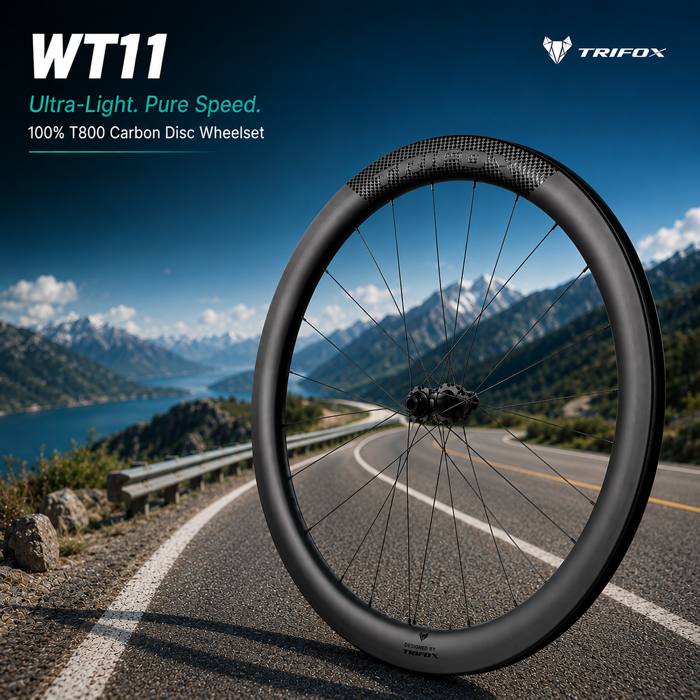
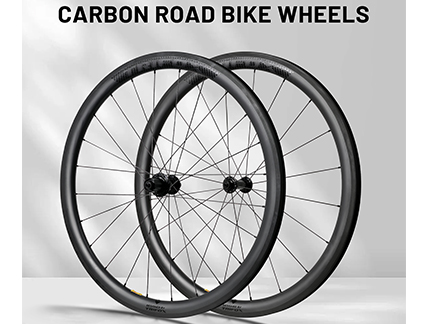
Carbon fiber’s primary advantage is its exceptional stiffness-to-weight ratio. A well-engineered carbon wheelset like the WT11 can weigh as little as 1,526g for the 40mm depth (712g front, 814g rear), while many aluminum wheelsets of similar depth exceed 1,700–1,800g. That weight difference isn’t just a number on a spec sheet—it directly affects how the bike feels on the road.
Weight: The Most Noticeable Difference
Rotational weight matters more than static weight. Every gram at the rim requires more energy to accelerate than a gram elsewhere on the bike. Lighter wheels spin up faster, climb more easily, and respond more eagerly when you surge out of a corner or attack a short climb. A pair of lightweight carbon wheels like the WT11 can make a bike feel “like an absolute rocketship” compared to heavier aluminum wheels. Riders who have tested the WT11 consistently note that the wheels are “lightweight, well leveled and very easy to install”, with one reviewer calling them “probably the best bang for your buck”.
Stiffness: Power Transfer and Handling
Carbon’s higher stiffness-to-weight ratio means more efficient power transfer. When you sprint or climb out of the saddle, a stiff carbon rim resists flex, directing more of your energy into forward motion. This translates to sharper acceleration and more precise handling. Aluminum wheels tend to flex more under load, which some riders find comfortable, but it can feel less responsive under hard efforts. The WT11’s 100% Toray T800 carbon construction and 24 straight-pull Pillar spokes deliver the stiffness that performance-oriented riders demand.
Aerodynamics: Shaping the Wind
Carbon can be molded into complex aerodynamic profiles that aluminum cannot easily replicate. The WT11 offers four depth options—40mm, 45mm, 50mm, and 60mm—allowing riders to choose between lighter weight (40mm) or greater aero efficiency (60mm). Deeper carbon rims reduce drag at speed, saving watts on flat and rolling terrain. Aluminum rims of similar depth are often heavier and less aerodynamically refined.
Vibration Damping: A Smoother Ride
Carbon’s composite structure absorbs high-frequency road vibration more effectively than aluminum. The WT11’s T800 carbon construction helps filter out road buzz, reducing hand and arm fatigue on rough pavement. Riders often describe carbon wheels as feeling “smoother” and “more planted” than aluminum equivalents, especially on chip seal and worn asphalt.
The Aluminum Case: Durability and Value
Aluminum wheels have their own strengths. They are generally more affordable, more durable against impacts, and can be repaired more easily than carbon. A quality aluminum wheelset can handle potholes, curb strikes, and daily training abuse with less anxiety. For winter training, commuting, or riders on a tighter budget, aluminum remains an excellent choice. However, aluminum does have a fatigue life—over years of hard use, the material can develop micro-cracks that eventually lead to failure. Carbon, when undamaged, does not fatigue in the same way.
Braking: Disc Brakes Change the Equation
The move to disc brakes has removed one of carbon’s historical disadvantages: rim brake compatibility. Rim brake carbon rims require special brake pads and can suffer from reduced stopping power in wet conditions. With disc brakes, the braking surface is on the rotor, not the rim. The WT11’s Center Lock disc brake interface eliminates this concern entirely, delivering consistent, powerful braking regardless of weather or rim material. This makes carbon disc wheels a more practical choice for year-round riding.
Which Should You Choose?
The choice depends on your priorities and budget. Choose carbon if you value weight savings, stiffness, aerodynamics, and a smoother ride—and if you have the budget to invest in a quality wheelset like the WT11. Choose aluminum if you prioritize durability, repairability, and upfront cost, or if you ride primarily in conditions where wheel strikes are common.
For riders seeking a lightweight carbon wheels upgrade that delivers genuine performance without the premium price of big‑brand rivals, the Trifox WT11 offers a compelling value proposition. Weighing as little as 1,526g per pair, built with T800 carbon and Pillar spokes, and available in multiple depths to match your terrain, it’s a wheelset that transforms how your bike accelerates, climbs, and handles. At $439, it’s one of the most accessible entry points into genuine carbon wheel performance.
2026-06-24
Trifox
SHARE:


Comments
Recent Posts
1
1
1
1
1
1
1
1
1
1
1
1
1
1
1
1

1
1
1

1
1
1
1

1



