



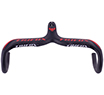





You’ve spent good money on a carbon cockpit upgrade. It looks fast just sitting there—sleek matte finish, clean lines, no visible cables. But after a season of sweaty summer rides, dusty trail days, and relentless sun exposure, will that beautiful finish still look the part? More importantly, will it still perform?
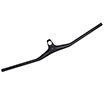
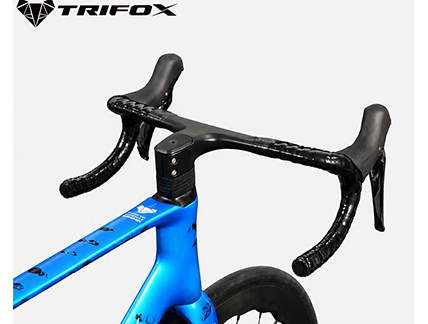
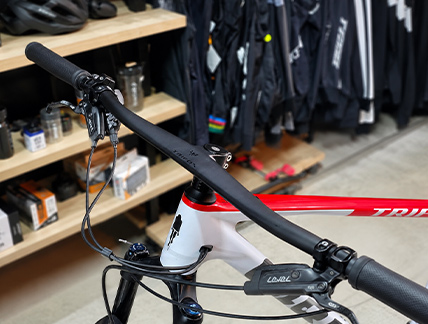
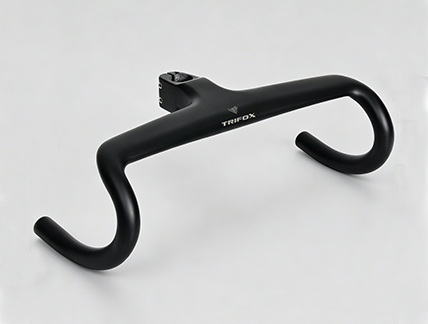
The Trifox RHB100 carbon mtb bar isn’t just another integrated cockpit. Its T800 carbon construction and UD (unidirectional) matte finish are engineered to handle real-world abuse, not just look good in product photos. Let’s take a closer look at how this finish holds up under three common threats: friction from grips, chemical assault from sweat, and UV degradation from the sun.
The Challenge: Three Threats to Every Handlebar Finish
Before diving into the RHB100’s performance, it’s worth understanding what any handlebar finish is up against:
1. Grip Friction and Clamping Pressure – Your grips or bar tape constantly rub against the surface. Over time, this micro-abrasion can wear through clear coats and even damage the underlying resin if the finish isn’t durable.
2. Sweat and Body Chemistry – Sweat contains salts and acids that can corrode alloy components and damage clear coat finishes on carbon. Harsh degreasers and chemical cleaners can also attack the resin structure.
3. UV Radiation – The epoxy resin that binds carbon fibers is sensitive to ultraviolet light. Prolonged sun exposure can degrade unpainted carbon, leading to surface chalking, micro-cracking, and eventual weakening.
A truly durable handlebar needs to resist all three. Here’s how the RHB100 measures up.
UD Matte Finish: Built for Wear Resistance
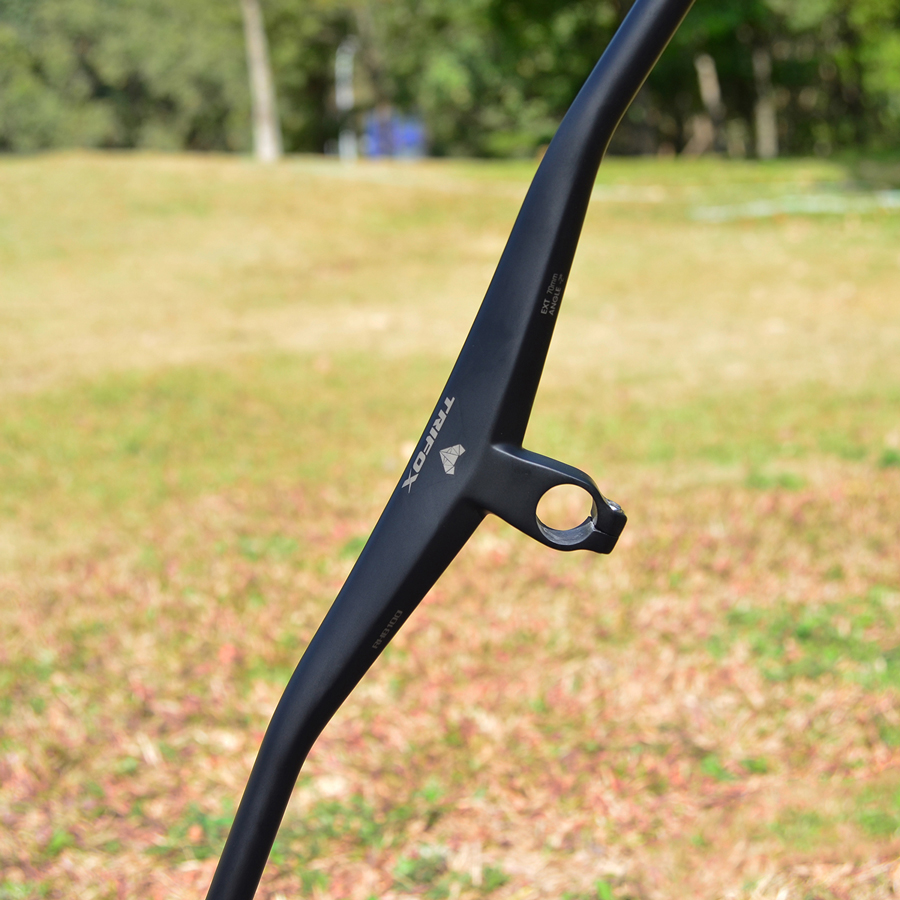
The RHB100 features a UD (unidirectional) matte finish, a surface treatment that’s become the gold standard for high-performance carbon components. Unlike glossy finishes that can show every fingerprint and micro-scratch, the matte UD surface is remarkably resistant to visible wear.
Under the grip area—where friction is highest—the finish holds up exceptionally well. Users who have ridden the RHB100 for extended periods report that the matte surface doesn’t polish or become glossy under grips, a common problem with cheaper carbon finishes. The key is the quality of the clear coat itself; a properly formulated matte clear coat resists abrasion far better than many riders expect.
Trifox specifies a 4–6 Nm torque range for the stem faceplate bolts. This isn’t just about safety—it’s about protecting the finish. Over-tightening can compress the carbon fibers and damage the surface layer. Following the recommended torque ensures the grip area remains uncompromised for years.
Sweat and Chemical Resistance: More Than Skin Deep
One of the RHB100’s standout features is its corrosion resistance. The product page explicitly notes that the T800 carbon fiber material is “resistant to corrosion” with “high temperature tolerance, ensuring longevity”.
But what does that mean in practice? The epoxy resin used in quality carbon components—including the RHB100—is formulated to withstand exposure to sweat, mild cleaners, and environmental moisture. Unlike alloy handlebars that can pit or oxidize over time, carbon simply doesn’t corrode.
That said, maintenance still matters. Sweat that dries on the surface won’t damage the carbon itself, but over many months it can leave mineral deposits or dull the finish if not cleaned periodically. The best practice is simple: wipe down your bars after particularly sweaty rides with a damp cloth and mild bike-safe cleaner. Avoid degreasers or solvents, which can attack the resin.
One user reported riding a Trifox carbon handlebar for over 10,000 km with “no issues at all,” noting that the bars still “look awesome”. That’s real-world evidence of the finish’s durability under sustained use.
UV Protection: Does the Sun Damage the RHB100?
This is where many budget carbon components fall short. Unprotected epoxy resin will degrade under prolonged UV exposure, turning chalky and brittle over time. But the RHB100’s matte finish includes UV-inhibiting additives in the clear coat.
The aerospace-grade clear coat used on the RHB100 serves as a barrier against UV radiation, moisture, and scratches, ensuring the bar maintains both its structural integrity and sleek appearance. While no finish is completely immune to years of direct sun exposure, the RHB100’s coating is formulated to resist UV degradation far better than unpainted or poorly finished carbon.
For riders in particularly sunny climates, a few simple habits extend the life of any carbon component: store your bike indoors or in the shade when possible, and avoid leaving it baking in direct sunlight for hours on end.
The Verdict: A Finish That Earns Its Place
The Trifox RHB100’s UD matte surface isn’t just for show. It’s a functional, durable finish that resists abrasion, shrugs off sweat and moisture, and includes UV protection to prevent sun damage. Combined with the stiffness and vibration damping benefits of the T800 carbon construction, this mountain bike aero bars setup delivers performance that lasts.
Whether you’re grinding up sweaty climbs, ripping through dusty descents, or leaving your bike parked in the sun between rides, the RHB100’s finish is engineered to handle it. Clean it occasionally, torque it correctly, and ride with confidence—this bar is built for the long haul.
2026-04-21
Trifox
SHARE:


Comments
Recent Posts
1
1
1
1
1
1
1
1
1
1
1
1
1
1
1
1

1
1
1
1
1
1
1

1



