



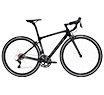
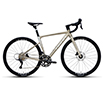
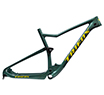
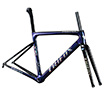
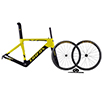
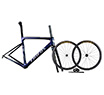
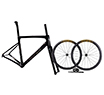





There is a point in every builder’s journey when a box arrives. Inside, wrapped in foam and bubble wrap, is a carbon frame—a thing of sculpted beauty, ready to become someone’s pride. The question that lingers in that moment is: is this one built right? For the Trifox X11, the answer is shaped long before the box is sealed. Behind every one of these road bike frameset clearance creations stands a quality control process that runs from raw carbon fibre to final inspection. Here is how the X11 is built—consistently, reliably, and with the precision that defines a modern chinese carbon fiber frame at its best.
From Prepreg to Autoclave: The Layup Foundation
Every X11 begins as prepreg—carbon fibre fabric pre-impregnated with epoxy resin. The layup process is where the frame’s character starts. Sheets of T800 carbon are cut as plies and layered by hand in orientations that govern stiffness, compliance, and impact resistance. Some layers are placed at 0° to resist pedaling forces; others at 45° or 90° to manage torsional loads through corners. Each frame uses a specific sequence of plies, a recipe refined through finite element analysis to ensure the right balance of rigidity and vibration damping. This is not guesswork. The layup crew trains for weeks before touching a production frame, and each ply is positioned with a margin of error measured in millimeters, verified against laser-cut templates to ensure consistency part to part. After the plies are placed into the mold, the frame enters an autoclave—a pressurized oven where heat (typically 120–130°C) and pressure cure the resin, eliminating voids and bonding the layers into a homogeneous structure. This step is arguably the most critical in carbon frame manufacturing. Incomplete curing or trapped air can compromise strength, so autoclave cycles are logged and monitored for every production batch.
Finding the Invisible Flaws: Non‑Destructive Testing
Once a frame emerges from the autoclave, its true integrity must be verified without damaging it. This is where non-destructive testing enters the process. High-end carbon frame manufacturing employs **ultrasonic testing** to peer inside the carbon. High-frequency sound waves are passed through the laminate; reflections reveal delaminations, voids, or areas where plies failed to bond. This is the same inspection technology used in aerospace composite structures, and it catches flaws invisible to the naked eye. Advanced manufacturers—and those producing frames intended for international markets—also use **X‑ray computed tomography** and **thermography** to detect subsurface anomalies. For a frame like the X11, intended to withstand years of road vibration and occasional road hazards, this level of scrutiny is non‑negotiable.
Visual Inspection and Dimensional Precision
Before any frame leaves the production floor, it receives a thorough visual examination. Inspectors check for surface irregularities—pinholes, dry spots, or uneven clear coat—and also look inside bottom bracket shells and head tubes for signs of cured resin pooling or misaligned plies. The frame is then mounted on a geometry fixture to verify its alignment against the X11’s published specifications: head tube angle, bottom bracket drop, chainstay length, and rear dropout alignment. A frame that is misaligned by even a few millimeters can cause tracking problems and accelerated component wear. The X11 is also designed to carry a 2‑year warranty, a commitment that requires each frame to meet consistent standards across every batch.
Raw Materials and Supply Chain Accountability
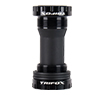
Quality control begins long before the layup table. The X11 is built from **T800 carbon fibre**, a high‑modulus material known for its stiffness‑to‑weight ratio. But raw fibre is only as good as its source. Reputable manufacturers require certificates of analysis for each roll of carbon, verifying fibre density, resin content, and tensile strength. Incoming rolls are staged in climate‑controlled storage to prevent moisture absorption, which can compromise the resin during curing. The bottom bracket shell is machined to accept a **T47 threaded bottom bracket**—a standard chosen for its reliability, but one that requires precise machining to ensure proper bearing alignment. Every machined interface, from the headset cups to the brake mounts, is checked with calibrated gauges.
Real‑World Verification
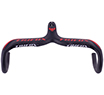
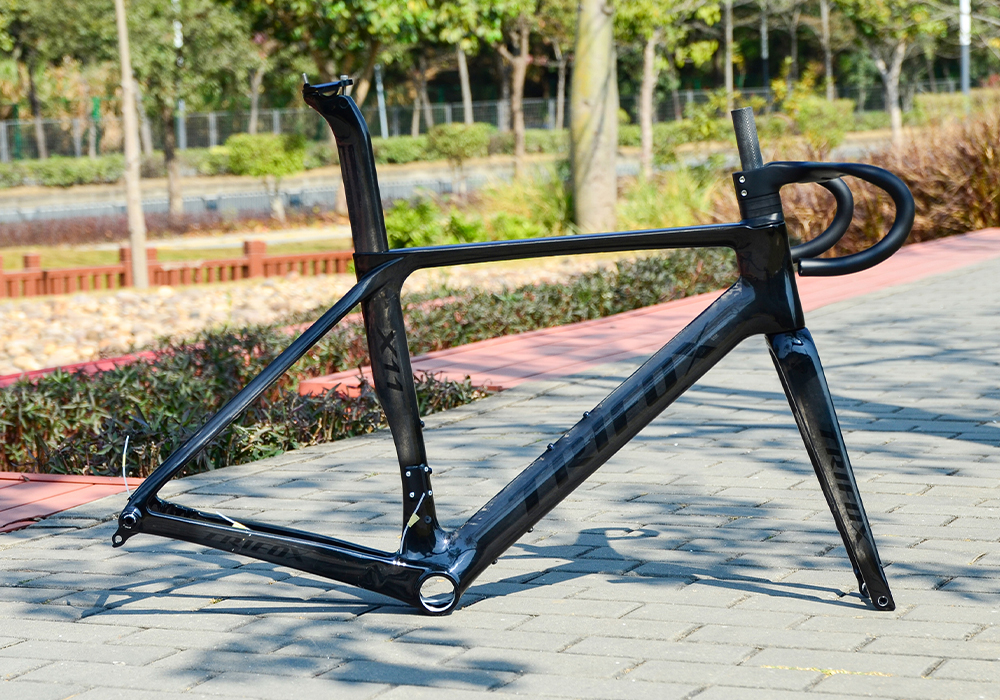
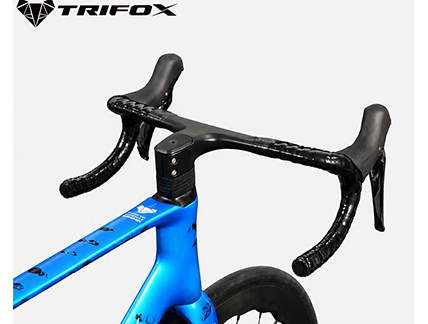
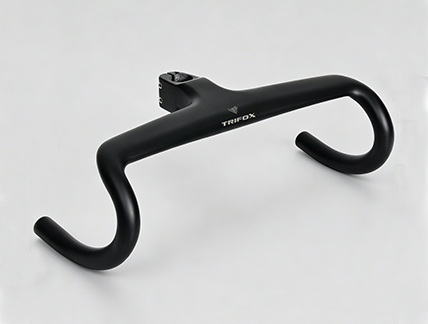
Specifications alone do not build trust; real‑world performance does. Owners of Trifox carbon frames have noted that components fit precisely—bottom brackets thread cleanly, headset bearings seat without creaking, and wheels slot into dropouts without binding. They also point to the importance of the company’s responsiveness, with one reviewing the overall experience as efficient and reliable. While no manufacturing process is perfect, a systematic quality control protocol directly reduces the likelihood of defects and uneven bond lines. The X11’s **full internal cable routing** and integrated carbon handlebar are additional examples of complex features that rely on precise molding to ensure smooth housing paths. These details are not afterthoughts—they are designed and validated through the same quality framework that governs the frame’s structural elements.
Why Consistency Matters to You
Every time you climb out of the saddle, carve a descent, or ride through a rainstorm, you are testing your frame. What you hope not to discover is a variance from one frame to the next—a bottom bracket that creaks, a rear triangle that flexes more on one side, or a dropout that twists under load. Consistency is the quiet virtue of a mature supply chain. A frame that is built the same way, inspected with the same tools, and tested to the same standards, batch after batch, earns the right to be called reliable. The X11 represents that kind of engineering discipline: not flashy, not overstated, but built with the precision that lets a rider stop thinking about the frame and start enjoying the road.
For more details or to explore the X11 further, visit the product page linked below.
Road Bike Frameset Clearance Options
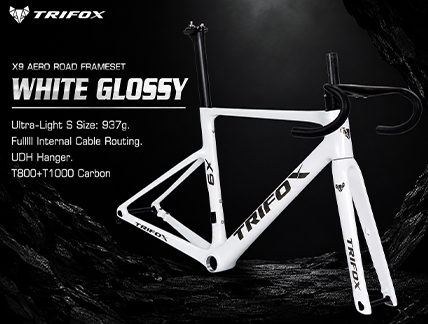
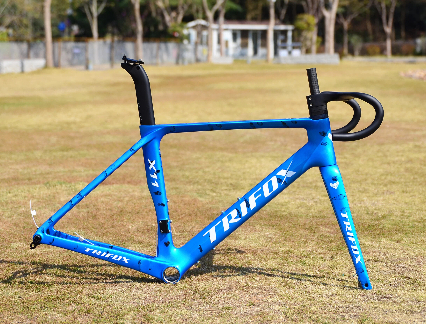
The Trifox X11 is available in multiple sizes to fit a wide range of riders: XS (49cm) for heights 155-168cm, S (52cm) for 165-178cm, M (54cm) for 175-188cm, and L (56cm) for 185-196cm. With a bare frame weight starting at just 965g and a full internal cable routing design, the X11 represents an uncompromising road bike frameset clearance choice for those seeking a high-performance carbon chassis without the premium price tag attached to bigger brand names. Its T47 bottom bracket and disc brake compatibility further ensure this frame remains current as component standards continue to evolve. For riders who have hesitated to invest in a chinese carbon fiber frame, the X11’s documented quality control provides the reassurance that this is a frame built to last.
Choose the X11, and you choose consistency—ride after ride, mile after mile.
2026-04-28
Trifox
SHARE:


Comments
Recent Posts
1
1
1
1
1
1
1
1
1
1
1
1
1
1
1
1

1

1
1

1
1
1
1

1



