








The question haunts every rider considering an upgrade to carbon: "Can carbon handlebars break?" It's a valid concern fueled by stories of catastrophic failure. The direct answer is yes, like any material, carbon fiber has limits and can fail if misused, damaged, or installed incorrectly. However, the more important answer lies in understanding why failures happen and how proper knowledge transforms carbon from a perceived risk into one of the strongest, most reliable components on your bike. Let's separate myth from engineering reality.
The Strength of Carbon: Stiffness, Not Brittleness
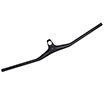
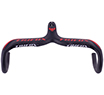
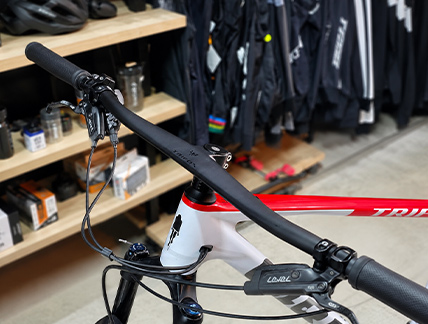
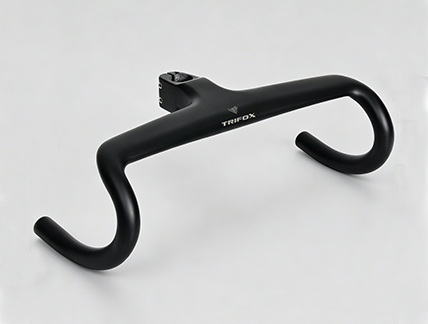
First, it's crucial to understand carbon fiber's nature. A high-quality mtb bicycle handlebar like the Trifox RHB100 is not "brittle glass." It's a composite material—thousands of ultra-strong carbon filaments embedded in a resin matrix. This construction allows it to be engineered to be exceptionally stiff and strong in specific directions (like resisting bending from your weight or steering inputs) while being remarkably lightweight. Its strength-to-weight ratio far surpasses aluminum. The perceived fragility stems from its intolerance to two specific things: impact damage and improper clamping force.
The Primary Risks: Impact and Improper Installation
Most carbon handlebar failures can be traced to a few key causes:
1. Impact Damage (The Hidden Threat): A crash or even a simple tip-over can cause a compromising impact. Unlike aluminum which might dent, carbon can suffer internal delamination—hidden cracks or separations between the carbon layers. This damage severely weakens the structure, and a bar with internal damage can fail later under normal riding loads. Always inspect your bars thoroughly after any impact.
2. Over-Torquing (The Silent Killer): This is the #1 installation error. Carbon does not yield like metal. Using the same "feel" or tools you would on an aluminum bar is dangerous. Exceeding the manufacturer's specified torque rating (typically 4-6 Nm for faceplate bolts) can crush the carbon fibers, creating stress risers that lead to cracks. A calibrated torque wrench is non-negotiable for installing carbon components.
3. Under-Torquing & Slippage: Conversely, insufficient torque can allow the bar to slip in the stem. A rider may then overtighten in a panic, leading to damage. It can also create localized stress points from movement.
4. Using the Wrong Paste: Never use grease on carbon clamp interfaces. Always use a carbon assembly paste. This specialized compound increases friction without damaging the fibers, allowing you to achieve a secure hold at the correct, lower torque.

Safe Practices for a Lifetime of Performance
Following a few golden rules ensures your mtb cycle handlebar remains safe and reliable:
* Torque, Torque, Torque: Use a quality torque wrench on every bolt. Follow the manufacturer's specs precisely (check the RHB100's documentation).
* Inspect Religiously: Before every ride, visually inspect the bar, especially around the clamp area and any potential impact points. Look for cracks, chips, or deep scratches. If in doubt, replace it.
* Handle with Care: Avoid clamping the bar in a vise or using levering tools on it during bike work. Protect it from impacts in transit or storage.
* Use Compatible Components: Ensure your stem faceplate is smooth and clean, without any sharp edges or burrs that could score the carbon surface.
Understanding the Limits and Riding with Confidence
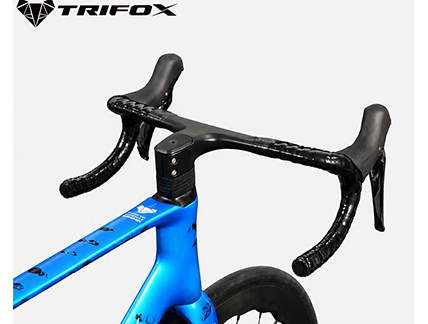
Carbon handlebars are designed to withstand the enormous forces of riding. They are tested to standards far exceeding normal use. The Trifox RHB100, with its integrated design and monocoque carbon construction, is engineered for this purpose. The risk emerges not from the material itself, but from misuse.
By respecting the material—investing in a torque wrench, using carbon paste, and performing regular inspections—you mitigate virtually all the risk. Carbon's reward is a stiffer, more responsive, and lighter front end that improves control and reduces fatigue. The goal isn't to fear carbon, but to understand and respect its unique requirements. When treated correctly, a carbon handlebar is not a liability; it's a high-performance asset you can trust for countless miles of confident riding.
2026-01-29
Trifox
SHARE:


Comments
Recent Posts
1
1
1
1
1
1
1
1
1
1
1
1
1
1
1
1
1
1
1
1
1
1
1
1



