









Upgrading your cockpit is one of the most effective ways to transform how your road bike feels beneath you. When it comes to choosing between carbon fiber and aluminum handlebars, the debate has been ongoing for years—and for good reason. Both materials have passionate advocates, and the “right” answer depends on your riding style, budget, and performance priorities. So where do the weight savings really land, and what does that extra cost actually buy you? Let’s break it down.
The Weight Reality: How Much Lighter Is Carbon?
Let’s cut straight to the numbers. On average, carbon handlebars weigh about 20–40% less than their aluminum counterparts. That translates to a typical aluminum handlebar falling in the 300–400 gram range, while a carbon bar often comes in between 200–300 grams. For a real-world comparison, many brands show a weight saving of around 100 to 150 grams when switching from aluminum to carbon.
Does that sound small? Consider this: saving 100 grams at the handlebars—the highest point on your bike—has a more noticeable effect on handling and climbing feel than saving the same weight from a bottom bracket or wheelset. Every gram you remove from the front end sharpens steering response and makes the bike feel more alive when you pull out of the saddle. For competitive cyclists, that difference matters. For the rest of us? It depends on how much you value that “lighter in the hands” sensation.
Beyond Weight: Vibration Damping and Ride Quality
Weight savings are just the beginning. Where carbon truly shines is in its ability to absorb high-frequency road vibrations—the constant “buzz” that gradually fatigues your hands, wrists, and shoulders over long rides. Carbon fiber can be engineered through precise fiber lay-ups to strike an optimal balance between stiffness and compliance, meaning you get a bar that’s stiff enough for precise cornering yet forgiving enough to smooth out rough pavement.
Aluminum, by contrast, transmits more road chatter directly into your hands. While modern alloy bars have improved significantly, they still lack carbon’s natural vibration-damping properties. For endurance cyclists spending hours in the saddle, that extra compliance translates directly to less fatigue and more enjoyment.
Fatigue Life and Durability: The Surprising Truth
Here’s something that might surprise you: carbon handlebars actually have a superior fatigue life compared to aluminum. Lab testing has documented that carbon’s fatigue resistance is roughly five times better than aluminum’s. Aluminum and other metals don’t exhibit an endurance limit—meaning even small repeated loads will eventually cause failure after enough cycles. Carbon, on the other hand, can withstand millions of stress cycles without degradation, provided it remains undamaged.
That said, carbon’s Achilles’ heel is impact damage. A hard crash or an over-torqued stem clamp can compromise a carbon bar in ways that aren’t always visible to the naked eye. Aluminum tends to bend or show obvious deformation before failing, giving you a clear warning sign. If you’re a rider who crashes frequently or prefers the peace of mind that comes with a more impact-resistant material, aluminum remains a compelling choice.
The Cost Equation: What You’re Paying For
This is where the rubber meets the road—or rather, where your wallet meets the handlebars. Carbon bars typically range from $150 to $500, while quality aluminum bars can be found for $30 to $150. That’s a significant premium, and it’s fair to ask whether the performance benefits justify the price.
For competitive racers and serious enthusiasts who spend countless hours training, the answer is often yes. The combination of weight savings, vibration damping, and fatigue resistance creates a tangible performance advantage. But for recreational riders or those on a tighter budget, modern aluminum handlebars offer excellent value without sacrificing too much. Many pro teams actually prefer aluminum bars for racing—not because carbon is unsafe, but because aluminum offers a better cost-to-performance ratio when you’re equipping an entire fleet of bikes.
What About Modern Aluminum?
It’s worth noting that aluminum handlebars have come a long way. Advances in alloy manufacturing now allow brands to produce bars that are lighter, stiffer, and even more aerodynamic than ever before. You can now obtain many of the aerodynamic benefits that were previously only possible with carbon, using an alloy bar. For road and gravel racers on a budget, this means high-performance cockpits are more accessible than ever.
Where Carbon Still Rules
Despite aluminum’s progress, carbon remains the undisputed champion in three key areas: aerodynamic shaping, fine-tuned compliance, and absolute minimum weight. Carbon can be molded into complex aero profiles that would be impossible—or prohibitively expensive—to achieve with metal. This is especially relevant for aero-integrated designs, where every watt of drag matters.
If you’re looking to shave every possible gram while maximizing aerodynamic efficiency, carbon is the only answer. For cyclists who prioritize a refined, fatigue-reducing ride feel on long days in the saddle, carbon’s vibration-damping properties are worth the premium.
Meet the DHB1000: A New Standard in Carbon Road Bars
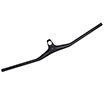
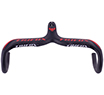
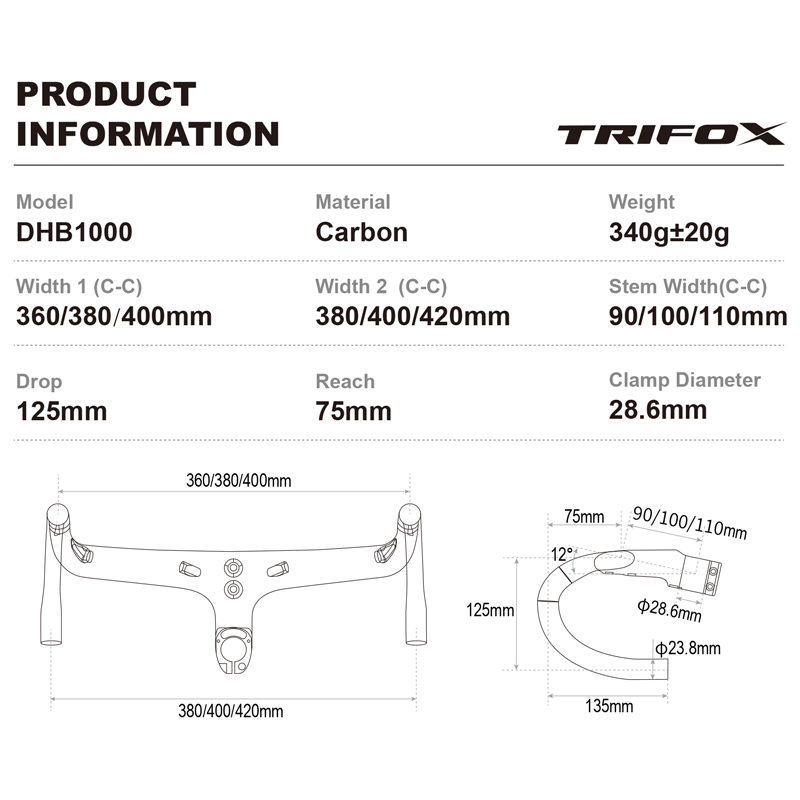
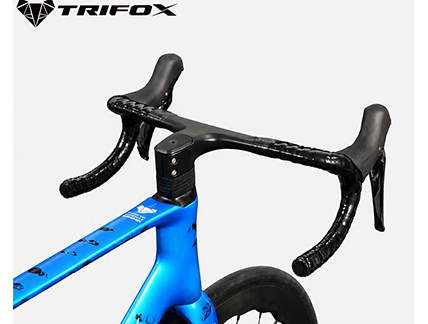
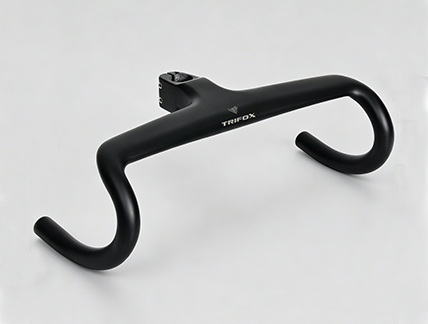
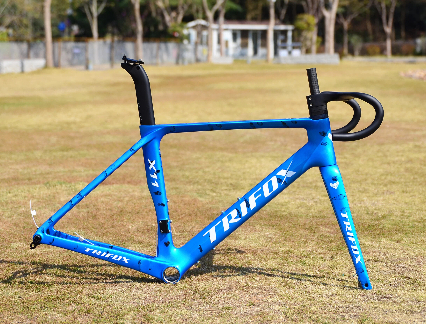
For riders ready to make the leap to carbon, the latest generation of integrated bars offers benefits that go far beyond simple weight reduction. The carbon road bars from Trifox represent everything carbon does best—lightweight construction, impeccable vibration damping, and a fully internal cable routing system that cleans up your cockpit and reduces aerodynamic drag. As an integrated one-piece design, it eliminates the traditional stem and faceplate interface, resulting in a stiffer, more responsive front end that transmits your inputs directly to the wheel. And with a sleek aero profile, every watt you produce goes forward, not sideways.
The Verdict
So, where do the weight savings—and the cost—really land? Carbon handlebars will save you roughly 100–150 grams compared to a quality aluminum bar, while offering superior vibration damping and exceptional fatigue resistance. You’ll pay a premium for those benefits, typically 2–4 times the cost of an equivalent alloy bar.
The choice comes down to your priorities: If you’re chasing every performance advantage, spending hours in the saddle, or simply love the feel of a premium cockpit, carbon handlebars road are worth every penny. If durability on a budget is your main concern, modern aluminum still delivers impressive performance at a fraction of the price. Either way, understanding where the real differences lie will help you make the right choice for your riding.
2026-05-15
Trifox
SHARE:


Comments
Recent Posts
1
1
1
1

1

1
1
1
1
1
1
1
1
1

1
1

1

1
1

1
1
1
1

1



