


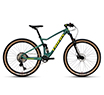

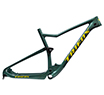
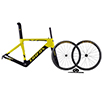
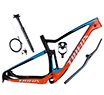
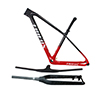
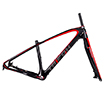





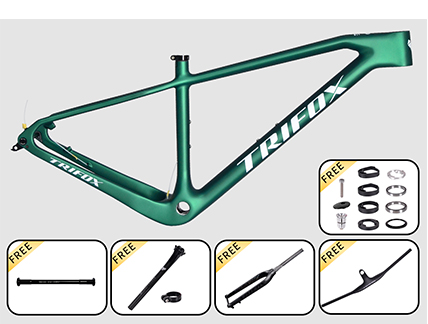
Tire clearance is one of those numbers every frame manufacturer lists in their spec sheet — and one of those numbers that very few riders bother to actually test before the first muddy race day. The Trifox TRAIL II PRO carbon frameset lists a clean, confident 29 x 2.25″ as its official maximum tire size. But spec sheets don‘t account for real-world mud, clay, sticky loam, or the subtle way a tire’s profile expands at lower pressures. So we took this frame out of the catalog and put it into the conditions that matter: wet, cloggy mess.
The Official Number vs The Muddy Reality
On paper, 2.25 inches is respectable. That width sits right in the modern XC and light trail sweet spot, offering enough volume for traction and comfort while still rolling fast enough to hang with the race crowd. The TRAIL II PRO’s T800 carbon construction and sculpted chainstays provide a claimed maximum of 29 x 2.25″ clearance — no ambiguity, just a clean number on a spec sheet.
But the trails don‘t read spec sheets. Wet clay and decaying leaves don’t measure themselves against manufacturer tolerances before accumulating. When we pushed this frame into actual mud, a more nuanced picture emerged.
The Dry Condition Overachiever
Several owners have reported that in clean, dry conditions, the TRAIL II PRO can accommodate a 2.3″ tire without rubbing. The extra 0.05 inches (about 1.3 mm) of width is possible thanks to the frame’s generous chainstay and seatstay shaping. One reviewer even noted 74 mm of clearance between the chainstays — enough space that they planned to try a 2.4″ tire for dry, fast summer racing. That’s not just clearance; that’s versatility for riders who change tires by season.
Where Mud Changes the Equation
The key word, however, is clean.
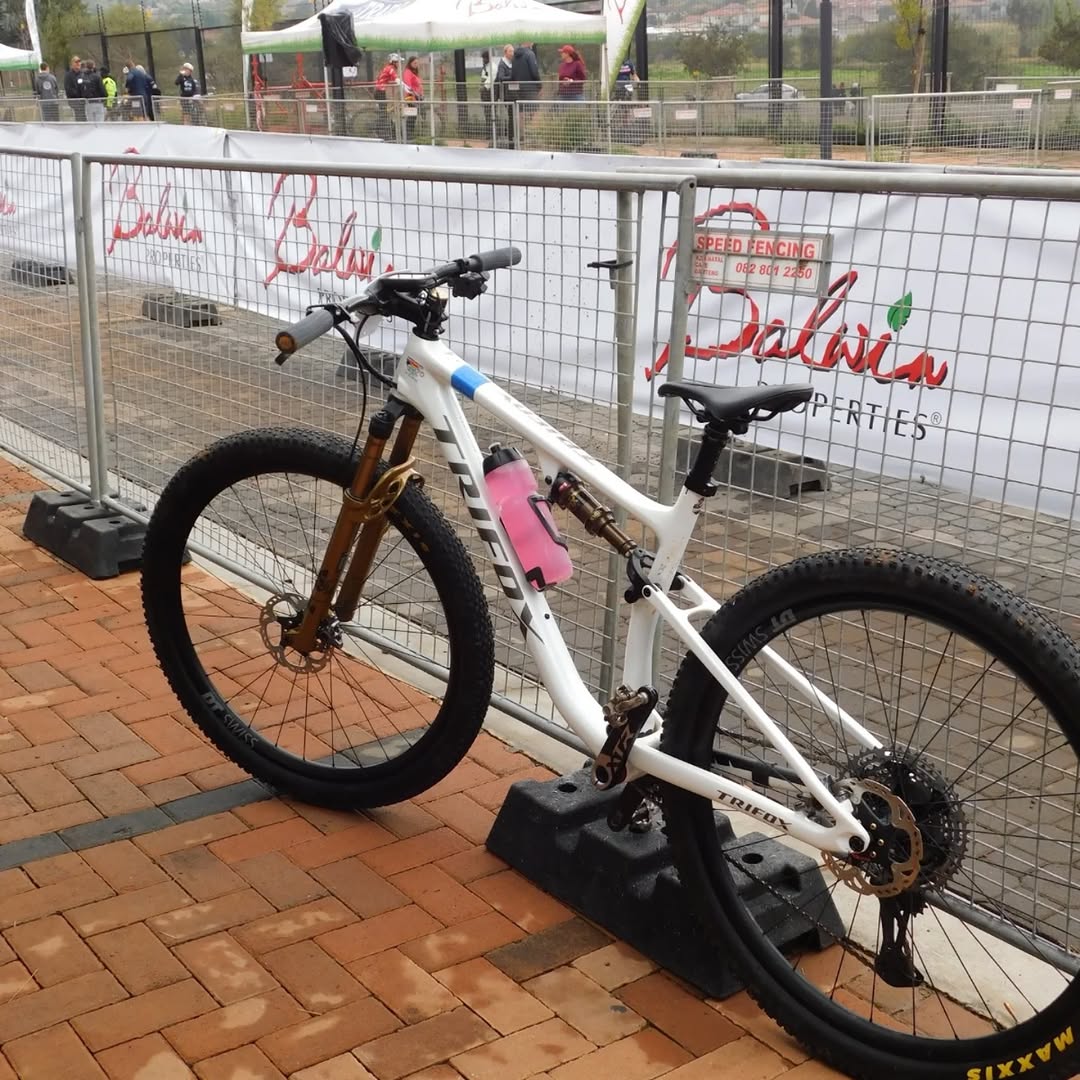
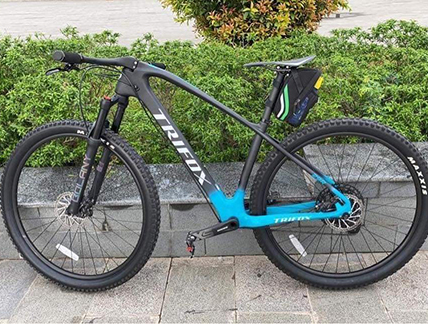
When mud, clay, or sticky loam accumulates, the same 2.3″ tire that clears perfectly in dry conditions can start contacting the frame, especially near the seat tube bridge or the chainstay yoke. Mud doesn‘t compress. It builds. And with heavy, claggy conditions, even the official 2.25″ tire will demand caution. The TRAIL II PRO’s mud clearance is adequate for race‑day slop, but it’s not designed for deep, sticky clay expeditions.
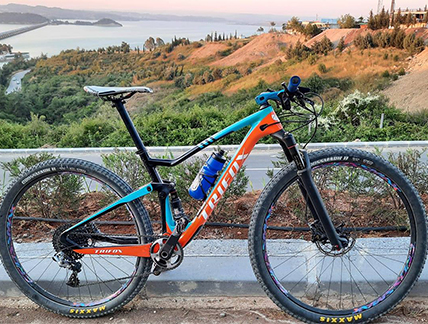
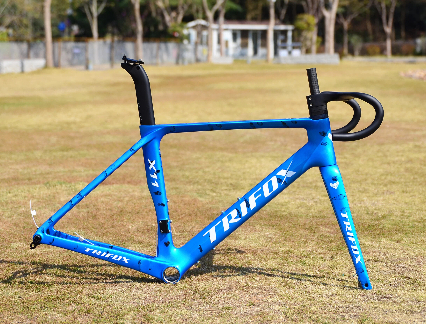
This isn‘t a design flaw — it’s a design philosophy. The TRAIL II PRO is an XC full-suspension frame first. Its geometry prioritizes efficient pedaling, short chainstays (437–438mm), and a 67.5° head angle for planted but responsive handling. Mud clearance is a real consideration; the relatively wide chainstay bridge and sculpted seat tube help, and the UDH dropout with thru-axle keeps the wheel precisely aligned even under load. But if your local trails turn into peanut butter for half the year, you‘ll want to stick to the official 2.25″ maximum and run channel‑clearing tread patterns that self‑eject mud rather than packing it tight.
Why Real-World Testing Matters
For riders considering a best carbon frameset under 1000, the numbers on the spec sheet only tell part of the story. Yes, the TRAIL II PRO is built from T800 carbon, weighs 1660–1700g depending on size, and features Boost 148x12mm spacing, internal cable routing, and a threaded BB68. All of that is impressive on paper.
But the real value reveals itself when you’re three hours into a wet race, lapping through a mud bog, and your wheels keep spinning without the dreaded drag of tires rubbing against the frame. That’s when well-engineered clearance matters.
If you’re a taller rider running a bike frame 17 inch (the 17″ option fits riders 160–175 cm with a 430 mm seat tube), you’ll appreciate that the clearance scales with the frame size — the geometry is proportional, and the chainstay length remains consistent across sizes, so smaller frames don’t lose clearance to accommodate taller riders.
The Balanced Verdict
The Trifox TRAIL II PRO clears 2.25″ tires in all conditions without drama. In dry, dusty conditions or summer race days, you may be able to sneak a 2.3″ tire for extra grip and comfort. But for truly wet, cloggy trails — especially those that feature deep clay or sticky organic loam — the official 2.25″ maximum remains the safe and smart bet.
The spec sheet gives you a number. Wet trail testing gives you confidence. The TRAIL II PRO delivers honest clearance that matches its listed spec, with a little extra breathing room for dry days. That’s the kind of transparency that turns a best carbon frameset under 1000 into a frame you actually trust when the sky opens up and the mud starts flying.
2026-05-09
Trifox
SHARE:


Comments
Recent Posts
1
1
1
1
1
1
1
1
1
1
1
1
1
1
1
1

1
1
1

1
1
1
1

1



