


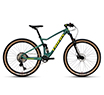
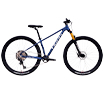

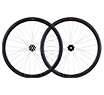
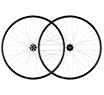





For nearly two decades, the 26-inch wheel was the undisputed king of the mountain bike world. It was the standard that defined the sport from its gritty origins in the late 1970s through the suspension revolution of the 1990s. Then came the 29er, with its monster-truck-like ability to roll over obstacles, and the 27.5-incher, touted as the perfect middle ground. Today, you rarely see a new high‑end adult trail bike on 26-inch hoops. So, is the 26er extinct? Has the smaller wheel been completely eclipsed by its larger rivals? The answer, surprisingly, is a definitive no. The 26-inch mountain bike is not just surviving; it is thriving in specific, crucial niches where its unique characteristics make it the undisputed champion.
The Agility Advantage: Why Small Wheels Excel in the Tech
While a 29er excels at carrying speed over open, rolling terrain, the 26-inch wheel remains the master of low‑speed, high‑precision handling. In tight, twisting singletrack, through rock gardens, and up steep, technical switchbacks, the smaller wheel is simply easier to muscle around. Riders who still keep a 26er in their stable often cite its precision for slow cornering and slow tech sections is far superior to larger wheels. The bike feels more like an extension of your body, allowing you to dart between obstacles and make micro-adjustments to your line without the feeling of turning a ship. For anyone whose local trails are defined by dense forests and tight turns, this isn‘t a minor benefit—it's a game-changer.
Quicker Acceleration and a “Playful” Feel
Physics is simple: less mass is easier to move. A 26-inch wheel has a smaller circumference and is generally lighter, resulting in significantly faster acceleration. When you stomp on the pedals coming out of a corner or surge up a punchy climb, the bike responds immediately. Larger wheels require more energy to spin up to speed. This low rotational mass contributes to a fun, poppy, and lively feel that many experienced riders say is missing from the larger, more planted wheel sizes. As one rider perfectly described, they have a “fun feeling that is not present on bigger wheels”. If you value a bike that feels like a BMX bike on steroids, ready to pop off every root and manual through every dip, the 26-inch wheel delivers a joy that spec sheets can‘t measure.
The Youth, Dirt Jump, and Budget Stronghold
Major manufacturers may have shifted their focus to 27.5 and 29-inch bikes, but the 26-inch platform has never disappeared—it simply found its true home. The most significant stronghold is the youth market. A 26-inch mountain bike provides the perfect stepping stone for kids and teenagers who have outgrown 24-inch wheels but aren‘t ready for the bulk of a full-sized adult 29er. The compact frame and smaller wheels offer significantly more agility and control for younger, lighter riders, helping them develop skills without being overwhelmed by a massive bike. Premium brands like Marin, Cube, and Merida continue to produce purpose-built 26-inch youth bikes that feature real suspension, powerful disc brakes, and progressive geometry. Beyond the trails, 26-inch wheels remain the standard for the dirt jump and slopestyle world, where maneuverability in the air is paramount. And for the cost-conscious rider or commuter, the abundance of used 26-inch bikes and readily available replacement parts makes this wheel size a supremely economical choice.
Meet the Modern 26er: The Trifox Ventura 26 Path
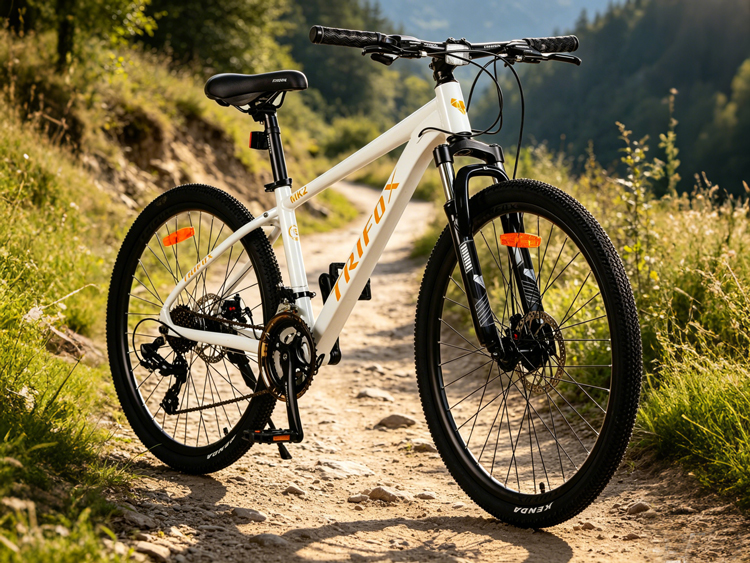
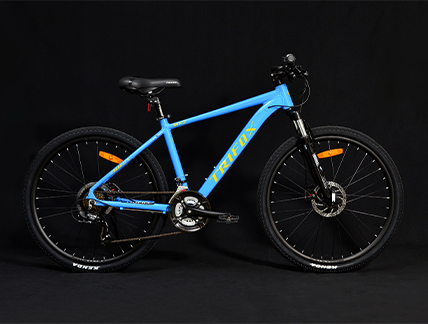
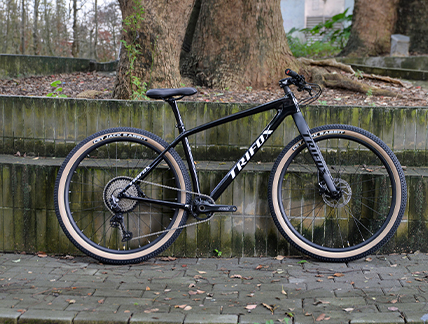
You don‘t have to choose between classic 26-inch agility and modern mountain bike features. The Trifox Ventura 26 Path is a shining example of the modern 26er, proving that this wheel size is still relevant for new riders, smaller adults, and anyone seeking a lightweight, reliable hardtail. It combines a sleek AL6061 aluminum frame with the sharp handling of 26-inch wheels, a full Shimano Tourney 21‑speed drivetrain, and the stopping power of mechanical disc brakes. For those seeking a mtb 26 inch that blends timeless maneuverability with modern specs, the Ventura 26 Path is the answer. For budget-conscious riders, it’s also one of the lightest mountain bike options at its price point. Weighing in at a manageable 14kg, this bike is light enough to throw around but tough enough to handle the rigors of the trail, making it the perfect first serious bike for a teenager or a fun, flickable toy for a smaller adult.
The Verdict: Not Obsolete, Just Specialized
Is the 26-inch mountain bike dead? Absolutely not. It has simply vacated the position of the all‑around standard it once held and moved into a series of specialized roles where it is still, objectively, the best tool for the job. It is the king of agility, the champion of the youth trail, the weapon of choice for the dirt jumper, and the smart budget pick. In a world that keeps getting bigger and longer, the 26er reminds us that smaller wheels offer a kind of playful, responsive fun that no amount of stability can replace. Whether you are a teenager looking for your first real trail bike, a smaller adult wanting a confidence-inspiring fit, or a seasoned veteran looking for a lively hardtail to add to the garage, the 26-inch mountain bike is still very much in the game.
2026-06-15
Trifox
SHARE:


Comments
Recent Posts
1
1
1
1
1
1
1
1
1
1
1
1
1
1
1
1
1
1
1
1
1
1
1

1



