








On the trails, you will notice that most mountain bikers maintain a slightly forward-leaning posture. Many beginners may wonder: why can't they sit upright like on a city bike? Is this forward lean really necessary?
In fact, the forward-leaning position in mountain biking is not just for looking "pro" – it is an efficient posture developed through years of riding experience and evolving frame geometry.
Why does mountain biking require a forward lean?
The main purpose of leaning forward is to optimise the rider's centre of gravity.
When climbing, a forward position shifts more weight onto the front wheel, increasing front‑tyre traction and preventing the wheel from lifting as the gradient steepens.
On fast descents or rough terrain, a proper forward lean also helps the rider maintain control, allowing the body to act as part of the suspension system.
This posture brings:
- Better front‑wheel control
- More stable steering response
- More efficient pedalling output
- Improved handling on technical sections
Is the forward-leaning position suitable for all mountain biking?
Although a forward lean has many advantages, it does not mean "the lower, the better".
If the handlebar is too low, it may cause:
- Increased wrist pressure
- Shoulder and back fatigue
- Reduced comfort on long rides
That is why modern mountain bikes place increasing emphasis on ergonomics – using appropriate bar width, rise, and frame geometry to strike a balance between speed and comfort.
The upgrade experience brought by a carbon MTB handlebar
Besides riding posture, the handlebar itself is a critical component that affects handling.
Compared with traditional aluminium bars, carbon handlebars offer better vibration damping, filtering out high‑frequency buzz from gravel and trail chatter, which improves comfort over long distances.
Many XC and trail riders opt for lightweight wide bars, such as 800mm carbon mtb bars, because a wider bar provides greater leverage and control, especially during high‑speed cornering and on rough terrain.
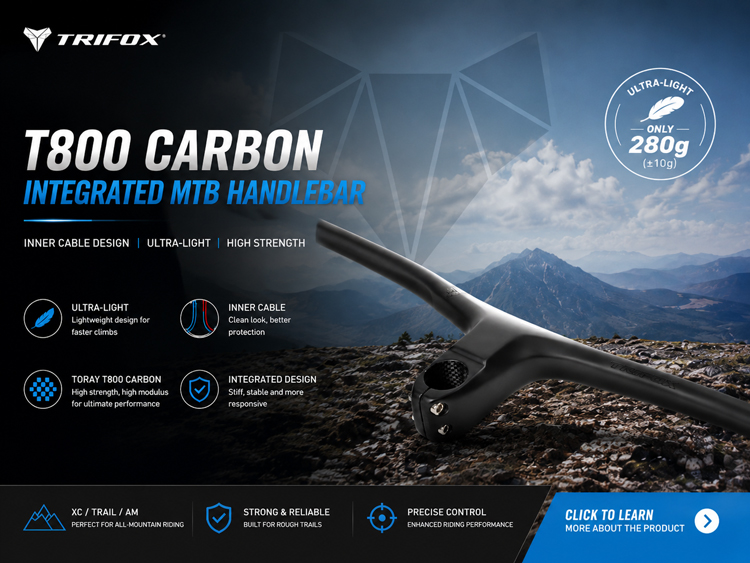
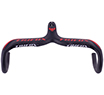
TRIFOX RHB600: Lightweight integrated carbon MTB handlebar
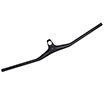
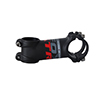
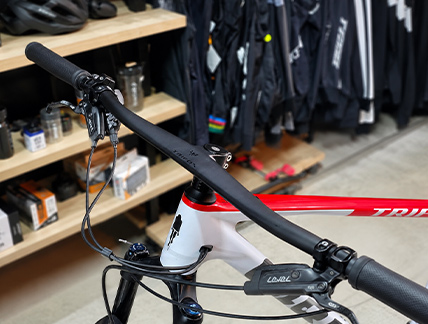
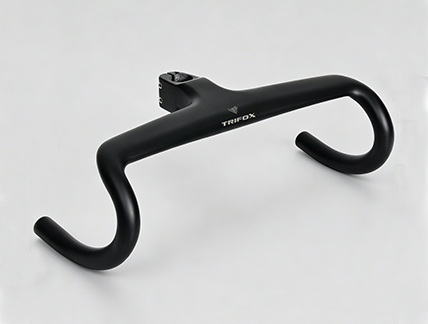
If you are upgrading your mountain bike's cockpit, take a look at the TRIFOX Ultra Light Integrated Full Inner Mountain Bike Handlebar RHB600.
The RHB600 features a carbon fibre integrated design that combines the handlebar and stem into one piece, reducing weight while improving overall stiffness and steering response.
Key features include:
- Ultra‑light carbon construction
- Integrated one‑piece design
- Full internal cable routing for a clean, sleek look
- Wide profile for enhanced handling stability
- Excellent vibration damping for greater ride comfort
For riders chasing lightweight XC builds or high‑performance Trail setups, this handlebar delivers a noticeable upgrade in feel and performance.
Are carbon bars worth it MTB?
Many riders ask: are carbon bars worth it for mountain biking?
The answer depends on your riding needs.
If you only ride occasionally for leisure, aluminium bars are perfectly adequate.
But if you frequently ride XC, Trail, or long‑distance off‑road, the weight savings, vibration damping, and improved handling that carbon bars offer often make them a worthwhile investment.
Conclusion
The forward‑leaning position in mountain biking is not a habit – it is an optimised riding posture. It helps riders improve pedalling efficiency, enhance bike control, and adapt to challenging terrain.
At the same time, choosing the right handlebar is equally important. A lightweight carbon model like the TRIFOX RHB600 Carbon MTB Handlebar further elevates handling feel and ride comfort.
Whether you are a speed‑focused XC rider or a trail enthusiast who loves technical singletrack, a proper riding posture combined with high‑performance components will make every ride more stable and efficient.
2026-07-27
Trifox
SHARE:


Comments
Recent Posts
1
1
1
1
1
1
1
1
1
1
1
1
1
1
1
1
1
1
1
1
1
1
1

1



