










You’ve spent weeks researching, comparing stack heights and reach numbers, and finally settled on the perfect mtb handle bar rise. Then comes the moment of truth — you pull the old cockpit off, pick up a brake hose, and realize the fitting is 2mm too wide to slide through the handlebar’s entry port. The dream pauses. Integrated bars have revolutionized how mountain bike cockpits look and feel, but their neat, cable‑free exteriors hide a critical question: will your hoses and housings actually fit inside? Before you buy, modify, or replace a whole groupset, here’s how to check compatibility — with the RHB600 as your reference.
Know Your Bar: Internal vs. External Routing Options
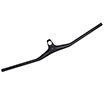
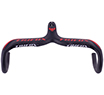
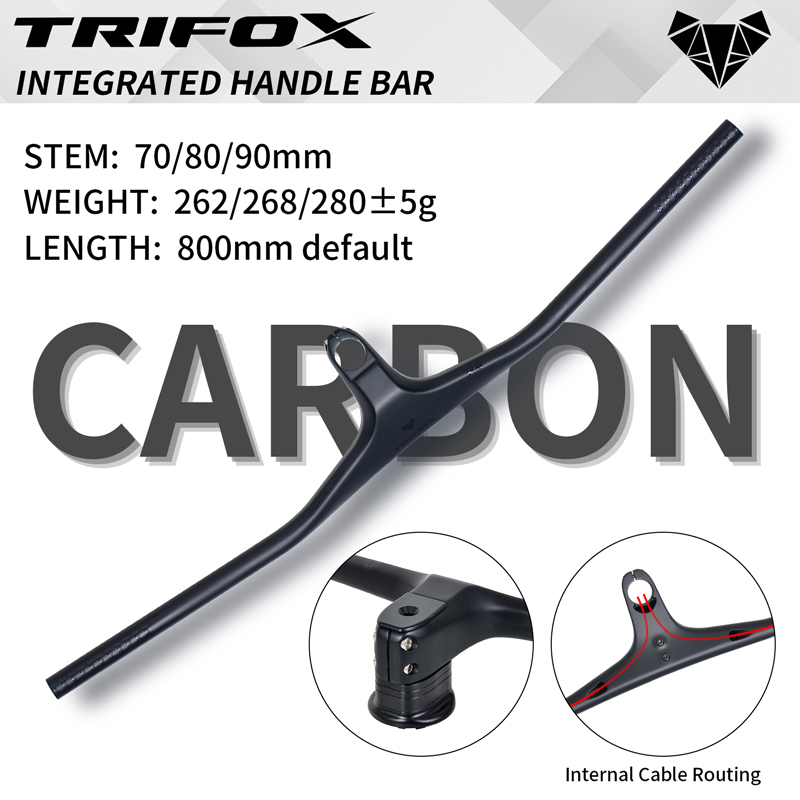
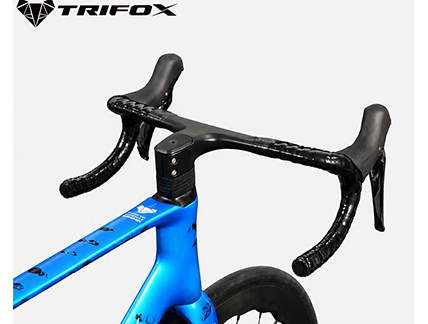
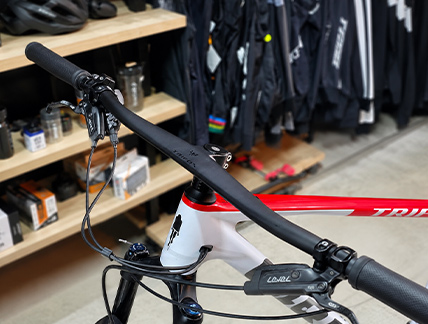
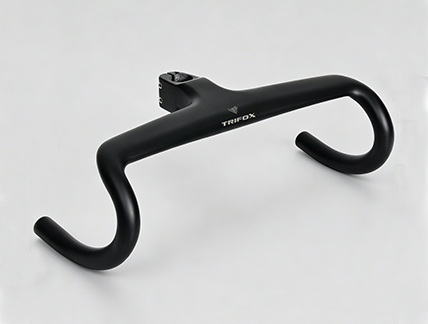
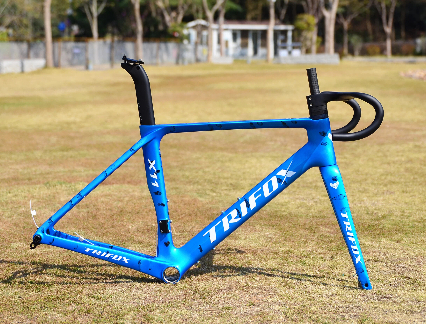
The Trifox RHB600 is available in two distinct routing configurations. The 52mm spacer version is designed for fully internal cable routing — your brake hoses and shifter cables enter the bar at the stem and travel completely inside the carbon structure, exiting at the lever mounting points. This is the cleanest look but the most demanding setup. The 42mm version uses semi‑external routing: cables run along the outside of the bar, tucked under a cover, which simplifies installation and maintenance while still tidying up the front of the bike. Knowing which version you need is step one.
Once you‘ve chosen your routing style, the real compatibility check begins. Hydraulic brake hoses are often the tightest fit. Shimano’s BH‑90 hose, for example, requires an 11.2mm‑wide connector at the lever end, while the BH‑59 uses a 13.2mm fitting — that extra 2mm can mean the difference between passing through or getting stuck. The RHB600’s internal channels are designed to accept most modern hydraulic hoses, but if you’re running SRAM’s Stealth‑a‑matic or Magura’s thicker fittings, you must measure your ferrule and olive outer diameter before installation. Some riders have found that switching to the lower‑profile Shimano OT‑RS900 housing provides a more flexible and slimmer profile, easing the routing process. If your hose fitting is too wide, you may need to replace the entire front hose with one that has a narrower connector — a task best left to a shop if you lack a bleed kit and the right barbs.
Mechanical Shifter Cables: Thinner Isn’t Always Easier
Mechanical shifting cables pose a different challenge. While a bare inner cable slides easily, it’s the compressionless shift housing that determines fit. Standard 5mm shift housing (common on older groups) can be a tight squeeze through integrated bar channels that expect 4mm housing. The RHB600’s internal diameter is engineered to accommodate both, but if you encounter resistance, swapping to Jagwire’s 4mm Pro or Elite Link housing (which uses segmented aluminum links) can dramatically reduce friction and improve bend radius while fitting through narrower ports. Before cutting any housing, run a test pull: feed the housing through the bar without the inner cable and ensure it moves freely from the stem opening to the lever exit. Any binding now will worsen under real‑world steering loads.
Dropper Post and Di2 Wiring: Hidden Clearance Issues
Modern cockpits often carry more than just brake hoses. If you run a dropper post, the remote cable housing follows the same path as your shifter cables — and must share the internal space. The RHB600’s internal channels are designed with enough capacity for one hose and one housing, but trying to squeeze two full‑size compressionless housings plus a hydraulic hose through the same bar can create friction that makes steering feel heavy. For heavy cable loads, consider using a wireless dropper (Reverb AXS, BikeYoke) or routing one of the cables externally through the 42mm spacer version. Di2 or AXS wiring (e‑tube wires) is much thinner and rarely causes issues, but the connectors themselves (e.g., EW‑SD50) are bulkier than the wire — feed the wire through first, then attach the connector, not the other way around.
Bend Radius and Lever Position: The Hidden Fit Factor
Even if your cables fit through the bar, they still need to exit cleanly at the levers. The RHB600’s 7° backsweep and 5° rise create a natural curve that most hoses can follow, but pushing a hose too tightly against a sharp internal edge can lead to long‑term chafing. Always inspect the exit ports for roughness and consider adding a small piece of adhesive‑backed foam or rubber lining where the hose makes contact. A hose that passes a static fit test can still fail after 100 miles of steering back and forth, as the constant micro‑movement saws through the outer layer. One forum user described discovering frayed cables at the point where housing exits the stem — a failure that only appears after hours of riding, not during initial assembly. To avoid this, leave a small loop of housing inside the bar rather than pulling everything taut; slack is your friend when it comes to internal routing longevity.
Tools and Techniques for a Smooth Install
If you‘ve confirmed compatibility but are still nervous, two tools can save you hours of frustration. A cable routing kit (a flexible guide wire with magnetic tips) allows you to pull hoses through blind channels without fishing blindly. And a 5mm or 4mm internal routing liner — essentially a thin plastic tube you slide into the bar first — creates a smooth pathway that you then pull your actual hose through. For extra insurance, wrap the end of your hose in a thin layer of electrical tape to prevent the end from snagging on internal carbon edges. And whatever you do, do not grease the hose: lubricant will attract dirt and eventually gum up the internal channel, making future cable swaps miserable. If you need slip, use a few drops of isopropyl alcohol — it evaporates cleanly.
Making the Final Call
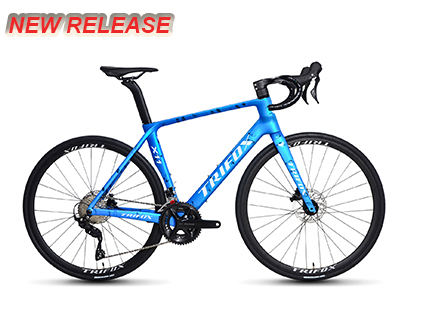
Integrated bars like the RHB600 aren‘t just about looks — they’re about eliminating cable clutter, improving aero, and creating a cockpit that feels like one solid piece of equipment. But that clean profile demands careful preparation. By verifying your hose and housing diameters, using the correct routing version, and investing in a few cheap routing aids, you can avoid the disappointment of discovering incompatibility halfway through a build. The RHB600 is part of a new generation of carbon aero handlebars that make fully integrated cockpits accessible — but only if your cables are ready to take the ride with you.
2026-06-09
Trifox
SHARE:


Comments
Recent Posts
1
1
1
1
1
1
1
1
1
1
1
1
1
1
1
1

1
1
1

1
1
1
1

1



