


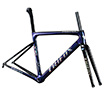
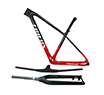
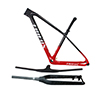
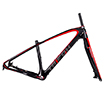





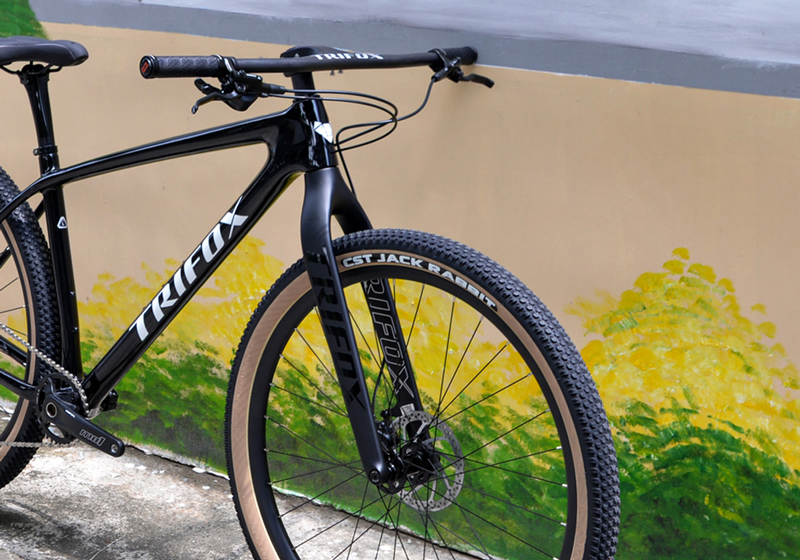
Upgrading to a carbon rigid fork is one of the most transformative changes you can make to a hardtail mountain bike. A quality rigid fork sharpens steering, drops significant front-end weight, and replaces the “buzzy” feel of aluminum with a smoother, more connected ride. But not all carbon forks are built the same. To choose the best one for your bike and riding style, you need to look beyond the carbon weave and evaluate key specs: weight, axle standard, steerer type, tire clearance, and intended use. Here’s a practical guide, featuring the Trifox TMK200 as a benchmark 29er carbon fiber fork. trails are defined by dense forests and tight turns, this isn‘t a minor benefit—it's a game-changer.
Why Go Carbon in the First Place?
Before diving into compatibility, it’s worth understanding why you’d swap an alloy fork for a carbon one. The most immediate benefit is weight. A typical aluminum rigid fork weighs between 800g and 1,200g, while a well‑made carbon fork like the TMK200 weighs just 507g — a saving of 300–700g right at the front of the bike. That’s weight you’ll feel on every climb, every manual, and every hard corner. Equally important is ride quality. Carbon fiber naturally dampens high‑frequency trail chatter, reducing arm pump and hand fatigue without isolating you from the terrain. Riders who switch often describe the sensation as “connected” and “planted” — a direct contrast to the harsh, buzzy feel of aluminum.
Step 1: Match Your Axle Standard (Boost vs. Non‑Boost)
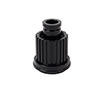
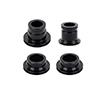
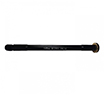
The most critical compatibility check is your bike‘s front axle standard. Modern trail and XC frames use Boost 110x15mm thru‑axle spacing, which widens the hub flanges to create a stiffer wheel and more precise steering. If your frame is designed for Boost, you need a Boost fork. The TMK200 is a true lightweight MTB fork with Boost 110x15mm thru‑axle spacing, delivering exceptional lateral rigidity and a secure, rattle‑free interface. If you have an older frame with 100x9mm QR or 100x15mm non‑Boost, check whether the fork you’re considering offers end‑cap adapters; many modern carbon forks are Boost‑only and cannot be converted.
Step 2: Check the Steerer Tube — Tapered or Straight?
Your frame’s head tube determines which steerer type you need. Most modern mountain bike frames use a tapered head tube (1‑1/8″ to 1‑1/2″), which provides a stiffer interface between the fork and frame, translating to razor‑sharp handling and reduced flex under hard braking or cornering. The TMK200 features a tapered steerer tube, making it compatible with the vast majority of contemporary hardtail and full‑suspension frames. If you have an older frame with a straight 1‑1/8″ head tube, you may need a different fork or a headset adapter.
Step 3: Verify Tire Clearance and Rotor Compatibility
One of the most overlooked aspects of fork selection is how much rubber it can accommodate. The TMK200 offers generous clearance for tires up to 29x3.0 inches, making it versatile enough for everything from lightweight XC race tires to high‑volume bikepacking rubber or even snow use. That same space also accommodates wide rims without rubbing. For disc brake riders, confirm that the fork uses a standard post‑mount interface and supports the rotor size you intend to run (the TMK200 accepts 160mm and 180mm rotors). Avoid forks with integrated but proprietary brake mounts that restrict your choice of calipers.
Step 4: Know Your Fork Length and Offset
Replacing a suspension fork with a rigid fork? You need to match the axle‑to‑crown length and offset as closely as possible to preserve the bike’s intended geometry. A fork that is too short will steepen your head angle (faster steering but twitchy descents). A fork that is too long will slacken the front end, affecting climbing traction. The TMK200 has a 45mm offset — a neutral figure that works well with most modern 29er geometry. The axle‑to‑crown measurement is designed to maintain handling consistent with many 100‑120mm travel frames. If you’re replacing a specific suspension fork, measure your current fork’s length before ordering.
Step 5: Consider Your Riding Style and Terrain
Not every rider needs the same rigid fork. For XC racing and marathon events, prioritize the lightest possible fork with vibration damping — the TMK200‘s T800 carbon construction and sub‑510g weight make it an ideal race‑day weapon. For bikepacking or rough gravel, look for a fork with multiple mounting points and generous tire clearance. For aggressive trail riding, stiffness becomes paramount; the TMK200’s unidirectional carbon layup and Boost axle provide exceptional lateral rigidity that inspires confidence on chunky descents.
Why the Trifox TMK200 Stands Out
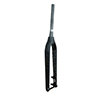
The TMK200 combines all of the above attributes into a single, affordable package. It’s crafted from T800 carbon with a unidirectional matte finish, weighs just 507g (plus thru‑axle), and features Boost 110x15mm spacing, a tapered steerer, and clearance for up to 29x3.0″ tires. Riders who have installed the TMK200 consistently report that it transforms their bikes into “lightweight, durable, and off‑road‑capable” machines — without the premium price tag of big‑brand rivals.
Ultimately, the best carbon fiber MTB fork is the one that matches your frame’s standards, fits your intended tire size, and suits your riding terrain. Prioritize correct axle and steerer compatibility above all else, then weigh the benefits of low weight, vibration damping, and tire clearance. When you find a fork that ticks all three boxes — like the Trifox TMK200 — you’ll know you’ve chosen well.
2026-06-16
Trifox
SHARE:


Comments
Recent Posts
1
1
1
1
1
1
1
1
1
1
1
1
1
1
1
1
1
1
1
1
1
1
1
1



