



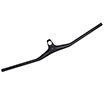
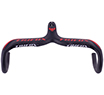





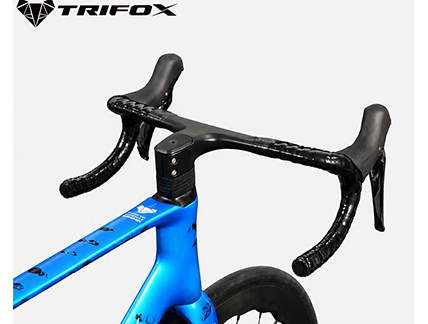
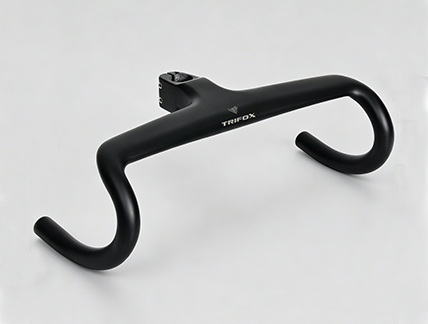
At Trifox, we believe that confidence in your equipment is fundamental to riding performance. This is especially true for components like handlebars that directly impact both control and safety. Our carbon integrated handlebars undergo some of the most rigorous testing in the industry, culminating in destructive failure tests that push materials far beyond normal use limits. Here's an inside look at how we ensure every bar, like our Carbon Integrated Handlebar RHB100, meets our exacting standards.
The journey to failure begins long before the actual break. We start with raw material validation, ensuring the carbon fiber weave and resin matrix meet precise specifications for strength, stiffness, and weight. Each batch of material is tested for consistency, because superior components start with superior ingredients.
Once a handlebar like the Trifox RHB100 is molded and finished, it enters our mechanical testing lab. The most critical test is the static load test to destruction. The bar is mounted in a fixture that simulates a bicycle stem clamp. We then apply increasing force to the drops, the hoods, and the center section independently, measuring deflection until the point of catastrophic failure. This data tells us not just the ultimate strength, but also the bar's stiffness profile and how it behaves under extreme stress. For an aero handlebars design, we also test for torsional rigidity, ensuring the aerodynamic shape doesn't compromise handling precision.
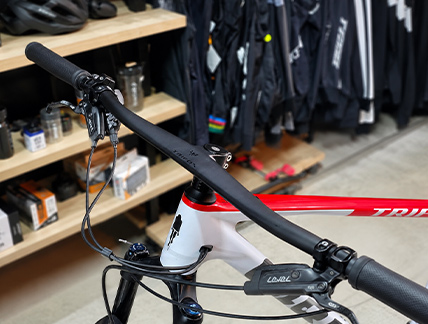
Beyond static force, we perform fatigue testing. Here, we subject the handlebar to thousands of cycles of repetitive, lower-level stress—simulating years of rough terrain, sprinting, and out-of-saddle climbing. This test is crucial for uncovering potential weaknesses that might not appear in a one-time strength test. It proves the component's durability and longevity, a key factor for riders considering the best mountain bike riser handlebars for aggressive trail use.
Why do we deliberately destroy our products? Because safe design requires knowing the exact boundaries. By understanding how and when a bar fails, we can engineer it to be massively strong in real-world conditions. The failure point in our tests is typically 3-5 times higher than the maximum forces a rider could ever generate, creating a huge safety margin. This process validates our finite element analysis (FEA) models, allowing us to optimize material placement. We can add strength where it's needed (like at the clamp and lever areas) and reduce weight where it's not, achieving the perfect balance.
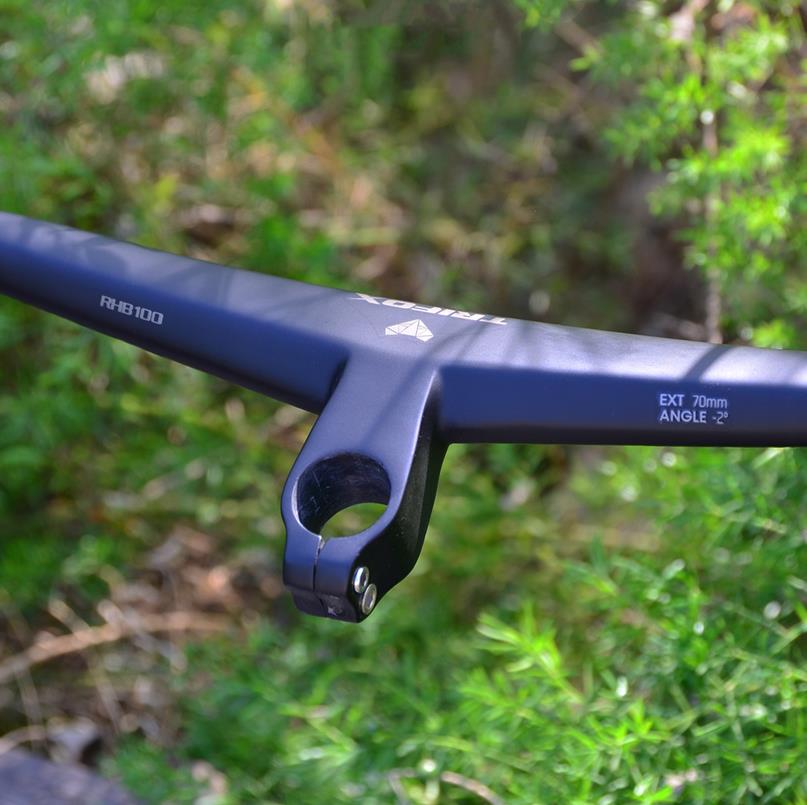
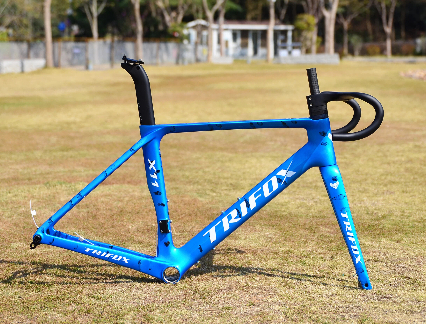
The Trifox RHB100 Carbon Integrated Handlebar is a product of this philosophy. Its one-piece monocoque construction eliminates weak points from bonding. The aero-profile top section is designed not just for speed, but also for optimal stiffness and vibration damping. The testing regimen ensures that whether you're seeking aero handlebars for road racing or robust best mountain bike riser handlebars for technical descents, the underlying principle is the same: unshakeable reliability.
This commitment to empirical validation means when you choose a Trifox handlebar, you're not just choosing a lightweight or aerodynamic component. You're choosing a piece of equipment with a verified performance envelope, engineered to inspire confidence on every ride. We don't just build handlebars; we build trust, one destructive test at a time.
2025-12-24
Trifox
SHARE:


Comments
Recent Posts
1
1
1
1
1
1
1
1
1
1
1
1
1
1
1
1

1
1
1
1
1
1
1

1



