


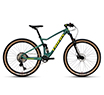
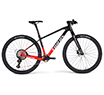
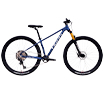

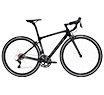
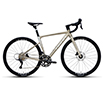
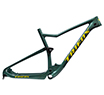
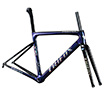
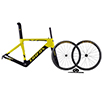
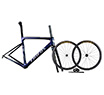
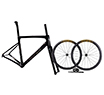
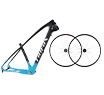
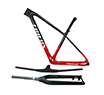





In the world of mountain biking, the choice of frame is dictated by the trail ahead. At opposite ends of the spectrum sit the XC Racer (Cross-Country) and the DH Sled (Downhill). Both are often crafted from premium carbon fiber, but their design philosophies are worlds apart. Understanding this difference is key to choosing a bike that matches your terrain and riding style. And for the vast majority of riders, a modern trail platform like the Trifox MFM100 represents the ideal middle ground.
The XC Racer: Built for Speed and Efficiency
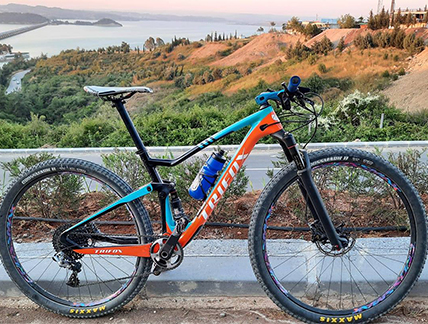
An XC race bike is a scalpel. Its carbon frame is designed to be as light as possible, prioritizing pedaling stiffness and climbing efficiency above all else. You'll find steep seat tube angles (around 74-75°) to put the rider in a powerful climbing position, and steeper head tube angles (69-70°) for quick, responsive steering at lower speeds. Suspension travel is minimal, typically 100-120mm, to keep the bike active on climbs and efficient on rolling terrain. The goal is to convert every watt of rider power into forward momentum as directly as possible. Riders on XC bikes are often found on smoother, less technical trails, racing against the clock. A rider on an xl bike frame in this category would be a tall athlete seeking a lightweight, climbing-focused weapon.
The DH Sled: Built for Gravity and Guts
At the other extreme is the downhill bike—a full-on assault vehicle. These frames are built to be absolutely bombproof, prioritizing stability and control at high speeds over light weight. Geometry is drastically slacker, with head tube angles often dropping below 63°, and wheelbases are stretched long to provide a planted feel on the steepest, roughest terrain. Suspension travel is massive, often 200mm or more, to absorb huge impacts. These bikes are not designed for climbing; they are shuttled or pushed to the top to unleash on the descent. A medium mtb frame in this category is built tough for the rider who lives for the gnarliest, most technical downhill tracks.

The Trail Bike: The Perfect Compromise
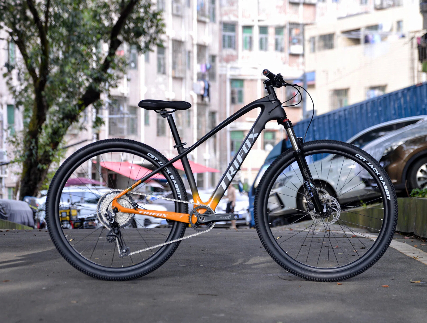
Between these two extremes lies the sweet spot: the trail bike. Frames like the Trifox MFM100 are engineered to offer a balanced blend of climbing capability and descending confidence. They feature modern geometry, such as a 68.5° head tube angle and a 74.7° seat tube angle, which provides stability on descents without sacrificing climbing efficiency. With around 115mm of rear travel (paired with a suitable fork), it can handle technical trail features while remaining an efficient all-day climber.
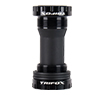
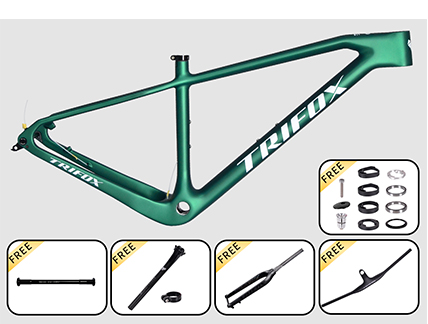
The MFM100's T800 carbon construction ensures it's lightweight and stiff, but its design—including a Press Fit BB92 bottom bracket and Boost 148mm spacing—is focused on creating a durable, responsive platform for aggressive trail riding. It's a bike that can be ridden up a mountain and then confidently descend, making it the ideal choice for riders who want one bike to do it all. Available in sizes from XS to L, including the popular medium mtb frame size, it caters to a wide range of riders seeking this versatile performance.
In the end, the choice is about where you ride. If your trails are all about going up fast, an XC bike is your tool. If you only point downhill, a DH sled is your ride. But for the rider who wants to experience the full mountain—climbing to earn the descent and descending to enjoy the climb—a modern, balanced trail frame like the Trifox medium mtb frame is the ultimate companion. It's the carbon fiber frame that says yes to the entire trail, not just one part of it.
2026-03-03
Trifox
SHARE:


Comments
Recent Posts
1
1
1
1
1
1
1
1
1
1
1
1
1
1
1
1
1
1
1
1
1
1
1

1



