








Few components spark as much quiet frustration among riders as the bottom bracket. You feel it when a persistent creak ruins an otherwise perfect ride, or when an upgrade turns into a search for obscure adapters. For years, the industry swung hard toward press-fit standards, promising lighter frames and stiffer pedal platforms. But recently, the pendulum has swung back, and many manufacturers have returned to the classic threaded bb —specifically the BSA standard. Here’s a real‑world breakdown of what each system does well, and where it falls short.
BSA Threaded: The Rock‑Solid Standard
The BSA (British Standard/English) threaded bottom bracket is the gold standard for reliability. Unlike press‑fit systems held in by friction, a bsa bottom bracket is secured by substantial metal threads cut directly into the frame or bonded into a metal insert. This mechanical lock virtually eliminates the loosening and movement that cause creaking. When the bearings eventually wear out, service is refreshingly simple: unscrew the old unit with standard tools and thread in a new one. BSA bottom brackets are also remarkably adaptable. The 24mm spindle standard (used by Shimano Hollowtech and many others) is widely supported, and the design has proven itself across decades of road, mountain, and gravel riding. If you value peace of mind and despise chasing mystery creaks, the BSA system is a proven, no‑compromise solution.
Press-Fit: The Pursuit of Stiffness and Lightness
Press‑fit systems arose from a valid engineering goal: reducing weight and increasing stiffness. By eliminating threaded metal inserts, frame manufacturers could use larger‑diameter carbon tubes around the bottom bracket area, potentially improving power transfer. BB86 (road) and BB92 (mountain) standards are common examples. When manufacturing tolerances are perfect and installation is flawless, a press‑fit bottom bracket can be quiet and efficient. However, that margin of error is narrow. Minor inconsistencies in frame molding can lead to bearing misalignment, which accelerates wear and creates the dreaded creak. Because the cups rely on friction to stay in place, flexing during hard pedaling can cause microscopic movement that eventually eats into the frame shell. For riders who work on their own bikes, press‑fit also requires specialized bearing presses and removal tools—adding cost and complexity to a routine job.
Making Your Choice: Real‑World Priorities
The best bottom bracket system is the one that suits your frame and your tolerance for maintenance. Choose a threaded bb (BSA) if you prioritize: long‑term reliability above marginal weight savings; simple, at‑home service with common tools; and compatibility with the widest range of cranksets. Choose press‑fit if you have a frame designed specifically for that standard, you don't mind potential creaks, and you want the absolute maximum BB shell width for frame stiffness. However, if you value peace of mind and want a bottom bracket you can install and forget, the BSA bsa bottom bracket remains the smartest choice.
The Trifox TRBB68: Threaded Simplicity, Ready to Roll
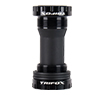
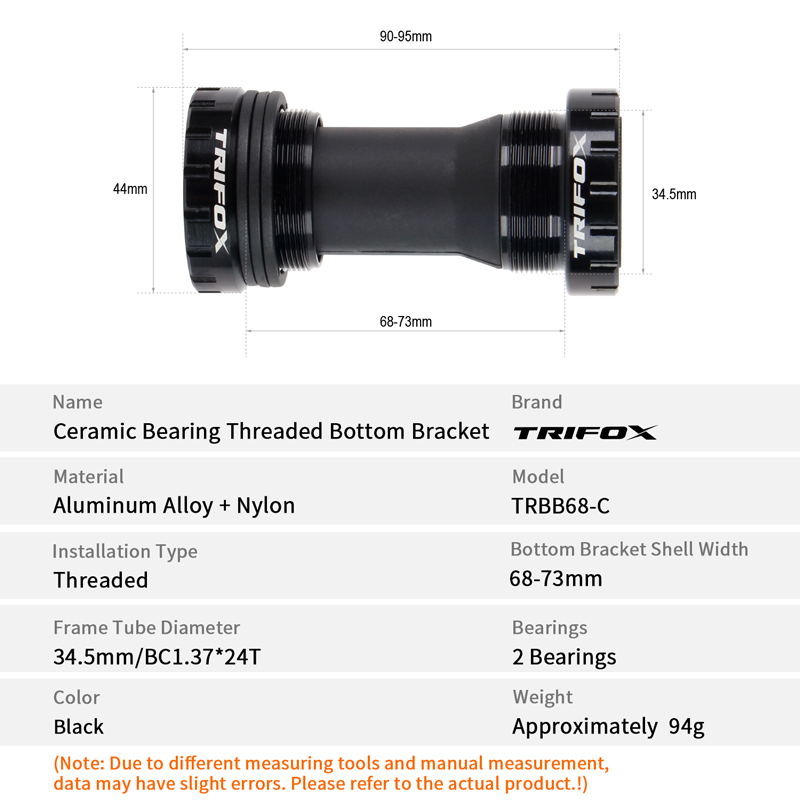
The Trifox TRBB68 is a direct reflection of the BSA philosophy. Designed for 68mm English‑threaded shells, it uses a dependable aluminum body with robust sealed bearings. Installation is straightforward with standard tools, and the threaded cups provide a secure, creak‑free interface that stays quiet ride after ride. Whether you’re refreshing an existing bike or building up a new frame, the TRBB68 delivers the no‑fuss performance that keeps you focused on the road, not on a mystery squeak.
2026-05-20
Trifox
SHARE:


Comments
Recent Posts
1
1
1
1
1
1
1
1
1
1
1
1
1
1
1
1

1

1
1

1
1
1
1

1



