


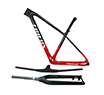
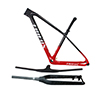





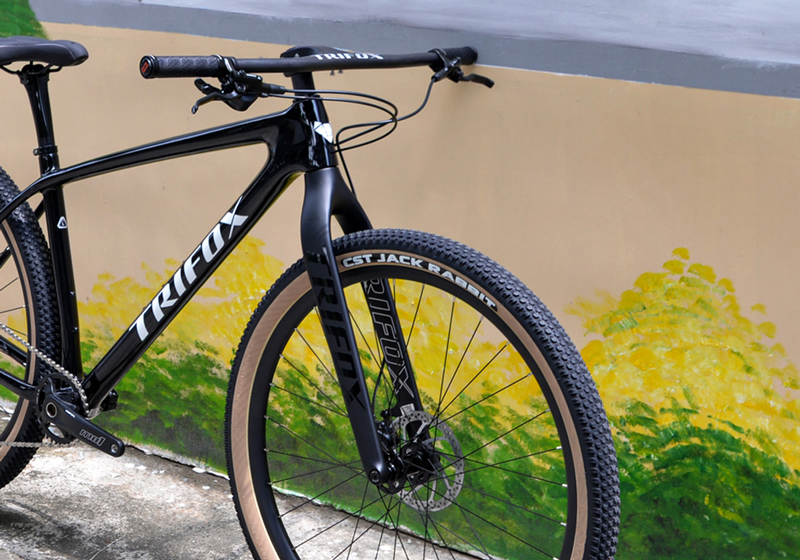
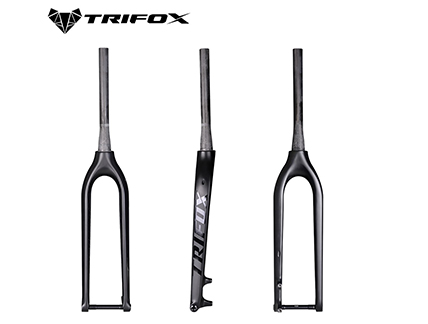
Upgrading to a carbon rigid fork is one of the most transformative changes you can make to a hardtail mountain bike. A quality rigid fork sharpens steering, drops significant front-end weight, and replaces the “buzzy” feel of aluminum with a smoother, more connected ride. But not all carbon forks are built the same. To choose the best one for your bike and riding style, you need to look beyond the carbon weave and evaluate key specs: weight, axle standard, steerer type, tire clearance, and intended use. Here’s a practical guide, featuring the Trifox TMK200 as a benchmark 29er carbon fiber fork. trails are defined by dense forests and tight turns, this isn‘t a minor benefit—it's a game-changer.
Why Go Carbon in the First Place?
Before diving into compatibility, it’s worth understanding why you’d swap an alloy fork for a carbon one. The most immediate benefit is weight. A typical aluminum rigid fork weighs between 800g and 1,200g, while a well‑made carbon fork like the TMK200 weighs just 507g — a saving of 300–700g right at the front of the bike. That’s weight you’ll feel on every climb, every manual, and every hard corner. Equally important is ride quality. Carbon fiber naturally dampens high‑frequency trail chatter, reducing arm pump and hand fatigue without isolating you from the terrain. Riders who switch often describe the sensation as “connected” and “planted” — a direct contrast to the harsh, buzzy feel of aluminum.
Step 1: Match Your Axle Standard (Boost vs. Non‑Boost)
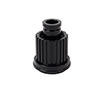
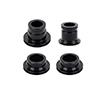
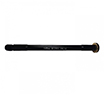
The most critical compatibility check is your bike‘s front axle standard. Modern trail and XC frames use Boost 110x15mm thru‑axle spacing, which widens the hub flanges to create a stiffer wheel and more precise steering. If your frame is designed for Boost, you need a Boost fork. The TMK200 is a true lightweight MTB fork with Boost 110x15mm thru‑axle spacing, delivering exceptional lateral rigidity and a secure, rattle‑free interface. If you have an older frame with 100x9mm QR or 100x15mm non‑Boost, check whether the fork you’re considering offers end‑cap adapters; many modern carbon forks are Boost‑only and cannot be converted.
Step 2: Check the Steerer Tube — Tapered or Straight?
Your frame’s head tube determines which steerer type you need. Most modern mountain bike frames use a tapered head tube (1‑1/8″ to 1‑1/2″), which provides a stiffer interface between the fork and frame, translating to razor‑sharp handling and reduced flex under hard braking or cornering. The TMK200 features a tapered steerer tube, making it compatible with the vast majority of contemporary hardtail and full‑suspension frames. If you have an older frame with a straight 1‑1/8″ head tube, you may need a different fork or a headset adapter.
Step 3: Verify Tire Clearance and Rotor Compatibility
One of the most overlooked aspects of fork selection is how much rubber it can accommodate. The TMK200 offers generous clearance for tires up to 29x3.0 inches, making it versatile enough for everything from lightweight XC race tires to high‑volume bikepacking rubber or even snow use. That same space also accommodates wide rims without rubbing. For disc brake riders, confirm that the fork uses a standard post‑mount interface and supports the rotor size you intend to run (the TMK200 accepts 160mm and 180mm rotors). Avoid forks with integrated but proprietary brake mounts that restrict your choice of calipers.
Step 4: Know Your Fork Length and Offset
Replacing a suspension fork with a rigid fork? You need to match the axle‑to‑crown length and offset as closely as possible to preserve the bike’s intended geometry. A fork that is too short will steepen your head angle (faster steering but twitchy descents). A fork that is too long will slacken the front end, affecting climbing traction. The TMK200 has a 45mm offset — a neutral figure that works well with most modern 29er geometry. The axle‑to‑crown measurement is designed to maintain handling consistent with many 100‑120mm travel frames. If you’re replacing a specific suspension fork, measure your current fork’s length before ordering.
Step 5: Consider Your Riding Style and Terrain
Not every rider needs the same rigid fork. For XC racing and marathon events, prioritize the lightest possible fork with vibration damping — the TMK200‘s T800 carbon construction and sub‑510g weight make it an ideal race‑day weapon. For bikepacking or rough gravel, look for a fork with multiple mounting points and generous tire clearance. For aggressive trail riding, stiffness becomes paramount; the TMK200’s unidirectional carbon layup and Boost axle provide exceptional lateral rigidity that inspires confidence on chunky descents.
Why the Trifox TMK200 Stands Out
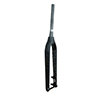
The TMK200 combines all of the above attributes into a single, affordable package. It’s crafted from T800 carbon with a unidirectional matte finish, weighs just 507g (plus thru‑axle), and features Boost 110x15mm spacing, a tapered steerer, and clearance for up to 29x3.0″ tires. Riders who have installed the TMK200 consistently report that it transforms their bikes into “lightweight, durable, and off‑road‑capable” machines — without the premium price tag of big‑brand rivals.
Ultimately, the best carbon fiber MTB fork is the one that matches your frame’s standards, fits your intended tire size, and suits your riding terrain. Prioritize correct axle and steerer compatibility above all else, then weigh the benefits of low weight, vibration damping, and tire clearance. When you find a fork that ticks all three boxes — like the Trifox TMK200 — you’ll know you’ve chosen well.
For nearly two decades, the 26-inch wheel was the undisputed king of the mountain bike world. It was the standard that defined the sport from its gritty origins in the late 1970s through the suspension revolution of the 1990s. Then came the 29er, with its monster-truck-like ability to roll over obstacles, and the 27.5-incher, touted as the perfect middle ground. Today, you rarely see a new high‑end adult trail bike on 26-inch hoops. So, is the 26er extinct? Has the smaller wheel been completely eclipsed by its larger rivals? The answer, surprisingly, is a definitive no. The 26-inch mountain bike is not just surviving; it is thriving in specific, crucial niches where its unique characteristics make it the undisputed champion.
The Agility Advantage: Why Small Wheels Excel in the Tech
While a 29er excels at carrying speed over open, rolling terrain, the 26-inch wheel remains the master of low‑speed, high‑precision handling. In tight, twisting singletrack, through rock gardens, and up steep, technical switchbacks, the smaller wheel is simply easier to muscle around. Riders who still keep a 26er in their stable often cite its precision for slow cornering and slow tech sections is far superior to larger wheels. The bike feels more like an extension of your body, allowing you to dart between obstacles and make micro-adjustments to your line without the feeling of turning a ship. For anyone whose local trails are defined by dense forests and tight turns, this isn‘t a minor benefit—it's a game-changer.
Quicker Acceleration and a “Playful” Feel
Physics is simple: less mass is easier to move. A 26-inch wheel has a smaller circumference and is generally lighter, resulting in significantly faster acceleration. When you stomp on the pedals coming out of a corner or surge up a punchy climb, the bike responds immediately. Larger wheels require more energy to spin up to speed. This low rotational mass contributes to a fun, poppy, and lively feel that many experienced riders say is missing from the larger, more planted wheel sizes. As one rider perfectly described, they have a “fun feeling that is not present on bigger wheels”. If you value a bike that feels like a BMX bike on steroids, ready to pop off every root and manual through every dip, the 26-inch wheel delivers a joy that spec sheets can‘t measure.
The Youth, Dirt Jump, and Budget Stronghold
Major manufacturers may have shifted their focus to 27.5 and 29-inch bikes, but the 26-inch platform has never disappeared—it simply found its true home. The most significant stronghold is the youth market. A 26-inch mountain bike provides the perfect stepping stone for kids and teenagers who have outgrown 24-inch wheels but aren‘t ready for the bulk of a full-sized adult 29er. The compact frame and smaller wheels offer significantly more agility and control for younger, lighter riders, helping them develop skills without being overwhelmed by a massive bike. Premium brands like Marin, Cube, and Merida continue to produce purpose-built 26-inch youth bikes that feature real suspension, powerful disc brakes, and progressive geometry. Beyond the trails, 26-inch wheels remain the standard for the dirt jump and slopestyle world, where maneuverability in the air is paramount. And for the cost-conscious rider or commuter, the abundance of used 26-inch bikes and readily available replacement parts makes this wheel size a supremely economical choice.
Meet the Modern 26er: The Trifox Ventura 26 Path
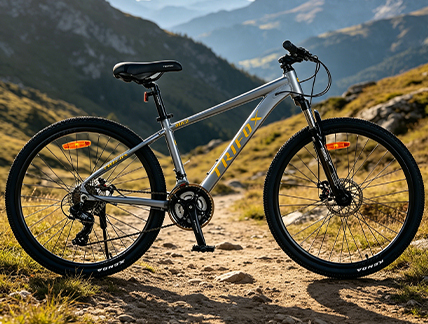
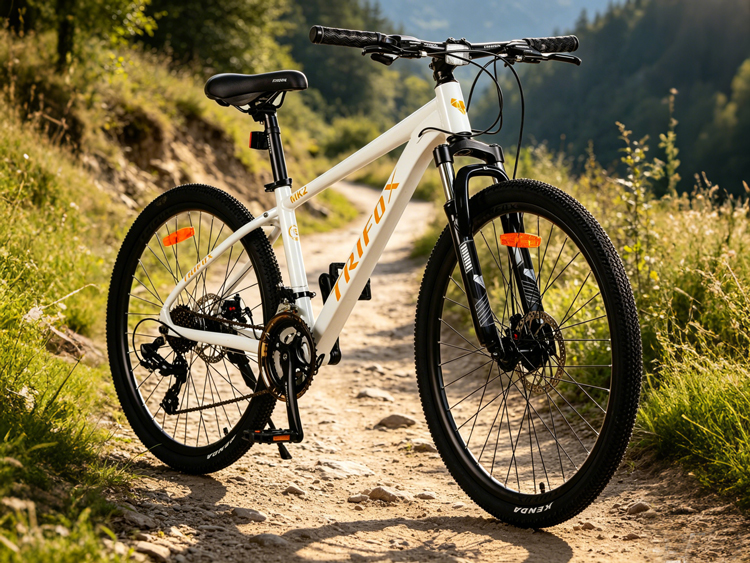
You don‘t have to choose between classic 26-inch agility and modern mountain bike features. The Trifox Ventura 26 Path is a shining example of the modern 26er, proving that this wheel size is still relevant for new riders, smaller adults, and anyone seeking a lightweight, reliable hardtail. It combines a sleek AL6061 aluminum frame with the sharp handling of 26-inch wheels, a full Shimano Tourney 21‑speed drivetrain, and the stopping power of mechanical disc brakes. For those seeking a mtb 26 inch that blends timeless maneuverability with modern specs, the Ventura 26 Path is the answer. For budget-conscious riders, it’s also one of the lightest mountain bike options at its price point. Weighing in at a manageable 14kg, this bike is light enough to throw around but tough enough to handle the rigors of the trail, making it the perfect first serious bike for a teenager or a fun, flickable toy for a smaller adult.
The Verdict: Not Obsolete, Just Specialized
Is the 26-inch mountain bike dead? Absolutely not. It has simply vacated the position of the all‑around standard it once held and moved into a series of specialized roles where it is still, objectively, the best tool for the job. It is the king of agility, the champion of the youth trail, the weapon of choice for the dirt jumper, and the smart budget pick. In a world that keeps getting bigger and longer, the 26er reminds us that smaller wheels offer a kind of playful, responsive fun that no amount of stability can replace. Whether you are a teenager looking for your first real trail bike, a smaller adult wanting a confidence-inspiring fit, or a seasoned veteran looking for a lively hardtail to add to the garage, the 26-inch mountain bike is still very much in the game.
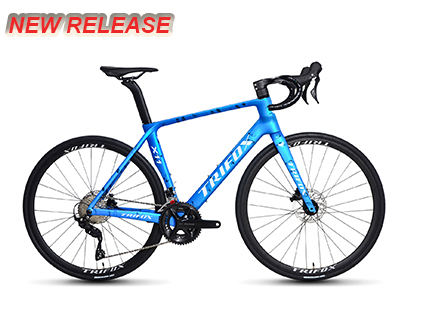
If you've shopped for a drop bar road bike recently, you’ve seen the numbers. A reputable carbon frame with internal routing often starts around $1,200–$1,500 — before you add wheels, groupset, finishing kit, or assembly. Add a modern 12‑speed mechanical groupset from Shimano, and the final bike price regularly pushes past $2,500. The new Trifox VELOX-X11 flips that equation. For **$1,899**, this is not a discounted frame or a pieced‑together build. It's a factory‑complete racing bicycle built around a T800 carbon frameset, a full hydraulic Shimano 105 R7120 groupset, an integrated carbon cockpit, and full internal cable routing. Here’s why that combination is turning heads in the value‑performance space.
Full‑Carbon Aero Platform Without the Premium Price
The VELOX-X11 starts with the same X11 T800 carbon frameset that Trifox offers as a standalone frameset for $729. It balances stiffness for power transfer with vertical compliance for long‑ride comfort. The fork is also full carbon (T800) with a tapered 1‑1/8″ to 1‑1/2″ steerer. Internal cable routing runs through the headset — no exposed housings on the downtube. That’s a detail you normally only see on bikes costing $3,000 or more. Frame weight is competitive (a size‑medium X11 frameset lands around 1,000g). For riders comparing carbon vs. aluminum, a 300–500g frame weight difference translates directly to easier climbing and quicker acceleration. The VELOX‑X11 keeps that advantage fully intact while keeping the complete bike weight at approximately 8.78kg (size M).
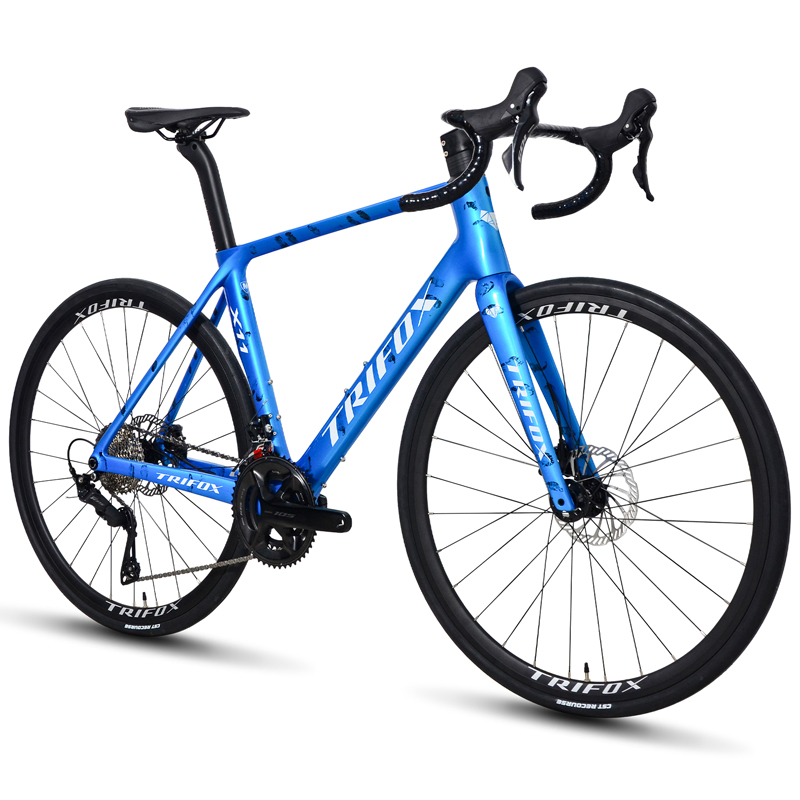
Shimano 105 R7120 Mechanical: The Sweet Spot of Value
The drivetrain is a **full Shimano 105 R7120 12‑speed mechanical groupset**, not a budget mix‑and‑match spec. This includes the R7100 series crankset (34‑50T, 170mm), the R7100 front and rear derailleurs, the HG710 11‑34T cassette, and the hydraulic disc ST‑R7120 shift/brake levers with flat‑mount calipers. R7120 benefits from technology trickling down directly from Ultegra and Dura‑Ace. The lever ergonomics have been revised using hand‑shape data from a wide range of riders, and the shifting feel is precise, confident, and consistent — fully in line with Shimano‘s 12‑speed mechanical ecosystem. It’s the groupset that many experienced cyclists call “the sweet spot of value” and “perfect for riders who want dependable shifting, strong braking performance, and modern 12‑speed gearing”.
Disc brakes are hydraulic (the ST‑R7120 levers paired with BR‑R7170 calipers). Pad clearance is generous, making wheel removal easy, and the one‑way bleeding system simplifies maintenance. Whether you’re descending in the rain or braking through a fast corner on a group ride, the modulation and power are immediate and confidence‑inspiring.
Internal Cable Routing and Integrated Cockpit
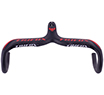
The VELOX‑X11 hides every cable, brake hose, and housing inside the frame and handlebar. The handlebar is the Trifox DHB1000 aero carbon integrated drop bar, which routes hoses from the shifters through the bar and directly into the stem. No zipties, no external guide clips, no messy front end. For a drop bar road bike, a clean front end isn’t just aesthetic — it reduces frontal drag and protects cables from weather and abrasion. Riders moving from a traditional cockpit often describe the sensation as “clean” and “more professional”, but the real benefit is the maintenance reduction: cables stay clean, shift housings don’t chafe against frame paint, and the cockpit remains quiet over bumps.
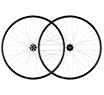
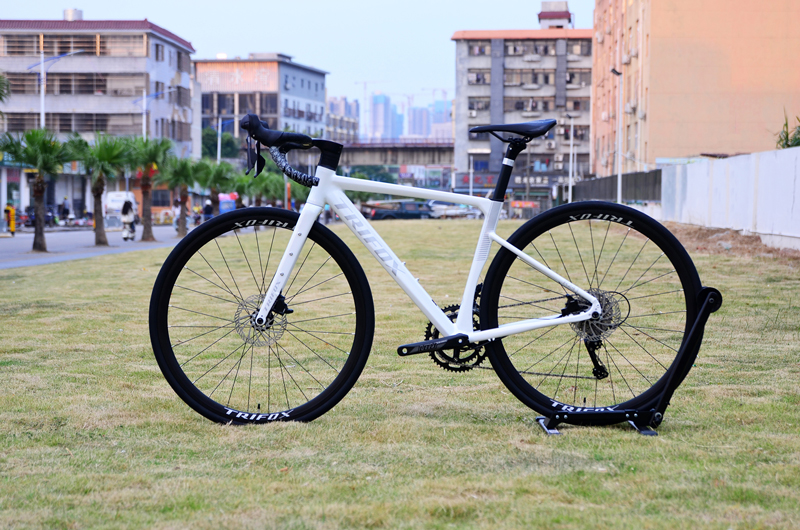
The included aluminum wheelset is a 30mm alloy disc brake wheelset (AWT7) with 28 stainless steel Pillar spokes, ceramic bearings, and a 6‑pawl freehub. It ships with CST 700×28C tires, but the frame and fork clear up to 35mm rubber for added comfort or rougher roads if you upgrade later. Four frame sizes from XS‑510mm to L‑580mm cover riders from 155cm to 196cm, so proper bike fit — the single most important factor for comfort and power — is achievable without compromise.
Who Should Consider the VELOX-X11?
This bike is for the rider who wants a genuine **racing bicycle** without taking out a second loan. It’s ideal for the club racer moving up from an aluminum bike — the carbon frame and 105 groupset alone will feel like a huge leap. It‘s perfect for the enthusiast who wants one bike for everything: fast weekend group rides, gran fondos, solo climbs, and the occasional “race your own record” segment. And it’s an excellent choice for the smart shopper who’s tired of manufacturers putting low‑spec components on an expensive frame just to hit a price point. Every major component on the VELOX‑X11 is Shimano 105 R7120 — not a “105‑compatible” mix, not a generic house brand. That honesty in spec is rare at this price.
The carbon fiber vs. aluminum debate often ignores the simple fact that for years, the barrier to carbon was cost. That barrier is gone. For $1,899, the VELOX‑X11 delivers a modern carbon aero frame, a complete mechanical 105 groupset, fully internal routing, and an integrated cockpit — all from a brand that sells its own framesets and knows how to build. Whether you’re training for a century, attacking local climbs, or simply want a bike that looks as fast as it rides, the Trifox VELOX‑X11 delivers value that makes the racing bicycle category genuinely accessible.
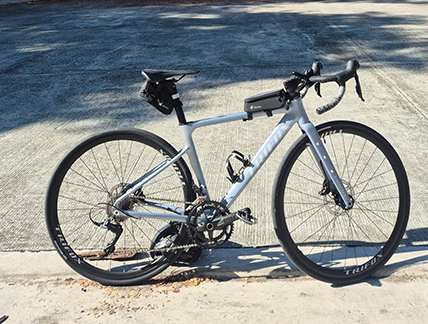
Walk into any bike shop or scroll through Instagram, and you‘d be forgiven for thinking carbon fiber is the only material that matters. Pro pelotons ride carbon, reviews obsess over gram‑saving layups, and the marketing machine whispers that anything less is a compromise. But here’s an uncomfortable truth for the carbon faithful: for a huge number of riders, a modern aluminum road bike isn‘t just “good enough”—it’s genuinely better. And the Trifox R241 is a living example of why.
The Budget Argument: Where Your Money Actually Goes
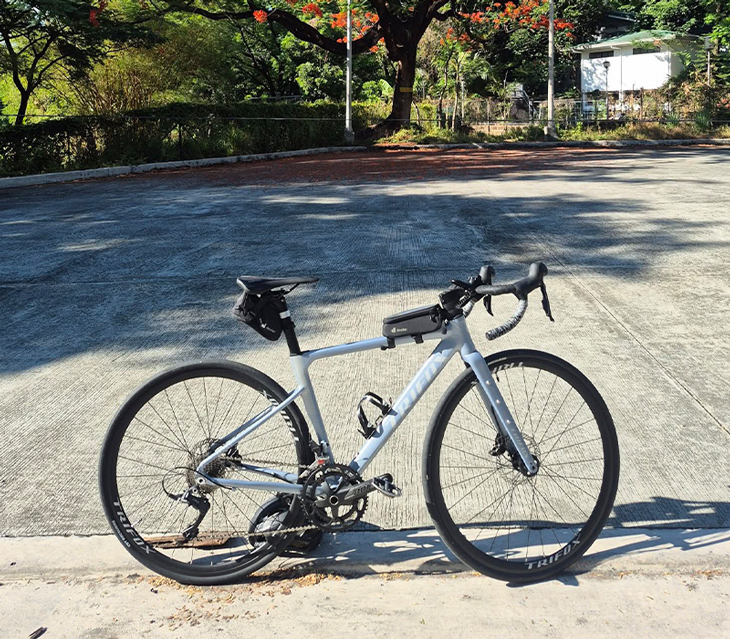
Carbon frames are expensive to manufacture. The material itself costs more, the layup process requires skilled labour, and the tooling is complex. Aluminum is simpler to work with and dramatically cheaper to produce. That‘s not a flaw—it’s an opportunity. A well‑priced alloy bike leaves room in your budget for components that directly impact ride quality: better wheels, a higher‑end groupset, and quality finishing kit. The Trifox R241, priced at just $659.99 (down from $1,399), is a textbook example. It gives you a lightweight 6061 aluminum frame, a full Shimano Tiagra 2×10‑speed groupset, integrated alloy handlebars, and ceramic bearing hubs—all for less than the price of many entry‑level carbon frames alone.
For a first‑time road cyclist, that value proposition is hard to ignore. You‘re not buying a “starter bike”—you’re buying a complete, performance‑ready machine that will feel fast and responsive from the very first pedal stroke. If you‘re searching for an entry level road bike that doesn’t cut corners on the parts that matter, the R241 is a smart place to start.
Durability: Does Aluminum Last Longer Than Carbon?
This is where the debate gets practical. Carbon fibre is phenomenally strong in the directions it‘s designed for, but it’s vulnerable to sharp impacts, overtightened bolts, and hidden cracks that can be invisible to the naked eye. A crash that would simply dent an alloy frame can cause delamination in carbon—damage that may not be obvious until the frame fails without warning. Aluminum is far more forgiving. It bends and dents rather than cracking, and those are almost always visible signs that you need to replace the part. For everyday training, commuting, or riding in groups where the odd tumble is a real risk, that durability advantage is significant.
Manufacturers confirm this: carbon is “more vulnerable to sharp impacts or crashes” and “crack or suffer hidden damage, making careful inspection important after any hard falls,” while aluminum “tends to bend or dent on impact.” Long‑term, an alloy frame is simply a more worry‑free companion.
Vibration Damping: The Surprising Reality
The old reputation of aluminum is that it rides harshly. That‘s outdated. Modern alloy frames, especially those using hydroformed tubes and advanced heat treatments, have closed the comfort gap dramatically. The Trifox R241 uses an AL6061 alloy frame with T4‑T6 heat treatment and triple‑butted tubing—thicker at stress points like the head tube and bottom bracket for stiffness, thinner along the mid‑sections to shed weight and add vertical compliance. The result is a frame that is stiff under power but far more comfortable than the jarring alloy bikes of a decade ago. The carbon fork further absorbs road chatter, and the 25mm tires (with clearance for 28mm) let you run slightly lower pressures for additional cushioning.
For the rider who isn‘t racing 10‑hour epics or chasing KOMs on brutal chipseal, the ride quality difference between a good alloy bike and a mid‑range carbon bike is surprisingly subtle—certainly not worth the price gap.
Practicality: When Aluminum Wins the Day
If you’re buying your first serious road bike, you‘re likely juggling multiple priorities: budget, reliability, and ease of maintenance. Aluminum doesn’t require carbon assembly paste, special torque wrenches, or annual professional inspections for hidden cracks. It‘s a material you can trust without second‑guessing every gravel chip or pothole hit. For the rider who wants to spend time on the saddle rather than in the workshop, that matters.
For cyclists seeking the best budget road bike that delivers real performance without the premium price tag, the Trifox R241 stands out. Weighing 9.75 kg, equipped with reliable Tiagra shifting, and built around a stiff, race‑ready geometry, it‘s a bike that doesn’t apologise for being alloy. It climbs efficiently, descends with confidence, and leaves you with cash left over for a proper bike fit, pedals, and kit.
The Verdict: Better for Who?
Is aluminum better than carbon? For a weight‑weenie racer chasing podiums, probably not. For the rest of us—the weekend warriors, the first‑time buyers, the smart shoppers—aluminum often makes more sense. You get 90% of the performance at 50% of the price, with less anxiety about damage and more room in your budget for the components that truly define a great ride. The Trifox R241 proves that alloy isn‘t a compromise—it’s a choice. And for many riders, it‘s the right one.
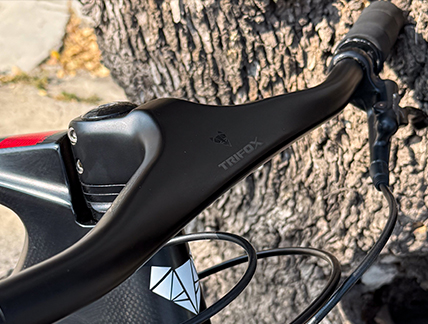
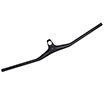
You’ve spent weeks researching, comparing stack heights and reach numbers, and finally settled on the perfect mtb handle bar rise. Then comes the moment of truth — you pull the old cockpit off, pick up a brake hose, and realize the fitting is 2mm too wide to slide through the handlebar’s entry port. The dream pauses. Integrated bars have revolutionized how mountain bike cockpits look and feel, but their neat, cable‑free exteriors hide a critical question: will your hoses and housings actually fit inside? Before you buy, modify, or replace a whole groupset, here’s how to check compatibility — with the RHB600 as your reference.
Know Your Bar: Internal vs. External Routing Options
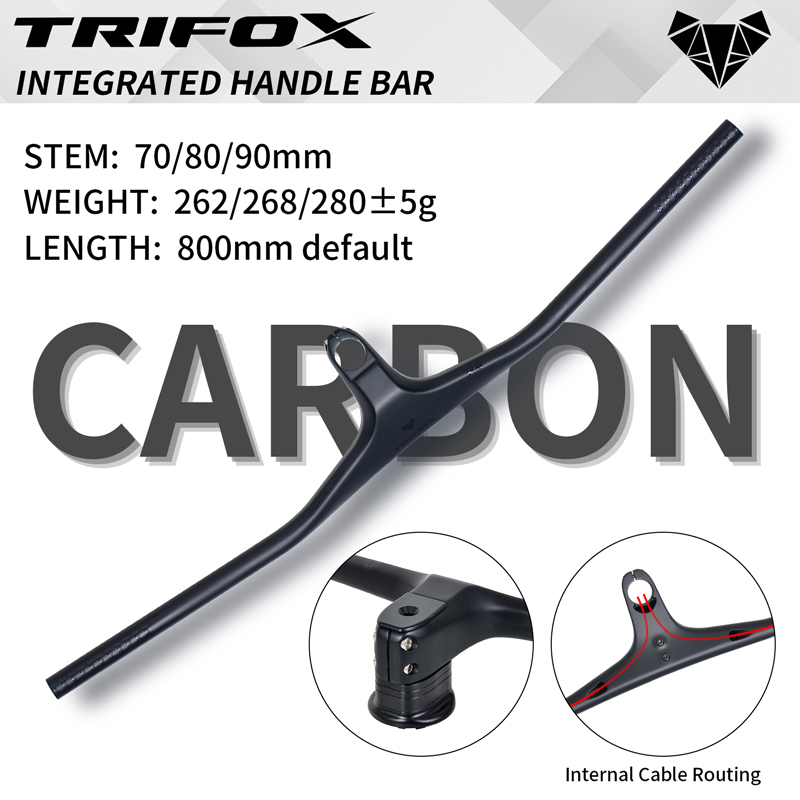
The Trifox RHB600 is available in two distinct routing configurations. The 52mm spacer version is designed for fully internal cable routing — your brake hoses and shifter cables enter the bar at the stem and travel completely inside the carbon structure, exiting at the lever mounting points. This is the cleanest look but the most demanding setup. The 42mm version uses semi‑external routing: cables run along the outside of the bar, tucked under a cover, which simplifies installation and maintenance while still tidying up the front of the bike. Knowing which version you need is step one.
Once you‘ve chosen your routing style, the real compatibility check begins. Hydraulic brake hoses are often the tightest fit. Shimano’s BH‑90 hose, for example, requires an 11.2mm‑wide connector at the lever end, while the BH‑59 uses a 13.2mm fitting — that extra 2mm can mean the difference between passing through or getting stuck. The RHB600’s internal channels are designed to accept most modern hydraulic hoses, but if you’re running SRAM’s Stealth‑a‑matic or Magura’s thicker fittings, you must measure your ferrule and olive outer diameter before installation. Some riders have found that switching to the lower‑profile Shimano OT‑RS900 housing provides a more flexible and slimmer profile, easing the routing process. If your hose fitting is too wide, you may need to replace the entire front hose with one that has a narrower connector — a task best left to a shop if you lack a bleed kit and the right barbs.
Mechanical Shifter Cables: Thinner Isn’t Always Easier
Mechanical shifting cables pose a different challenge. While a bare inner cable slides easily, it’s the compressionless shift housing that determines fit. Standard 5mm shift housing (common on older groups) can be a tight squeeze through integrated bar channels that expect 4mm housing. The RHB600’s internal diameter is engineered to accommodate both, but if you encounter resistance, swapping to Jagwire’s 4mm Pro or Elite Link housing (which uses segmented aluminum links) can dramatically reduce friction and improve bend radius while fitting through narrower ports. Before cutting any housing, run a test pull: feed the housing through the bar without the inner cable and ensure it moves freely from the stem opening to the lever exit. Any binding now will worsen under real‑world steering loads.
Dropper Post and Di2 Wiring: Hidden Clearance Issues
Modern cockpits often carry more than just brake hoses. If you run a dropper post, the remote cable housing follows the same path as your shifter cables — and must share the internal space. The RHB600’s internal channels are designed with enough capacity for one hose and one housing, but trying to squeeze two full‑size compressionless housings plus a hydraulic hose through the same bar can create friction that makes steering feel heavy. For heavy cable loads, consider using a wireless dropper (Reverb AXS, BikeYoke) or routing one of the cables externally through the 42mm spacer version. Di2 or AXS wiring (e‑tube wires) is much thinner and rarely causes issues, but the connectors themselves (e.g., EW‑SD50) are bulkier than the wire — feed the wire through first, then attach the connector, not the other way around.
Bend Radius and Lever Position: The Hidden Fit Factor
Even if your cables fit through the bar, they still need to exit cleanly at the levers. The RHB600’s 7° backsweep and 5° rise create a natural curve that most hoses can follow, but pushing a hose too tightly against a sharp internal edge can lead to long‑term chafing. Always inspect the exit ports for roughness and consider adding a small piece of adhesive‑backed foam or rubber lining where the hose makes contact. A hose that passes a static fit test can still fail after 100 miles of steering back and forth, as the constant micro‑movement saws through the outer layer. One forum user described discovering frayed cables at the point where housing exits the stem — a failure that only appears after hours of riding, not during initial assembly. To avoid this, leave a small loop of housing inside the bar rather than pulling everything taut; slack is your friend when it comes to internal routing longevity.
Tools and Techniques for a Smooth Install
If you‘ve confirmed compatibility but are still nervous, two tools can save you hours of frustration. A cable routing kit (a flexible guide wire with magnetic tips) allows you to pull hoses through blind channels without fishing blindly. And a 5mm or 4mm internal routing liner — essentially a thin plastic tube you slide into the bar first — creates a smooth pathway that you then pull your actual hose through. For extra insurance, wrap the end of your hose in a thin layer of electrical tape to prevent the end from snagging on internal carbon edges. And whatever you do, do not grease the hose: lubricant will attract dirt and eventually gum up the internal channel, making future cable swaps miserable. If you need slip, use a few drops of isopropyl alcohol — it evaporates cleanly.
Making the Final Call
Integrated bars like the RHB600 aren‘t just about looks — they’re about eliminating cable clutter, improving aero, and creating a cockpit that feels like one solid piece of equipment. But that clean profile demands careful preparation. By verifying your hose and housing diameters, using the correct routing version, and investing in a few cheap routing aids, you can avoid the disappointment of discovering incompatibility halfway through a build. The RHB600 is part of a new generation of carbon aero handlebars that make fully integrated cockpits accessible — but only if your cables are ready to take the ride with you.
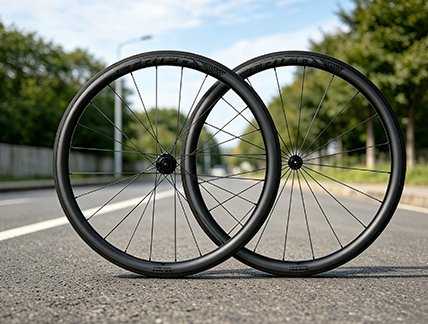
The road cycling world has a new obsession. Not weight, not stiffness — depth. Carbon wheel rim depth has become the single most talked-about variable in performance upgrades, and for good reason. The right depth transforms how your bike accelerates, cuts through the wind, and handles crosswinds. The wrong depth leaves you fighting the bike when you should be flowing. This guide breaks down the three most common depths — 35mm, 45mm, and 50mm — and explains how to choose the one that matches your riding style.
The Physics Beneath the Carbon
A deeper rim presents more surface area to airflow. When engineered correctly — with a modern U or V profile — that surface acts like an aircraft wing, directing air along a longer, more controlled path that reduces turbulent drag. Wind tunnel data consistently shows that upgrading from a 30mm rim to a 50mm rim saves more watts than almost any other equipment change available to an average rider. But deeper rims also catch more crosswind, and the deeper you go, the more you feel lateral gusts. Shallow rims are lighter, which matters on steep climbs where rotational weight penalizes every pedal stroke. The art is finding where those trade-offs balance for the terrain you actually ride.
35mm — The All-Rounder Climber
A 35mm carbon wheel sits at the shallow end of the performance spectrum. It prioritizes weight and responsiveness over pure aero gains. For riders who live in mountainous regions or regularly face 8-12% grades, 35mm depth is often the smart choice. The reduced rotational mass means quicker acceleration out of corners and a lighter feel when standing on the pedals. Crosswind stability is also excellent at this depth — lighter riders or those riding in gusty coastal conditions will appreciate predictable handling that doesn‘t demand constant steering corrections. The compromise is aerodynamic efficiency: at speeds above 35km/h on flat or rolling terrain, a 35mm wheel leaves watts on the table. For the rider who spends 80% of their time climbing and descending, that’s an acceptable trade. For the rider who sees a mix of hills and flats, a slightly deeper wheel is often faster overall.
45mm — The Versatile Sweet Spot
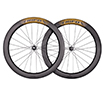
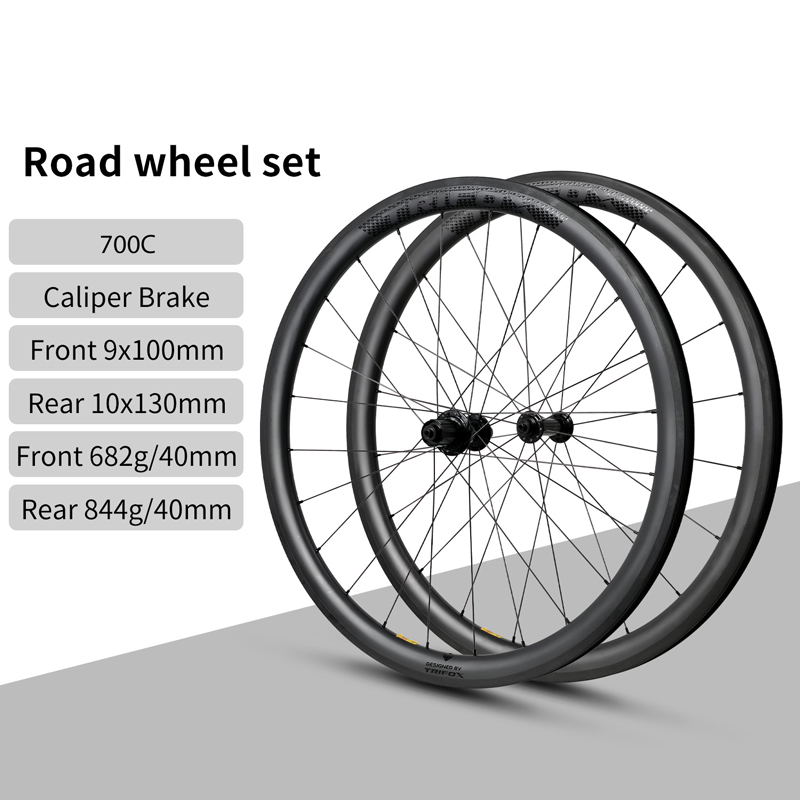
The 45mm depth has emerged as the new standard for riders who want one wheelset for everything. It offers genuine aerodynamic benefit — studies show a 45mm rim can save 5-10 watts at 40km/h compared to a shallow box-section rim — without the weight penalty or crosswind sensitivity of deeper sections. The 45mm WT18 wheels from Trifox weigh just 697g (front) and 862g (rear), making them light enough for serious climbing yet aero enough for fast group rides and flat time trials. This “golden middle” around 40-50mm is now the most recommended range for amateur riders because it works well across almost all terrain. Test data confirms this: at a steady 200 watts, a 50mm wheel delivers roughly 0.6km/h more speed than an alloy box rim; at 290 watts (~37.5km/h), the advantage grows to 1.2km/h. For a century ride, those small per-kilometer gains add up to meaningful time savings without a harsh ride penalty.
50mm — The Aero All-Rounder
A 50mm carbon wheelset has crossed a meaningful threshold. It’s deep enough to provide substantial aerodynamic gains — more than the 45mm version — yet remains manageable for most riders in real-world conditions. The 50mm WT18 wheels weigh only 716g (front) and 878g (rear), just 38g heavier per pair than the 40mm version. That’s a trivial weight penalty for a significant aero improvement. The 45-50mm range has become the default choice for riders seeking one wheelset to handle everything from mountainous gran fondos to fast criteriums. The aerodynamic advantage of a 50mm rim vs an older shallow rim is substantial at speeds above 30km/h, and modern rim profiles have dramatically improved crosswind stability compared to early deep-section designs. For the enthusiast who rides rolling terrain, participates in group rides, and occasionally races, 50mm is the depth that does it all. The 50mm carbon wheelset WT18 from Trifox offers this balance at a price that makes carbon aero wheels accessible to everyday cyclists.
60mm — The Aero Specialist
For completeness, the WT18 also offers a 60mm depth. This is the domain of the aero specialist — time trialists, triathletes, and riders who spend most of their time on flat roads or in fast, aggressive pacelines. The 60mm profile cuts through the wind with exceptional efficiency, delivering measurable speed gains at sustained high speeds. However, crosswind influence is more noticeable, and the weight penalty is real: 744g front, 906g rear. For most road riders, 60mm is best as a second wheelset for race days or specific flat courses, not a daily driver.
Which Depth Should You Choose?
The question isn‘t which depth is “best” — it’s which depth fits your roads. Use this quick guide:
• Choose 35-40mm if you spend most of your time climbing steep mountains, are a lighter rider sensitive to crosswinds, or prioritize quick acceleration over top speed.
• Choose 45-50mm if you ride rolling to moderately hilly terrain, participate in group rides or local races, and want one versatile wheelset that does everything well.
• Choose 60mm if you race time trials, compete on flat courses, or already have a shallower set for climbing days.
Value That Makes Sense
For years, the best budget carbon wheelset was an oxymoron — you could have low price or genuine performance, not both. The WT18 changes that equation. At $399, this is a 100% T800 carbon fiber wheelset with depth options from 40mm to 60mm, Pillar stainless steel spokes, high-quality LLU contact bearings, and a tool‑free quick‑release freehub. The braking surface is engineered for consistent rim brake performance, and the quick-release design (100mm front, 130mm rear) ensures compatibility with classic rim brake frames. Riders who have tested these wheels consistently praise the build quality, noting that they spin true out of the box and stay that way. The value proposition is clear: you‘re getting the same T800 carbon construction found in wheelsets costing twice as much, with no meaningful compromise in stiffness, weight, or ride feel.
The Trifox WT18 best budget carbon wheelset proves that high‑performance carbon wheels are no longer reserved for racers with deep pockets. By selecting the right depth for your terrain, you can unlock genuine aero and weight benefits without breaking the bank. That’s the new math of rim depth — and it‘s a calculation every road cyclist should run.
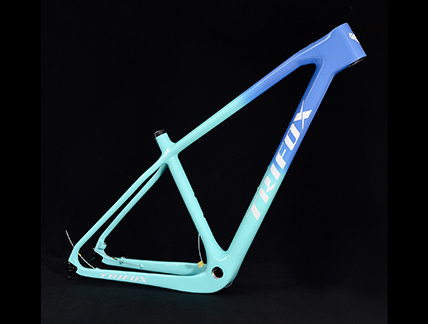
Walk into any mountain bike forum or scroll through group ride photos, and one truth becomes clear: component standards change faster than most of us care to admit. A frame that feels cutting‑edge today can feel hopelessly dated in three seasons — not because the carbon stops working, but because your wheels don’t fit, your hanger is discontinued, and the industry has moved on without you.
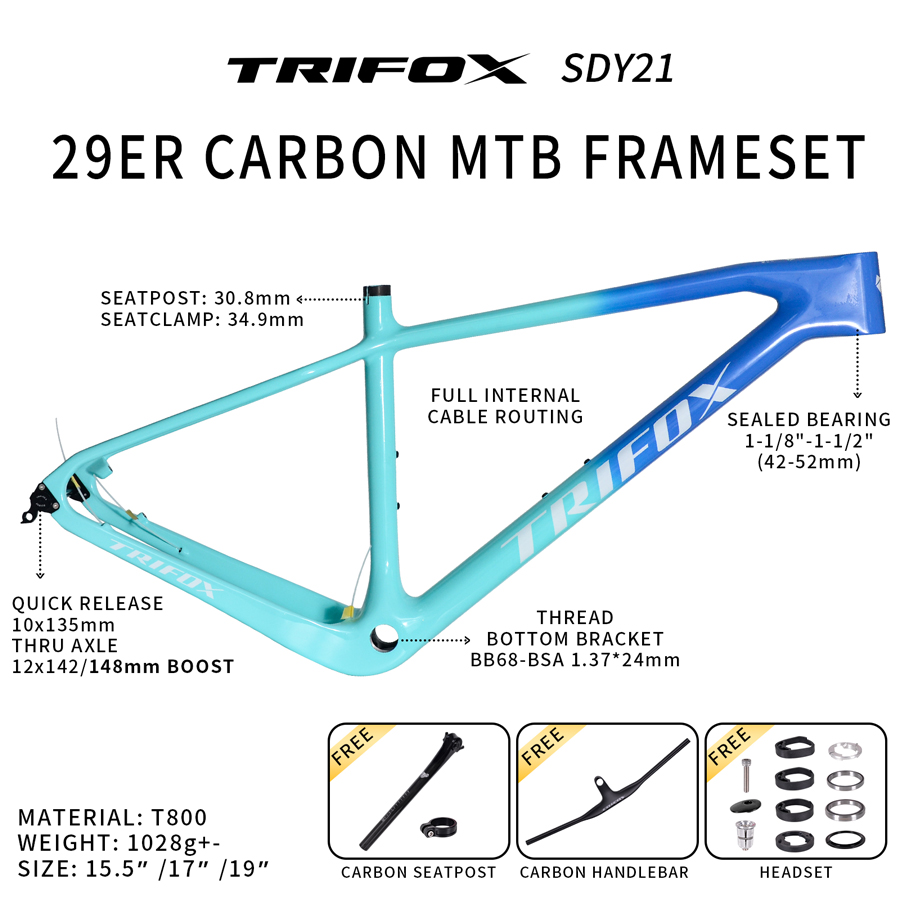
Relevance isn’t about fashion. It’s about compatibility. A truly relevant frame is one that gives you choices: modern stiffness when you want it, classic simplicity when you need it, and the flexibility to swap components without throwing your whole build away. The Trifox SDY21 carbon hardtail frame is built around exactly that philosophy. Its secret isn‘t a single “best” standard — it’s the ability to choose the right standard from the start. The frame is available in three distinct O.L.D (Over Locknut Distance) versions: 135mm Quick Release, 142x12mm Thru‑Axle, and 148x12mm Boost Thru‑Axle. Each is a purpose‑built frame, not a one‑size‑fits‑all hack. That clarity is the first step to keeping your bike relevant for years.
Choose Your Axle, Choose Your Future
Many brands claim versatility by offering adapters or interchangeable dropouts — solutions that often introduce play, creaks, or alignment headaches. The SDY21 takes a cleaner path. When you buy, you select the exact axle version that matches your wheelset and your ambitions.
Boost 148x12mm TA — The current gold standard. Boost spacing widens the hub flanges, which improves spoke bracing angles and creates a stiffer, stronger rear wheel. On the trail, that translates to sharper cornering, less wheel flex under hard pedaling, and better tracking through rock gardens. If you‘re building a modern XC or trail bike with 29” wheels and want maximum stiffness, this is the version to choose. Boost also gives you the widest compatibility with current wheels, forks, and drivetrains — the path of least future resistance.
142x12mm Thru‑Axle — The immediate predecessor to Boost. It offers much of the security and precision of a thru‑axle without the wider flange spacing. For riders who already own a quality 142mm wheelset or prefer a slightly narrower rear end for certain riding styles, this version provides a stiff, rattle‑free interface that improves handling and braking precision over QR. It‘s not the newest standard, but it’s far from obsolete — and it‘s the right answer if your parts bin already points that way.
135mm Quick Release — The traditionalist’s choice. Simple, lightweight, and compatible with a vast range of entry‑level and classic wheelsets. If you‘re building a budget‑conscious hardtail for smooth singletrack, bikepacking, or a singlespeed conversion, QR keeps things affordable and straightforward. Not every ride needs Boost-level stiffness — and that’s fine.
The Frame That Unites Them All
Whichever axle version you select, the core SDY21 DNA remains the same. The frame is constructed from T800 full carbon fiber, offering an exceptional stiffness‑to‑weight ratio. Weighing as little as 1028g in the 15.5” size, it‘s a true lightweight contender — a frame that doesn’t punish you on climbs. The geometry is modern and balanced: a 70° head tube angle and 73° seat tube angle provide confident, capable handling that climbs efficiently and descends with stability.
The SDY21 also features full internal cable routing through the headset, resulting in a sleek, uncluttered appearance while protecting cables from moisture, mud, and abrasion. The frame clears tires up to 29x2.4”, accommodating modern high‑volume rubber for traction and comfort. And it includes a replaceable derailleur hanger, making it compatible with both geared drivetrains and singlespeed setups — a rare touch of versatility at this price point.
The Standards That Matter Beyond the Axle
A relevant frame needs more than just axle choices. It needs to speak the industry‘s evolving language. The SDY21’s Boost 148 versions also embrace the Universal Derailleur Hanger (UDH) standard — the same interface that unlocks SRAM‘s Transmission drivetrains and makes hanger replacement universally easy. The frame uses a threaded BSA 73mm bottom bracket — famously creak‑free, easy to service with simple tools, and a deliberate departure from problematic press‑fit shells that can develop annoying noises over time.
For riders who want a frame that is both visually striking and technically sound, the SDY21 is available in multiple colors, including a vibrant orange mountain bike frame option that stands out without compromising the carbon‘s structural integrity. It’s a frame that performs as well as it looks.
Why This Matters for Your Build
The worst feeling in mountain biking is discovering that your dream build is incompatible with the wheels you already own — or with the wheels you hope to buy next season. By offering three distinct axle versions, the SDY21 puts control back in your hands. You don’t have to force adapters or compromise on your vision. You simply choose the version that aligns with your parts, your budget, and your riding style.
For riders seeking a no‑compromise rigid frame mtb that balances modern performance with practical compatibility, the SDY21 delivers. It‘s a frame that respects where mountain biking has been — and anticipates where it’s going. Build it with Boost and a 12‑speed drivetrain for a race‑ready XC machine. Build it with QR and a singlespeed tensioner for a minimalist trail weapon. Or build it with TA and a reliable 1x11 groupset for an all‑around hardtail that just works.
The right carbon hardtail doesn‘t lock you into a single path. It gives you choices — and the SDY21 gives you three. That’s how you stay relevant.
The seatpost is a component most riders overlook—until they notice it. That slight discomfort on rough roads, the creak that develops after a year, or the bike weight that feels just a little too heavy. The choice between a carbon fiber and an aluminum seatpost comes down to balancing weight, comfort, durability, and cost. Here are the seven key differences to help you decide which is right for your ride.
1. Weight
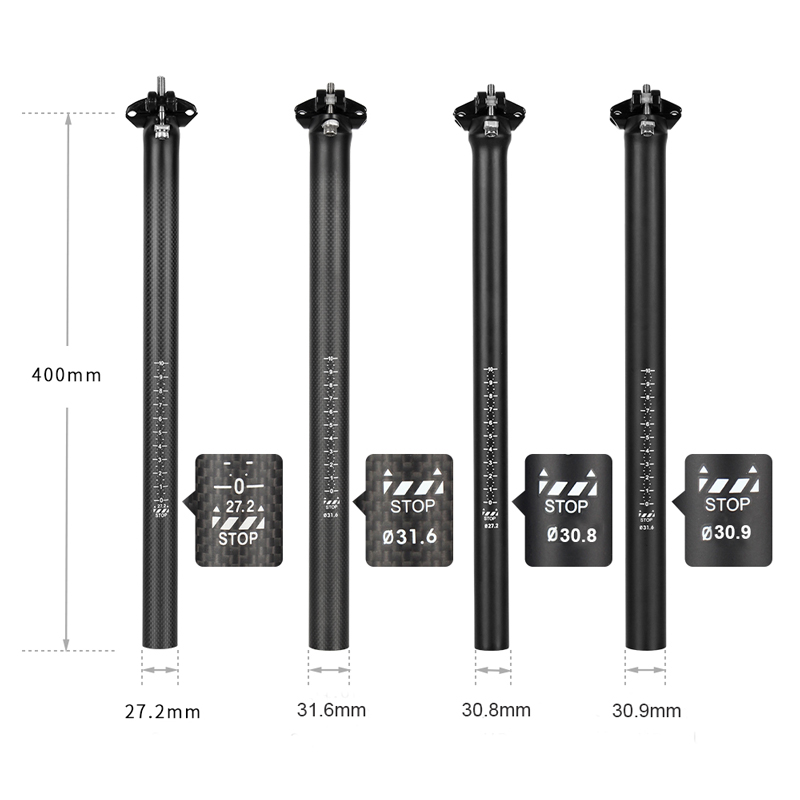
Carbon fiber is significantly lighter. A quality aluminum seatpost can weigh 220-300g. A carbon seatpost like the Trifox SLS21 tips the scale at just 160g (for the 30.8 x 400mm size), offering a weight reduction of 30-40% or more. That savings may seem small, but at the top of the seat tube, it reduces total bike weight and improves the bike’s overall feel.
2. Vibration Damping and Comfort
This is carbon’s strongest advantage. Carbon fiber naturally absorbs high-frequency “road buzz”—the vibration from rough pavement, chip seal, or gravel that causes fatigue over long miles. Aluminum transmits that vibration more directly, which can lead to numbness and discomfort. For long-distance road riders, gravel enthusiasts, or anyone seeking a smoother experience, carbon provides a meaningful increase in ride comfort.
3. Stiffness and Power Transfer
Both materials can be stiff, but carbon offers tunable stiffness. A well-designed carbon post can maintain the rigidity needed for efficient power transfer while still offering vertical compliance to absorb shocks. Aluminum is predictably stiff but cannot offer the same tuned flex characteristics.
4. Durability and Impact Resistance
Here, aluminum has the edge. Aluminum seatposts are tougher and can withstand direct impacts from rocks, crashes, or trail debris. If you regularly ride rocky terrain or subject your bike to hard use, aluminum offers peace of mind. Carbon can be damaged by overtightening or sharp impacts, though modern quality carbon posts are far more durable than early versions.
5. Installation and Maintenance
A carbon seatpost requires careful attention to torque specs and the use of carbon assembly paste (never grease). Carbon paste contains micro-grip particles that increase friction, allowing you to achieve a secure hold at lower torque to prevent slipping without crushing the carbon. An aluminum seatpost can be installed with standard grease and is more tolerant of minor torque variations. That said, an aluminum post in a carbon frame can corrode and seize over time, a problem carbon paste largely prevents. Either way, a torque wrench is recommended for both materials.
6. Aesthetics
Carbon’s UD matte or 3K weave finish looks undeniably premium. Aluminum posts typically have a painted or anodized finish. For builders who care about visual details, carbon offers a distinctive, high-end appearance.
7. Price and Value
Carbon costs more. A quality carbon seatpost typically ranges from $150 to $400, while aluminum options often run $50 to $150. The question becomes: is the weight savings and vibration damping worth the premium? For competitive riders, touring cyclists, or anyone spending long hours in the saddle, the answer is often yes. For casual or budget-conscious riders, aluminum remains a excellent choice.
Making Your Choice
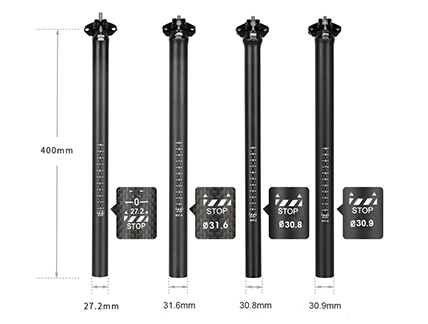
If you prioritize durability and cost, aluminum is a reliable choice. If you value weight reduction, ride comfort, and a premium aesthetic—and you’re willing to install it correctly with a torque wrench and carbon paste—a carbon seatpost like the carbon fiber seatpost SLS21 delivers measurable benefits on every ride. The Trifox SLS21 is available in multiple diameters, including the popular 27.2mm seatpost size for Mtb,road and gravel bikes, and features a 400mm length, T800 carbon construction, and titanium hardware. Upgrading your seatpost is one of the most effective ways to improve both bike performance and rider comfort—without changing how your bike looks from 10 feet away.
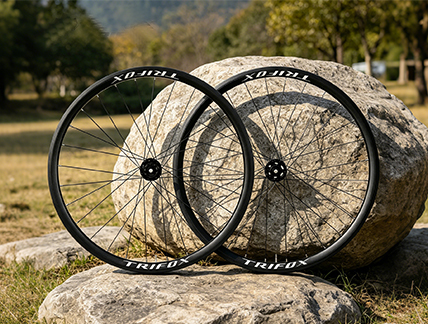
For years, road cyclists believed that narrow tires at sky‑high pressure were the only path to speed. That era is over. Today, riders understand that a wider rim — even by a few millimeters — fundamentally changes how a tire behaves. It reshapes the contact patch, lowers optimal pressure, and transforms ride quality. The Trifox AWT7 alloy disc brake wheelset is a perfect example of this modern philosophy. With its 14mm internal width, it’s engineered to do something simple but powerful: make your tires work better, so you ride faster, safer, and more comfortably. At an affordable price, it’s one of the best cheap bike wheelset options available for riders who want real performance without breaking the bank.
Rim Width Shapes the Tire, Not Just the Wheel
The rim isn’t just a hoop that holds the tire. Its internal width dictates the tire’s profile once inflated. On a narrow rim, a tire bulges into a light‑bulb shape — tall and narrow, with a small contact patch. This shape forces high pressure to keep the sidewalls stable, which translates into a harsh, unforgiving ride. A wider rim supports the tire’s sidewalls more effectively, creating a flatter, wider profile. This shape stabilizes the tread, reduces squirm, and dramatically increases the contact patch. As one industry analysis notes, “when the internal width of a rim reaches 21mm or more,” the contact surface rises considerably, enhancing redistribution of contact pressure and increasing lateral grip during cornering. The result is more predictable handling and better traction, especially on wet or loose surfaces.
The AWT7’s 14mm internal width is purpose‑selected for modern 25‑28mm tires. Rather than forcing a tire to bulge unnaturally, it creates a smooth, continuous surface from the rim to the tread. This profile improves stability when cornering and reduces the vague, wandering sensation that plagues narrow‑rim setups. Riders using the AWT7 on classic road routes have noted the wheels feel “planted” and “predictable” — a direct result of matching rim width to tire shape.
How Width Unlocks Lower Pressure and Higher Comfort
The most direct benefit of a wider rim is what it allows you to do with air pressure. A properly supported tire can be run at significantly lower pressures without risking pinch flats or rim strikes. According to wider rim research, using a 21mm internal width rim allows tires to be run at lower pressures, absorbing road vibrations more effectively and reducing the impact transmitted to the rider’s body and the frame. The AWT7’s 14mm width, while not as extreme as gravel‑oriented rims, hits the sweet spot for road use. It lets you drop pressure from the traditional 100‑120 psi range down to 80‑95 psi, depending on rider weight and tire choice. At these lower pressures, the tire flexes over road imperfections rather than bouncing off them. The result is dramatically reduced hand and saddle fatigue on rough pavement, longer chip seal, and worn asphalt.
This pressure flexibility also helps the tire maintain traction. A tire at lower pressure deforms around irregularities, increasing the effective contact patch. As one manufacturer explains, a wider internal rim maximizes tire support and grip, enhancing stability and comfort, and the lower pressure setup “absorbs road vibrations more effectively, therefore lowering the impact sent to the rider’s body.” That’s the difference between a bike that feels fragile on rough roads and one that inspires confidence mile after mile.
Alloy Efficiency Meets Budget‑Friendly Performance
Carbon wheels get the headlines, but alloy wheels like the AWT7 deliver 95% of the performance at a fraction of the cost. The AWT7’s 30mm rim depth offers a balance of aerodynamics and crosswind stability, while the 28 Pillar stainless steel spokes and welded aluminum construction provide the stiffness needed for efficient power transfer. Weighing approximately 1,956g per pair, the wheels are light enough for climbing yet durable enough for daily training. The 6‑pawl, 120‑point engagement hubs deliver crisp acceleration, and the disc brake compatibility ensures consistent stopping power in all weather. For riders seeking an affordable but capable bicycle disc wheel, the AWT7 represents exceptional value — a wheelset that doesn’t compromise on the fundamentals of ride quality.
The Bottom Line
Rim width isn’t a secondary spec. It’s a primary determinant of how your bike feels on the road. A 14mm internal width strikes a balance: wide enough to support the tire’s sidewalls and enable comfortable lower pressures, yet narrow enough to remain aerodynamically efficient for road use. The Trifox AWT7 alloy disc wheelset capitalizes on this design principle, delivering a ride that is stable, grippy, and noticeably more comfortable than traditional narrow‑rim wheelsets. For cyclists on a budget who refuse to sacrifice ride quality, the AWT7 is a smart upgrade that proves modern alloy engineering can rival carbon’s best traits — without the premium price tag.



