


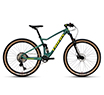
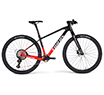
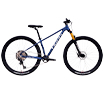

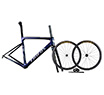
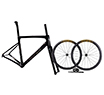
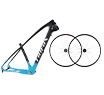
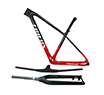





For mountain bike riders, the fork is a critical component that affects the riding experience. Many people struggle with a question when upgrading their bike: rigid fork or suspension fork – which is better?
In reality, there is no absolute winner; it depends on your riding terrain, speed, and your priorities regarding weight and comfort.
What is the difference between a Rigid Fork and a Suspension Fork?
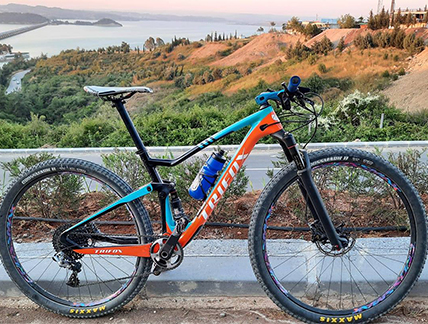
The biggest advantage of a suspension fork is its ability to absorb impacts from gravel, roots, and potholes, giving the bike better capability on rough terrain.
Therefore, if you frequently ride Trail, Enduro, or technical mountain terrain, a suspension fork is usually the better choice.
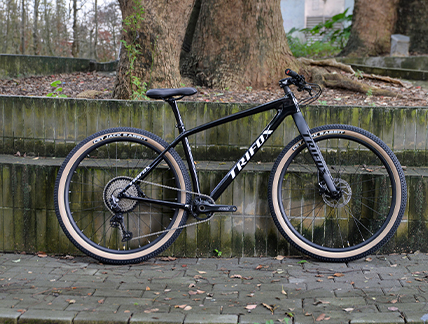
A rigid fork, on the other hand, has no moving suspension parts – it is lighter and simpler in construction. For XC, paved roads, light off‑road, and long‑distance riding, a rigid fork provides more direct pedalling feedback.
Why choose a carbon rigid fork?
For weight‑conscious riders, the fork is one of the key areas for reducing overall bike weight.
A high‑quality carbon fibre mtb fork can reduce weight while maintaining sufficient stiffness, making the bike feel more responsive during climbing and acceleration.
Compared with traditional metal rigid forks, carbon fibre also offers good vibration damping, filtering out some high‑frequency road buzz.
This is especially valuable for XC riders and long‑distance cyclists.
TRIFOX TMK200: Ultra‑light Carbon Boost Rigid Fork
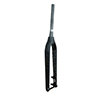
If you are building a lightweight XC mountain bike, check out the TRIFOX TMK200 Carbon MTB Rigid Fork.
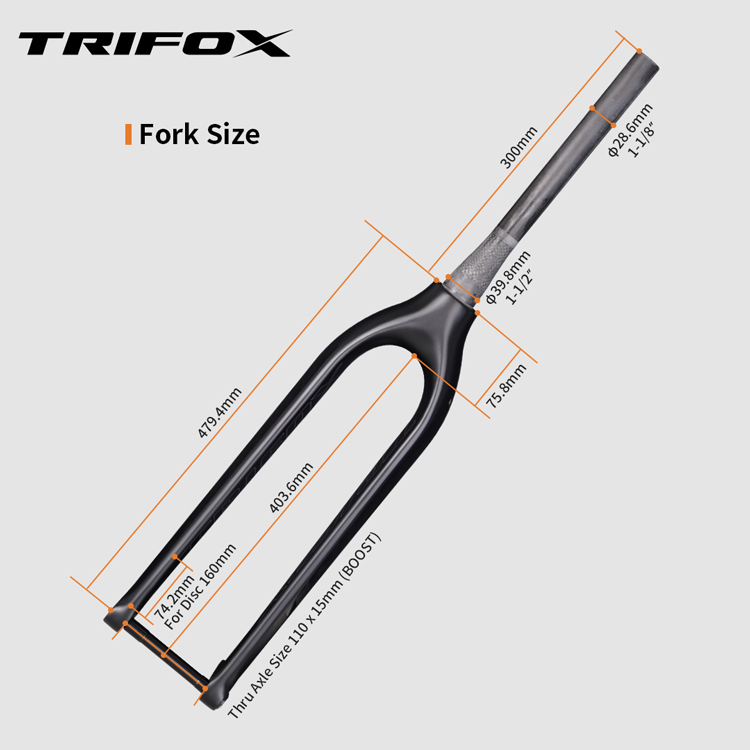
The TMK200 features a lightweight carbon construction with modern Boost规格, compatible with 29‑inch mountain bikes and disc brake systems.
As a rigid carbon fork mtb, it eliminates the moving parts of a traditional suspension fork, reducing weight while providing direct handling feedback.
Key features include:
- Ultra‑light carbon construction 507g
- Boost design
- Suitable for 29‑inch MTB
- Disc brake compatible
- Tapered steerer tube
- High stiffness for direct handling
- Ideal for XC and light trail riding
If your goal is to build a lightweight mountain bike, the TMK200 pairs well with lightweight carbon frames, wheelsets, and seatposts.
Who is a rigid fork suitable for?
A rigid fork is particularly well suited to the following riding scenarios:
XC riding: Lighter weight aids climbing and acceleration.
Long‑distance riding: Simple construction means lower maintenance needs.
Light trails: For relatively smooth off‑road routes, a rigid fork is more than adequate.
Lightweight builds: If you are aiming for a lightweight MTB, a rigid carbon fork is a very effective upgrade component.
However, if your routes include many rocks, continuous bumps, or large drops, a suspension fork remains the more appropriate choice.
Is a Rigid Fork really lighter than Suspension?
In general, a rigid fork has a simpler structure and therefore offers a clear weight advantage.
A carbon rigid fork, in particular, can further reduce front‑end weight, making the bike feel more agile in corners.
However, lighter does not mean suitable for all conditions. When choosing a fork, you should first consider riding safety and the terrain, then think about weight savings.
Conclusion
So, which is better: rigid fork or suspension?
The answer depends on your riding style.
If you frequently tackle challenging mountain terrain, a suspension fork provides better comfort and control.
If you prioritise light weight, climbing efficiency, and XC performance, then a carbon rigid fork is an excellent choice.
The TRIFOX TMK200, as an ultra‑light carbon fibre mtb fork, combines Boost, 29‑inch compatibility, and carbon construction – making it an ideal choice for riders who want to build a lightweight, efficient XC mountain bike.
2026-08-15
Trifox
SHARE:


Comments
Recent Posts
1
1
1
1
1
1
1
1
1
1
1
1
1
1
1
1
1
1
1
1
1
1
1

1



