


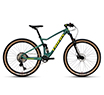
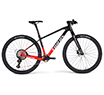
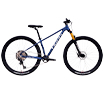

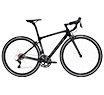
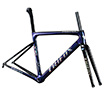
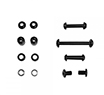
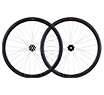
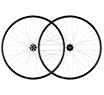
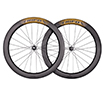
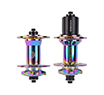
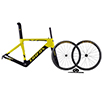
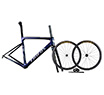
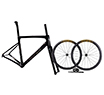
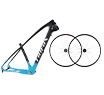
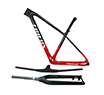
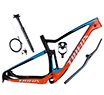
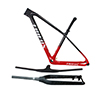
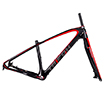





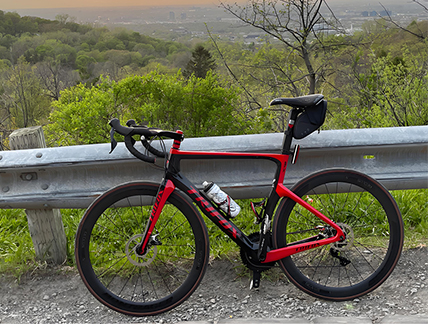
Carbon fiber frames have evolved dramatically over the past decade. Today, a truly modern carbon road bike is defined by three key standards: disc brakes, thru-axles, and tapered steerer tubes. The Trifox X10 carbon road bike frame embraces all three, delivering the performance, safety, and handling that today‘s riders expect. Here’s why each standard matters and how they work together on the X10. Disc Brakes: All-Weather Stopping Power The Trifox X10 is a dedicated disc brake frame, designed specifically for flat-mount calipers. Unlike rim brakes, disc brakes provide consistent stopping power regardless of weather conditions—wet roads, steep descents, or sudden obstacles. The flat-mount standard ensures a clean, integrated look with the frame’s aerodynamics. Disc brakes also allow wider tire clearance (the X10 accepts 700x25C tires, with compatibility for 28C), offering more comfort and grip without sacrificing the frame’s race-ready pedigree. Thru-Axles: Stiffness and Precision The X10 features 12x100mm front and 12x142mm rear thru-axles. Compared to traditional quick-releases, thru-axles thread directly into the frame, creating a much stiffer and more secure wheel-to-frame interface. This stiffness translates into sharper cornering, better tracking under hard braking, and zero disc rotor rub—a common nuisance on QR disc setups. The result is a bike that goes exactly where you point it, with no flex or hesitation. Thru-axles also make wheel installation consistent and repeatable, eliminating guesswork. Tapered Steerer: Steering Confidence The X10 employs a tapered 1-1/8” to 1-1/2” steerer tube. This wider lower diameter creates a dramatically stiffer interface between the fork and head tube compared to straight 1-1/8” steerers. The increased stiffness translates to more precise steering, less flex under hard cornering, and greater confidence on fast descents. For a carbon road bike frame disc brake, this is non‑negotiable for confident handling in all conditions. Complete Integration: A Frame Built for Today The X10 doesn’t stop at these three core features. It also includes full internal cable routing for a clean, aerodynamic profile, a threaded BSA BB68 bottom bracket for creak‑free reliability and easy maintenance, and progressive geometry across sizes from XS to XL. Crafted from T800 carbon fiber, it balances lightweight performance with the durability needed for all‑round use, making it a genuine contender for the best chinese aero frame value in its class. When combined with disc brakes, thru-axles, and a tapered steerer, the X10 delivers a complete platform that’s ready for fast group rides, gran fondos, and everything in between.
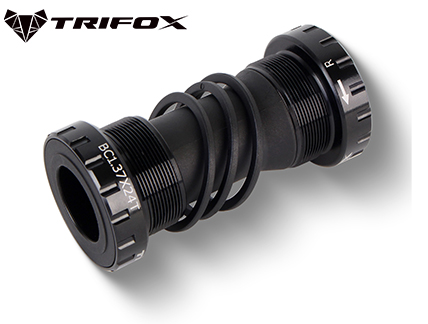
Few components spark as much quiet frustration among riders as the bottom bracket. You feel it when a persistent creak ruins an otherwise perfect ride, or when an upgrade turns into a search for obscure adapters. For years, the industry swung hard toward press-fit standards, promising lighter frames and stiffer pedal platforms. But recently, the pendulum has swung back, and many manufacturers have returned to the classic threaded bb —specifically the BSA standard. Here’s a real‑world breakdown of what each system does well, and where it falls short. BSA Threaded: The Rock‑Solid Standard The BSA (British Standard/English) threaded bottom bracket is the gold standard for reliability. Unlike press‑fit systems held in by friction, a bsa bottom bracket is secured by substantial metal threads cut directly into the frame or bonded into a metal insert. This mechanical lock virtually eliminates the loosening and movement that cause creaking. When the bearings eventually wear out, service is refreshingly simple: unscrew the old unit with standard tools and thread in a new one. BSA bottom brackets are also remarkably adaptable. The 24mm spindle standard (used by Shimano Hollowtech and many others) is widely supported, and the design has proven itself across decades of road, mountain, and gravel riding. If you value peace of mind and despise chasing mystery creaks, the BSA system is a proven, no‑compromise solution. Press-Fit: The Pursuit of Stiffness and Lightness Press‑fit systems arose from a valid engineering goal: reducing weight and increasing stiffness. By eliminating threaded metal inserts, frame manufacturers could use larger‑diameter carbon tubes around the bottom bracket area, potentially improving power transfer. BB86 (road) and BB92 (mountain) standards are common examples. When manufacturing tolerances are perfect and installation is flawless, a press‑fit bottom bracket can be quiet and efficient. However, that margin of error is narrow. Minor inconsistencies in frame molding can lead to bearing misalignment, which accelerates wear and creates the dreaded creak. Because the cups rely on friction to stay in place, flexing during hard pedaling can cause microscopic movement that eventually eats into the frame shell. For riders who work on their own bikes, press‑fit also requires specialized bearing presses and removal tools—adding cost and complexity to a routine job. Making Your Choice: Real‑World Priorities The best bottom bracket system is the one that suits your frame and your tolerance for maintenance. Choose a threaded bb (BSA) if you prioritize: long‑term reliability above marginal weight savings; simple, at‑home service with common tools; and compatibility with the widest range of cranksets. Choose press‑fit if you have a frame designed specifically for that standard, you don't mind potential creaks, and you want the absolute maximum BB shell width for frame stiffness. However, if you value peace of mind and want a bottom bracket you can install and forget, the BSA bsa bottom bracket remains the smartest choice. The Trifox TRBB68: Threaded Simplicity, Ready to Roll The Trifox TRBB68 is a direct reflection of the BSA philosophy. Designed for 68mm English‑threaded shells, it uses a dependable aluminum body with robust sealed bearings. Installation is straightforward with standard tools, and the threaded cups provide a secure, creak‑free interface that stays quiet ride after ride. Whether you’re refreshing an existing bike or building up a new frame, the TRBB68 delivers the no‑fuss performance that keeps you focused on the road, not on a mystery squeak.
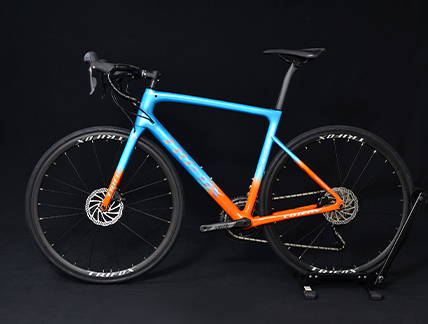
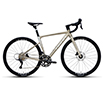
Walk into any bike shop or scroll through online listings, and you'll see road bikes divided into two distinct camps: race and endurance. One promises speed and aggression. The other promises comfort and distance. For years, the choice seemed simple—buy a race bike if you want to go fast, buy an endurance bike if you want to go far. But modern carbon engineering has blurred those lines. Today, many of the best entry level road bike options are proving that you don't have to choose between performance and comfort. Here's how race and endurance geometries differ—and why a balanced carbon frame might be the smartest choice for your body. The Numbers That Matter: Stack and Reach To understand bike geometry, you need to understand two critical measurements: stack and reach. Stack measures the vertical distance from the center of the bottom bracket to the midpoint of the top of the head tube. In plain English, stack determines how high or low your handlebars sit relative to your saddle. A taller stack puts you in a more upright position, reducing strain on your back and shoulders. A shorter stack lowers your torso, improving aerodynamics but requiring greater flexibility. Reach is the horizontal distance from the bottom bracket to the head tube. It determines how far you must stretch to reach the handlebars. These two numbers form the foundation of every bike's fit. Race geometry typically features a lower stack and longer reach. This positions the rider in an aggressive, forward-leaning posture designed for cutting through wind and transferring maximum power to the pedals. Endurance geometry, by contrast, uses a taller stack and shorter reach, creating a more relaxed, upright position that reduces fatigue over long hours in the saddle. What Race Geometry Feels Like on the Road A pure race bike is engineered for one thing: speed. The frame uses a steeper head tube angle (often 73° or more), which delivers quick, precise steering—ideal for fast cornering and rapid direction changes in criteriums or spirited group rides. The seat tube angle is also steeper, typically around 74°, positioning your hips directly over the bottom bracket for efficient power transfer—a hallmark of climbing and racing-oriented geometry. A shorter wheelbase (the distance between the front and rear axles) makes the bike feel responsive and eager to change direction. The result is a bike that feels alive under power, accelerates with urgency, and carves through corners like a scalpel. However, this same responsive handling can feel twitchy and demanding for riders who aren't accustomed to aggressive positions. Riders with limited flexibility or lower back issues may find race geometry uncomfortable on longer rides, especially in the drops. The stretched-out position can cause hand numbness, shoulder tension, and lower back fatigue. Pros have the strength and flexibility to maintain these extreme postures for days on end. For the rest of us, a full-on race bike might make your rides worse, not better. What Endurance Geometry Prioritizes Instead Endurance bikes flip the priority list. Comfort comes first. The taller stack shortens the vertical distance from saddle to handlebars, allowing you to ride with a more neutral spine angle. The shorter reach brings the bars closer, reducing the need to stretch forward. Endurance geometry also typically includes a longer wheelbase, which enhances stability at speed and creates a more planted, confidence-inspiring feel on descents. Tire clearance is another hallmark of endurance design. Where race bikes often cap out at 25-28mm tires, many endurance frames accept rubber up to 32-35mm. Wider tires at lower pressures provide significantly more comfort and grip without sacrificing speed. Today's endurance bikes still climb and accelerate quickly, but the geometry is more forgiving, with a slightly taller stack and shorter reach that reduce strain on your back and shoulders. They're designed for real roads—potholes, chipseal, expansion joints—not just smooth tarmac. That makes them ideal for sportives, gran fondos, and the kind of mixed-surface riding that most cyclists actually do. The Modern Middle Ground: When One Bike Does Both The good news is that the line between race and endurance has blurred dramatically in recent years. Modern race bikes have become more stable and predictable at high speeds, largely thanks to lessons learned from gravel geometry. Longer wheelbases, lower bottom brackets, and wider tire clearances now make them far more versatile than their 2015 equivalents. And endurance bikes have shed their "slow and comfortable" reputation. They now feature race-proven designs with minor geometry adjustments, delivering responsive handling without the extreme positioning. A well-balanced carbon frame offers the sharp handling and efficient pedaling position of a race bike, making it a joy to push hard on climbs and through corners. Yet, it tempers this with a wheelbase and stack height that provide real-world stability and comfort for longer days in the saddle. The stack-to-reach ratio tells the comfort story. A ratio of around 1.42, for example, offers a position that's performance-oriented yet not impossibly low—allowing for a moderately aggressive drop without requiring extreme flexibility, bridging the gap between an all-out race bike and a relaxed endurance machine. This is the sweet spot for most riders: responsive enough for spirited group rides and racing, yet manageable enough for all-day adventures. Who Is a Race Bike For? A pure race bike is the right choice if you compete in road races or criteriums, prioritize aerodynamics and power transfer above all else, have above-average flexibility and core strength, are comfortable with a very low, stretched-out position, and don't typically ride more than 3-4 hours at a time. Race bikes are scalpel-sharp tools for a specific job: going fast. If that describes you, a race-focused frame will reward you. Who Is an Endurance Bike For? An endurance or all-road bike is the better fit if you ride for enjoyment rather than competition, frequently cover 4+ hours in the saddle, have experienced back, neck, or wrist discomfort on long rides, want to run wider tires for comfort and stability, or are newer to road cycling and still developing flexibility. Endurance bikes are designed for the real world—for the rider who wants to finish a century feeling good enough to do it again the next day. A study on bike fit and comfort found that many "serious" road cyclists were ruining their experience by forcing themselves into ultra-aggressive positions that their bodies weren't ready for. The easiest way to make yourself faster for longer is to be more comfortable. If you can't get comfortable on a bike and stay that way on the longest of rides, it's money wasted—no matter how fast it looks on paper. Meet the Trifox SF-TA 2.0: A Carbon Road Bike That Bridges the Gap The Trifox SF-TA 2.0 is built around a T800 Toray carbon fiber frame, delivering a lightweight chassis (complete bike weight around 8.6kg/19 lbs) that feels responsive and efficient under power. The frame features modern standards: a tapered head tube for precise steering, flat-mount disc brakes for superior stopping power, and 12mm thru-axles for a stiff, secure wheel interface. The geometry is neither extreme race nor relaxed endurance. Instead, it's a highly capable all-rounder that satisfies the sportive rider, the club racer, and the enthusiast seeking one bike to do it all. The S-Ride 2x11-speed groupset provides reliable shifting, and the integrated hydraulic disc brakes offer confident, modulated braking in all conditions. The bike rolls on a quality aluminum wheelset with 40mm deep rims, and finishing kit like the carbon seatpost and alloy bars completes a thoughtful, performance-oriented build. Making Your Final Choice The bike industry has trained us to believe that "race" is better than "endurance"—that more aggressive is always more serious. That's marketing, not engineering. The right bike is the one that fits your body, matches your flexibility, and keeps you comfortable hour after hour. For the majority of riders—including many who consider themselves serious cyclists—a modern balanced geometry or well-designed endurance bike is the smarter choice. It will make you faster for longer because you'll actually want to stay in the saddle. The Trifox SF-TA 2.0 exemplifies this new paradigm: a genuine carbon fiber road bike with modern features, quality components, and a geometry that doesn't force you to choose between speed and comfort. If you're seeking an entry level road bike that offers real carbon performance without breaking the bank, or a best budget road bike that punches well above its price class, the SF-TA 2.0 is a compelling choice. Test ride. Pay attention to how your body feels after two hours. And remember: the fastest bike is the one you actually want to ride.
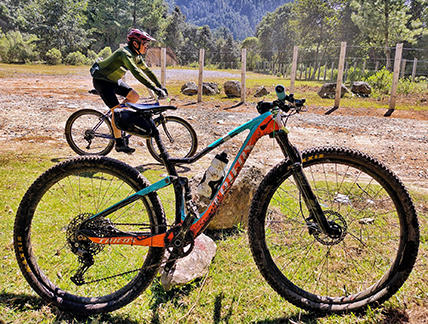
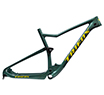
For years, mountain bikers believed you had to choose: an efficient climbing bike or a confident descending bike. A short-travel XC race machine would dance up climbs but leave you white-knuckled on steeps, while a long-travel bruiser could plow through anything but felt like pedaling a couch uphill. The compromise seemed inevitable — until modern carbon full‑suspension engineering changed the rules. The Trifox MFM100 frameset is designed to deliver the best of both worlds. Whether you‘re chasing a podium in an XC race or enjoying an all‑day trail adventure, this T800 carbon platform proves you can have climbing efficiency and descending confidence in one bike. Geometry: The Foundation of Versatility A frame’s geometry determines how it responds to rider input. The MFM100 uses a carefully balanced 68.5° head tube angle and 74.7° seat tube angle — numbers that sit right in the sweet spot between XC urgency and trail stability. The slightly slacker head angle (compared to traditional XC bikes) provides confidence on descents, keeping the front wheel planted and stable at speed. Meanwhile, the steeper effective seat tube angle places the rider directly over the bottom bracket for efficient power transfer on climbs. This combination creates a bike that climbs with authority and descends with composure — no compromises needed. For riders in the market for a medium bike frame, the MFM100’s M size (17.5“) offers a 440mm seat tube and a generous 470.2mm reach, providing a spacious yet planted cockpit for riders from 170‑185cm. The proportional geometry across all four sizes (XS, S, M, L) ensures every rider gets the same balanced handling characteristics. Suspension Kinematics: The Science of Simultaneous Efficiency The real magic happens in the rear suspension. The MFM100 employs a Horst‑link four‑bar linkage, a proven design that separates pedaling forces from bump forces. The key is the anti-squat curve — a measure of how the suspension resists compressing under pedaling loads. At the sag point (where the bike sits with a rider on board), the anti-squat is tuned high enough to resist pedal bob, keeping the bike stable and efficient during seated climbing. But deeper in the travel, the anti-squat tapers off, allowing the suspension to absorb impacts without harshness. Meanwhile, the anti-rise curve (which affects suspension behavior under braking) is tuned to keep the rear wheel active and glued to the trail even when you‘re grabbing anchors on a steep chute. This sophisticated kinematics tuning is paired with a Trunnion‑mounted rear shock — a design that reduces friction and allows for a more linear, predictable suspension feel. The Trunnion mount eliminates long eyelets, saving weight and enabling cleaner frame lines, while improving small‑bump sensitivity for better traction on loose or choppy terrain. Together, these design elements create a bike that climbs with the urgency of a hardtail (no wasted energy from pedal-induced bob) yet descends with the plushness and control of a bike with much more travel. Carbon Construction: Where Stiffness Meets Compliance Carbon fiber’s anisotropic nature is the final piece of the puzzle. Unlike aluminum, which has uniform stiffness in all directions, carbon allows engineers to orient fibers to be stiff exactly where needed and compliant exactly where desired. In the MFM100’s T800 carbon layup, high‑modulus fibers are oriented along the downtube and chainstays to resist pedaling forces and prevent wasteful flex. Yet the same structure allows controlled flex in the seatstays, absorbing rear‑wheel impacts and reducing vibration transmitted to the rider. This selective stiffness is the reason a carbon full-suspension frame can feel both rigid under power and forgiving over rough ground. The result is a frame that weighs just 2,235g (size M, including hardware) — impressively light for a full‑suspension chassis — yet provides the lateral rigidity needed for precise cornering and the vertical compliance that keeps you fresh hour after hour. Boost Spacing and Modern Standards The MFM100 fully embraces modern mountain bike standards. Boost 148x12mm rear spacing (with a 15x110mm fork interface) widens the hub flanges, creating a stiffer, stronger rear wheel that tracks more accurately through corners and resists flex under hard pedaling. Internal cable routing keeps the frame clean and protects hoses from trail debris. Real‑World Rider Feedback Riders who have built up the MFM100 consistently praise its balanced character. One owner noted the bike is “very fast and rigid … the suspension behaves very well, absorbing small irregularities in the terrain and it does not rock anything at all.” Another described it as “very reactive when you hit it with acceleration … the force you apply to the pedals goes directly to the wheels.” On descents, users report that the bike “tracks straight on steep, rocky runs” and stays composed under hard hits. This is the combination that makes a frame truly versatile: efficient power transfer for climbs and predictable, planted stability for descents. Value: Premium Performance Without the Premium Price Historically, a full‑carbon, full‑suspension frame with this level of engineering cost $2,000‑$3,000. The MFM100 disrupts that paradigm entirely. At just $899 (frequently on sale at $699‑$789 for certain sizes), it is a genuine best carbon frameset under 1000 — a full modern‑geometry, T800 carbon, Boost‑spaced chassis at a price normally reserved for high‑end aluminum frames. To achieve this value, Trifox uses a direct‑to‑consumer model, eliminating retail markups. The result is a frame that punches well above its price class, offering the kind of balance between climbing and descending that typically requires spending two or three times as much. Who Is This Frame For? The MFM100 is the ideal platform for: - Cross‑country racers who want efficient pedaling on climbs without sacrificing control on technical descents. - Trail riders who cover varied terrain — climbs, descents, flow trails, and chunky sections — all in a single ride. - Riders upgrading from an entry‑level hardtail, seeking the comfort and control of full suspension without a five‑figure investment. - Value‑conscious builders who want a modern, capable, lightweight full‑suspension platform that won’t break the bank. You no longer have to choose between a climbing bike and a descending bike. The Trifox MFM100 carbon full‑suspension frame proves that careful geometry, sophisticated suspension kinematics, and intelligent carbon layup can deliver the best of both worlds. It climbs with efficiency, descends with confidence, and offers exceptional value for riders who want a true one‑bike solution. Whether you‘re racing XC or exploring new trails, this frame is ready.
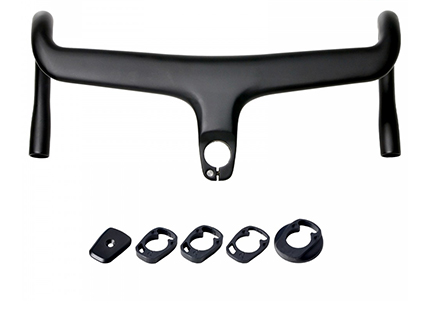
Upgrading your cockpit is one of the most effective ways to transform how your road bike feels beneath you. When it comes to choosing between carbon fiber and aluminum handlebars, the debate has been ongoing for years—and for good reason. Both materials have passionate advocates, and the “right” answer depends on your riding style, budget, and performance priorities. So where do the weight savings really land, and what does that extra cost actually buy you? Let’s break it down. The Weight Reality: How Much Lighter Is Carbon? Let’s cut straight to the numbers. On average, carbon handlebars weigh about 20–40% less than their aluminum counterparts. That translates to a typical aluminum handlebar falling in the 300–400 gram range, while a carbon bar often comes in between 200–300 grams. For a real-world comparison, many brands show a weight saving of around 100 to 150 grams when switching from aluminum to carbon. Does that sound small? Consider this: saving 100 grams at the handlebars—the highest point on your bike—has a more noticeable effect on handling and climbing feel than saving the same weight from a bottom bracket or wheelset. Every gram you remove from the front end sharpens steering response and makes the bike feel more alive when you pull out of the saddle. For competitive cyclists, that difference matters. For the rest of us? It depends on how much you value that “lighter in the hands” sensation. Beyond Weight: Vibration Damping and Ride Quality Weight savings are just the beginning. Where carbon truly shines is in its ability to absorb high-frequency road vibrations—the constant “buzz” that gradually fatigues your hands, wrists, and shoulders over long rides. Carbon fiber can be engineered through precise fiber lay-ups to strike an optimal balance between stiffness and compliance, meaning you get a bar that’s stiff enough for precise cornering yet forgiving enough to smooth out rough pavement. Aluminum, by contrast, transmits more road chatter directly into your hands. While modern alloy bars have improved significantly, they still lack carbon’s natural vibration-damping properties. For endurance cyclists spending hours in the saddle, that extra compliance translates directly to less fatigue and more enjoyment. Fatigue Life and Durability: The Surprising Truth Here’s something that might surprise you: carbon handlebars actually have a superior fatigue life compared to aluminum. Lab testing has documented that carbon’s fatigue resistance is roughly five times better than aluminum’s. Aluminum and other metals don’t exhibit an endurance limit—meaning even small repeated loads will eventually cause failure after enough cycles. Carbon, on the other hand, can withstand millions of stress cycles without degradation, provided it remains undamaged. That said, carbon’s Achilles’ heel is impact damage. A hard crash or an over-torqued stem clamp can compromise a carbon bar in ways that aren’t always visible to the naked eye. Aluminum tends to bend or show obvious deformation before failing, giving you a clear warning sign. If you’re a rider who crashes frequently or prefers the peace of mind that comes with a more impact-resistant material, aluminum remains a compelling choice. The Cost Equation: What You’re Paying For This is where the rubber meets the road—or rather, where your wallet meets the handlebars. Carbon bars typically range from $150 to $500, while quality aluminum bars can be found for $30 to $150. That’s a significant premium, and it’s fair to ask whether the performance benefits justify the price. For competitive racers and serious enthusiasts who spend countless hours training, the answer is often yes. The combination of weight savings, vibration damping, and fatigue resistance creates a tangible performance advantage. But for recreational riders or those on a tighter budget, modern aluminum handlebars offer excellent value without sacrificing too much. Many pro teams actually prefer aluminum bars for racing—not because carbon is unsafe, but because aluminum offers a better cost-to-performance ratio when you’re equipping an entire fleet of bikes. What About Modern Aluminum? It’s worth noting that aluminum handlebars have come a long way. Advances in alloy manufacturing now allow brands to produce bars that are lighter, stiffer, and even more aerodynamic than ever before. You can now obtain many of the aerodynamic benefits that were previously only possible with carbon, using an alloy bar. For road and gravel racers on a budget, this means high-performance cockpits are more accessible than ever. Where Carbon Still Rules Despite aluminum’s progress, carbon remains the undisputed champion in three key areas: aerodynamic shaping, fine-tuned compliance, and absolute minimum weight. Carbon can be molded into complex aero profiles that would be impossible—or prohibitively expensive—to achieve with metal. This is especially relevant for aero-integrated designs, where every watt of drag matters. If you’re looking to shave every possible gram while maximizing aerodynamic efficiency, carbon is the only answer. For cyclists who prioritize a refined, fatigue-reducing ride feel on long days in the saddle, carbon’s vibration-damping properties are worth the premium. Meet the DHB1000: A New Standard in Carbon Road Bars For riders ready to make the leap to carbon, the latest generation of integrated bars offers benefits that go far beyond simple weight reduction. The carbon road bars from Trifox represent everything carbon does best—lightweight construction, impeccable vibration damping, and a fully internal cable routing system that cleans up your cockpit and reduces aerodynamic drag. As an integrated one-piece design, it eliminates the traditional stem and faceplate interface, resulting in a stiffer, more responsive front end that transmits your inputs directly to the wheel. And with a sleek aero profile, every watt you produce goes forward, not sideways. The Verdict So, where do the weight savings—and the cost—really land? Carbon handlebars will save you roughly 100–150 grams compared to a quality aluminum bar, while offering superior vibration damping and exceptional fatigue resistance. You’ll pay a premium for those benefits, typically 2–4 times the cost of an equivalent alloy bar. The choice comes down to your priorities: If you’re chasing every performance advantage, spending hours in the saddle, or simply love the feel of a premium cockpit, carbon handlebars road are worth every penny. If durability on a budget is your main concern, modern aluminum still delivers impressive performance at a fraction of the price. Either way, understanding where the real differences lie will help you make the right choice for your riding.
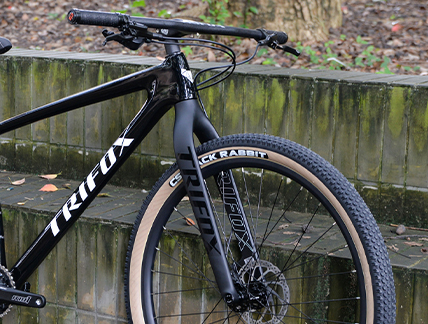
Most mountain bikers assume that more suspension equals better control. But there is a different path—one that many experienced riders are rediscovering. A quality mountain bike forks with a rigid carbon design strips away complexity and delivers something rare: a direct, unfiltered connection to the trail. The Trifox TMK200 is a 29er-specific rigid mtb fork that proves how lightweight construction and modern geometry can transform a hardtail‘s handling. Let’s explore how a carbon rigid fork sharpens your performance on the trail. Reduced Unsprung Mass for Quicker Steering Weight at the front of your bike directly affects how quickly it changes direction. A typical suspension fork weighs roughly 2.5 pounds (1.1–1.3 kg), while a high-quality carbon rigid fork like the TMK200 tips the scales at just 507 grams (1.1 lb). Dropping over a kilogram from the front end dramatically reduces the fork‘s rotational inertia, allowing the bike to respond to steering inputs with less effort. The result is a front wheel that feels eager, flickable, and far more precise through tight singletrack. Lighter unsprung mass also means your suspension fork’s spring rate and rebound damping are no longer a factor—every lean and countersteer transmits directly to the trail. Greater Stiffness for Cornering Confidence Flexibility in a fork creates vagueness. When you push hard into a berm or rail through a high-speed sweeper, any torsional flex in the fork causes the front wheel to lag, reducing traction and forcing mid‑corner corrections. The Trifox TMK200 is engineered for exceptional lateral rigidity. Its full‑carbon construction and Boost 110x15mm thru‑axle spacing eliminate unwanted flex, locking the front wheel precisely to your steering angle. The wider Boost spacing also pushes the hub flanges farther apart, which further improves spoke bracing angles and wheel stiffness. Riders who have tested the TMK200 consistently report feeling “more precise steering and less flex,” translating into greater confidence during aggressive cornering. This is the true advantage of a modern rigid mtb fork: the front end goes exactly where you aim it, without delay or deflection. Superior Vibration Damping Without Isolation Suspension forks excel at absorbing large impacts, but they also isolate the rider from the subtle feedback that helps you read the trail. Carbon fiber offers a unique solution: it filters out harsh, fatigue‑inducing high‑frequency vibration while transmitting the low‑frequency information you actually need. Carbon forks are known to be significantly stiffer than aluminum while also having better vibration damping. The TMK200’s T800 carbon layup is specifically designed to reduce trail “buzz” that leads to arm pump and hand numbness, yet it retains the precise steering feedback that keeps you in control on loose or chunky surfaces. You stay fresher on long days without losing the connection that helps you choose the smoothest line. Enhanced Trail Feedback for Better Line Choice Perhaps the most overlooked benefit of a rigid fork is how it sharpens your riding skills. Without suspension to mask mistakes, you learn to read the trail differently. You look further ahead, spot smoother lines, and develop a more active, flowing riding style. A carbon mountain bike forks transmits a clear feel of the trail surface—more so than forks that mix carbon with alloy crowns or steerers. That feedback helps you place the front wheel exactly where you intend, improving overall bike handling and line choice on technical sections. Over time, rigid-fork riding builds better fundamentals that make you a faster, safer rider even when you return to a suspended bike. The TMK200: A Modern Standard for Rigid Handling The Trifox TMK200 is purpose‑built for today‘s hardtails. It features a 1-1/8” to 1-1/2” tapered steerer, Boost 110x15mm thru‑axle spacing, and a 45mm offset—specs that complement modern trail geometry perfectly.Clearance for tires up to 29x3.0” makes it versatile enough for everything from XC racing to bikepacking, while its disc brake compatibility (160/180mm rotors) ensures confident stopping power. Riders who have installed the TMK200 note that it transforms their bikes into “lightweight, durable, and off‑road‑capable” machines. At just $109, it represents an accessible entry into precision handling. The shift to a carbon rigid fork isn‘t for everyone—if you spend your days charging through rock gardens at warp speed, suspension remains the better tool. But for riders who prioritize responsiveness, feedback, and a pure connection to the trail, a modern rigid mtb fork like the TMK200 is a revelation. It sharpens handling, reduces fatigue, and, most importantly, makes every trail feel more alive.
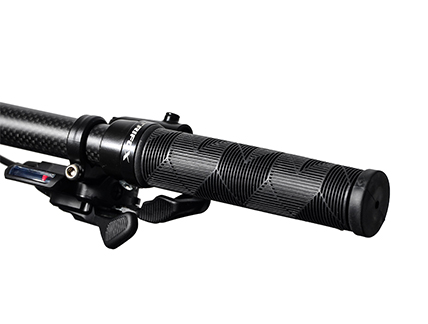
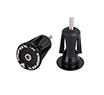
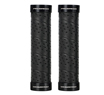
Your hands are the primary connection between you and the trail. If that connection is compromised—by slippery rubber, harsh vibration, or an ill-fitting shape—your control, confidence, and comfort suffer. The right mtb bar grips aren’t just about “feel good”; they’re a performance component. But with rubber, silicone, foam, and even cork available, how do you choose? Here’s a practical guide to grip materials and what they mean for your riding. Rubber: The Time‑Tested All‑Rounder Rubber remains the most common mtb bar grips material for good reason. High-quality rubber compounds offer an excellent balance of durability, shock absorption, and all-weather traction. Many premium rubber grips now use dual‑compound construction: a harder, tough base layer underneath with a softer, tackier outer layer. This provides a secure hold without sacrificing durability. Rubber also excels across a wide range of conditions. Quality rubber maintains grip in rain, sweat, and mud, making it a favorite for aggressive trail, enduro, and all‑mountain riders. If you ride year‑round in fluctuating conditions, a good lock‑on rubber grip is a safe and effective choice. Foam: Weight‑Weenie Favorite with Trade‑Offs Foam grips are the lightest option available, making them popular among cross‑country (XC) riders who prioritize every gram. The lightweight foam material also provides a soft, cushioned feel that some riders find comfortable for long days in the saddle. However, foam is the least durable of the three main materials. It tends to wear faster, can tear more easily in crashes, and offers less grip in wet or muddy conditions. Foam also has a reputation for shifting or rotating on the bar during hard efforts unless it’s lock‑on style. For dry‑weather XC racing or casual riding, foam can be a good choice. For aggressive terrain or wet climates, it’s less ideal. Silicone: The Modern Comfort King Popularized by brands like ESI, silicone grips are now the preferred choice for many mountain bikers seeking vibration damping and long‑ride comfort. Silicone is remarkably effective at absorbing high‑frequency trail chatter—the kind that leads to arm pump, hand numbness, and fatigue over hours of rough terrain. Riders who have switched to silicone report that they are “far more comfy than rubber grips” and can even switch to minimalist gloves after making the change. Silicone offers excellent wet‑traction properties, often gripping better when damp. The downside is that silicone can be slightly more expensive than rubber, may tear if dragged against rocks, and is one of the more difficult materials to install because it grips the bar so tightly. But for riders who prioritize comfort, vibration damping, and a supple feel, silicone is hard to beat. Cork and Other Alternatives Cork grips offer a unique option: natural material with moderate cushioning and a distinctive aesthetic. Cork is more solid than rubber or silicone, offering a direct, connected feel. It also has the unusual property of gripping better when wet, as moisture is absorbed into the natural fibers. However, cork tends to be firm (60–80 Shore A vs. 20–40 for traditional rubber) and less durable than rubber, especially against rock strikes. Cork also lacks lock‑on collars, making installation more involved. It’s a niche choice for bikepackers or riders seeking a natural feel and sustainable material, but not the first choice for aggressive trail riders. Lock‑On vs. Slide‑On: Installation and Security Beyond material, grip attachment type matters. Lock‑on grips use metal or plastic collars tightened with an Allen key to secure the grip. They are easy to install, remove, and swap, and they prevent any rotational slippage under hard riding. Slide‑on grips are lighter and cheaper but require adhesive or friction to stay in place. If you frequently swap parts or ride aggressively, lock‑on grips are strongly recommended. Many of today’s best mountain bike bar grips—including the Trifox MBT100—use a lock‑on design for security and ease of use. Making Your Choice There is no single “best” material—only the right material for your riding. For a breakdown by use case: XC and Light Trail: Silicone foam or high‑quality foam for weight savings and comfort; lock‑on preferred. ← Recommended: Trifox MBT100 silicone grip. Trail, All‑Mountain, Enduro: Quality dual‑compound rubber with lock‑on for all‑weather reliability. ← Recommended: Trifox MBT100 silicone grip (also suitable here). Wet / Muddy Climates: Rubber or silicone with aggressive tread pattern; lock‑on mandatory. Long‑Distance / Bikepacking: Silicone for superior vibration damping and hand fatigue prevention. Budget Builds: Rubber, lock‑on style for value and durability. The Trifox MBT100 silicone grip combines a soft, vibration‑damping silicone core with a secure lock‑on system, wide-diameter design, and durable alloy clamps. It delivers the vibration absorption of silicone and the installation confidence of lock‑on collars—an excellent balance for riders tired of hand fatigue. The set includes two lock‑on grips, bar end plugs, and a compact tool for easy installation. For riders seeking a comfortable, secure, and fatigue‑reducing grip upgrade, the MBT100 fits squarely in the “silicone comfort” camp while still offering the security of a lock‑on design.
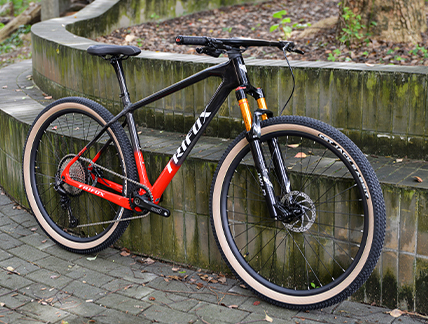
A great ride doesn’t happen by accident. It starts long before you hit the trailhead—with honest self-assessment, smart route planning, and a bike you trust. Whether you’re a first-timer or a seasoned rider, a little planning transforms a good day out into an unforgettable one. Here’s how to plan the perfect mountain bike ride, step by step. Know Yourself: Fitness and Skills Come First The most important part of planning any ride is being realistic about your current fitness and technical ability. If you’re new to the sport, start small. Choose well-marked trails with gentle slopes and avoid overly technical terrain that could lead to frustration or injury. There’s no shame in being a beginner—every experienced rider started exactly where you are now. For group rides, plan for the least experienced rider in the group. A ride is only as enjoyable as its most tired or struggling participant. Choose Your Route with Intention Once you’ve assessed your fitness, match your route to your goals. Are you training for endurance? Look for longer distances and significant elevation gain. Riding for fun with friends? Choose flowy singletrack that keeps everyone smiling. Digital tools make route discovery easier than ever. Apps like Komoot, Trailforks, Strava, and MTB Project offer trail maps, difficulty ratings, and user reviews that reveal trail conditions before you arrive. GPS devices are great for navigation, but always carry a backup—a physical map, a power bank, or both. Batteries die, but a paper map never runs out. Check the Weather—Then Check It Again Mountain weather can shift without warning. Before you head out, check wind speed, precipitation forecasts, and “feels like” temperature. Pay attention to daylight hours and always leave yourself slack. If conditions look questionable, remember: the trails will still be there tomorrow. And let someone know where you’re going and when you expect to be back. That simple act could save your life if something goes wrong. After your ride, text them to confirm you’re safe. Your Bike: The Most Important Piece of Equipment A well-maintained bike is your ticket to a trouble-free day. Before every ride, run through a quick pre-ride checklist: squeeze the brakes to feel lever travel, check tire pressure for both traction and puncture resistance, inspect your chain and derailleur for smooth shifting, and test your dropper post and suspension. For riders seeking a reliable, go-anywhere hardtail, the mens mountain bike SDY21 offers a full T800 carbon frame that soaks up trail chatter while remaining light and stiff for climbs. Its 12-speed range covers everything from steep ascents to fast flats, and internal cable routing keeps cables tidy and rattle-free on descents. Reviewers consistently note that the SDY21 “soaks up trail chatter and climbs like a dream,” making it an ideal companion for everything from short after-work loops to all-day backcountry explorations]. Pack Smart, Ride Lighter The gear on your back matters as much as the bike under you. Essentials include: hydration (more than you think you’ll need), snacks for energy, a multi-tool with chain breaker, spare tube or plug kit, mini-pump, first-aid kit, and an emergency shelter or space blanket for remote rides. A helmet-mounted crash sensor (like those from Specialized or Tocsen) can alert emergency contacts if you crash while riding alone. And always carry a method of communication—fully charged phone and, in remote areas, a personal locator beacon. On the Trail: Have a Plan B and Ride Smart Even the best plans can unravel. Weather changes, a section of trail is blocked, or a rider tires unexpectedly. Professional guides always have a plan B—or even a plan C—in mind. Be willing to adapt. Turn around if conditions worsen. Walk a section you’re not confident riding. The goal is to finish the day safely, smiling. And always respect trail signage, yield to other users, and pack out everything you pack in. The perfect ride isn’t about distance or speed. It’s about preparation, presence, and a little bit of adventure. Plan well, ride smart, and enjoy every moment on the trail.
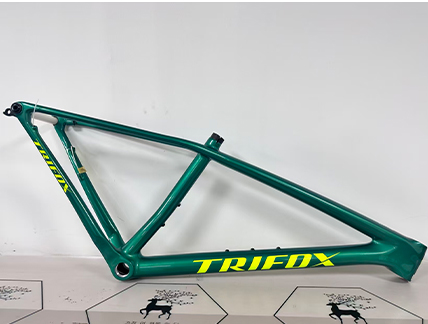
Trail chatter is the mountain biker’s silent enemy. The constant high-frequency vibration from roots, rocks, and rough ground doesn‘t just make your hands sore—it accelerates muscle fatigue, blurs your focus, and compounds over every mile. Many riders assume that only suspension can solve this. But the frame material itself plays a profound role. A carbon frame like the Trifox SDY20 17.5 bike frame (available in 15″, 17″, and 19″ sizes) transforms the ride experience not just through low weight, but through its unique ability to absorb trail vibration while maintaining pedaling efficiency. Here’s how modern carbon engineering achieves what metal simply cannot. From Metal to Composite: A Fundamental Difference Aluminum is a crystalline metal uniform in all directions. When vibration energy enters an aluminum frame, it transmits as a sharp, undampened shockwave directly to the rider. Steel is more compliant but heavier. Carbon fiber, however, is a composite. Thousands of individual fibers embedded in an epoxy resin matrix create a structure that can be engineered with different properties in different directions. This anisotropy is the key to carbon‘s vibration-damping advantage. The resin matrix acts as a microscopic damping agent. When high-frequency vibration enters the layup, energy is dissipated as heat within the resin and between fiber layers rather than being transmitted onward. The Layup: Where Comfort Is Engineered The magic of carbon isn‘t just the material—it’s how the material is arranged. A carbon frame is built from dozens of thin sheets (plies) of carbon fiber impregnated with resin, each laid at a specific orientation. By controlling the layup schedule—the number of layers, their orientation, and where they are placed—engineers can tune stiffness in one direction while allowing compliance in another. High-modulus fibers laid along the downtube and chainstays resist pedaling forces for crisp power transfer. Yet the same structure can allow controlled flex in the seatstays to absorb rear-wheel impacts, reducing shock transmitted to the rider before it reaches the spine. One study found that carbon fiber‘s damping properties enable road‑shock absorption efficiency of up to 92%, with comfort improvements of 41% on rough sections compared to less-engineered alternatives. Carbon vs. Aluminum: The Ride Feel Difference Aluminum offers excellent stiffness and affordability, but it doesn‘t absorb vibration as effectively, which can result in a harsher ride. Aluminum transmits “trail buzz” directly, leaving your hands and arms to absorb the punishment. This leads to faster fatigue and more difficult line-holding on loose terrain. Carbon’s natural damping filters out high-frequency vibrations, keeping you fresher and more in control. The Trifox SDY20, built with T800 carbon, exemplifies this balance. T800 occupies a sweet spot between entry-level T700 and ultra-stiff premium fibers, offering excellent stiffness for pedaling efficiency while retaining enough vertical compliance for real‑world comfort. What T800 Brings to the Trail T800 carbon has a higher tensile modulus (stiffer) than T700, allowing frame designers to use less material to achieve the same stiffness—or build a stiffer frame at the same weight. This translates to immediate power transfer and responsive handling when accelerating or climbing. More importantly for trail riders, T800‘s balance means you don’t sacrifice comfort for performance. The material is neither so flexy as to feel vague nor so rigid as to be harsh. Professional analysis confirms that T800 often provides a better balance of stiffness and vertical compliance than higher-modulus fibers like T1000. For riders seeking a 17.5 bike frame that climbs efficiently yet stays comfortable over long days, this precise blend of properties makes a tangible difference. Not all T800 is equal—quality control in fiber layup and resin application is critical—and Trifox‘s attention to this detail ensures the SDY20’s layup delivers consistent, predictable damping. Making It Yours: Custom Frame Painting A carbon frame‘s performance core is the same whether it wears subtle livery or bold colors. But personalization matters. Trifox offers custom bicycle frame painting options, allowing you to choose from multiple colors (the SDY20 is available in finishes such as Red, Green, and Glossy black). Whether finishing a stealth race build or a standout trail bike, custom paint doesn’t affect the engineering—it reflects your identity without compromising the frame‘s vibration-damping layup. The Long‑Ride Payoff Over hours in the saddle, vibration isn’t a minor inconvenience—it‘s a performance limiter. Carbon’s ability to reduce transmitted vibration means less muscle tension, clearer vision, and better bike control, especially in technical sections where staying loose matters. The rigid front triangle keeps steering precise, while the rear stays can be tuned to absorb just enough chatter to keep the rear wheel planted. That‘s the real magic of a well-engineered carbon frame: you stop thinking about the bike and start flowing with the trail. The Trifox SDY20 proves that carbon’s advantage isn‘t just about grams on a scale—it’s about how the material makes you feel on mile 30, mile 50, and beyond.



