








Your hands are the primary connection between you and the trail. If that connection is compromised—by slippery rubber, harsh vibration, or an ill-fitting shape—your control, confidence, and comfort suffer. The right mtb bar grips aren’t just about “feel good”; they’re a performance component. But with rubber, silicone, foam, and even cork available, how do you choose? Here’s a practical guide to grip materials and what they mean for your riding.
Rubber: The Time‑Tested All‑Rounder
Rubber remains the most common mtb bar grips material for good reason. High-quality rubber compounds offer an excellent balance of durability, shock absorption, and all-weather traction. Many premium rubber grips now use dual‑compound construction: a harder, tough base layer underneath with a softer, tackier outer layer. This provides a secure hold without sacrificing durability.
Rubber also excels across a wide range of conditions. Quality rubber maintains grip in rain, sweat, and mud, making it a favorite for aggressive trail, enduro, and all‑mountain riders. If you ride year‑round in fluctuating conditions, a good lock‑on rubber grip is a safe and effective choice.
Foam: Weight‑Weenie Favorite with Trade‑Offs
Foam grips are the lightest option available, making them popular among cross‑country (XC) riders who prioritize every gram. The lightweight foam material also provides a soft, cushioned feel that some riders find comfortable for long days in the saddle. However, foam is the least durable of the three main materials. It tends to wear faster, can tear more easily in crashes, and offers less grip in wet or muddy conditions. Foam also has a reputation for shifting or rotating on the bar during hard efforts unless it’s lock‑on style. For dry‑weather XC racing or casual riding, foam can be a good choice. For aggressive terrain or wet climates, it’s less ideal.
Silicone: The Modern Comfort King
Popularized by brands like ESI, silicone grips are now the preferred choice for many mountain bikers seeking vibration damping and long‑ride comfort. Silicone is remarkably effective at absorbing high‑frequency trail chatter—the kind that leads to arm pump, hand numbness, and fatigue over hours of rough terrain. Riders who have switched to silicone report that they are “far more comfy than rubber grips” and can even switch to minimalist gloves after making the change.
Silicone offers excellent wet‑traction properties, often gripping better when damp. The downside is that silicone can be slightly more expensive than rubber, may tear if dragged against rocks, and is one of the more difficult materials to install because it grips the bar so tightly. But for riders who prioritize comfort, vibration damping, and a supple feel, silicone is hard to beat.
Cork and Other Alternatives
Cork grips offer a unique option: natural material with moderate cushioning and a distinctive aesthetic. Cork is more solid than rubber or silicone, offering a direct, connected feel. It also has the unusual property of gripping better when wet, as moisture is absorbed into the natural fibers. However, cork tends to be firm (60–80 Shore A vs. 20–40 for traditional rubber) and less durable than rubber, especially against rock strikes. Cork also lacks lock‑on collars, making installation more involved. It’s a niche choice for bikepackers or riders seeking a natural feel and sustainable material, but not the first choice for aggressive trail riders.
Lock‑On vs. Slide‑On: Installation and Security
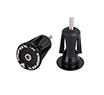
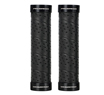
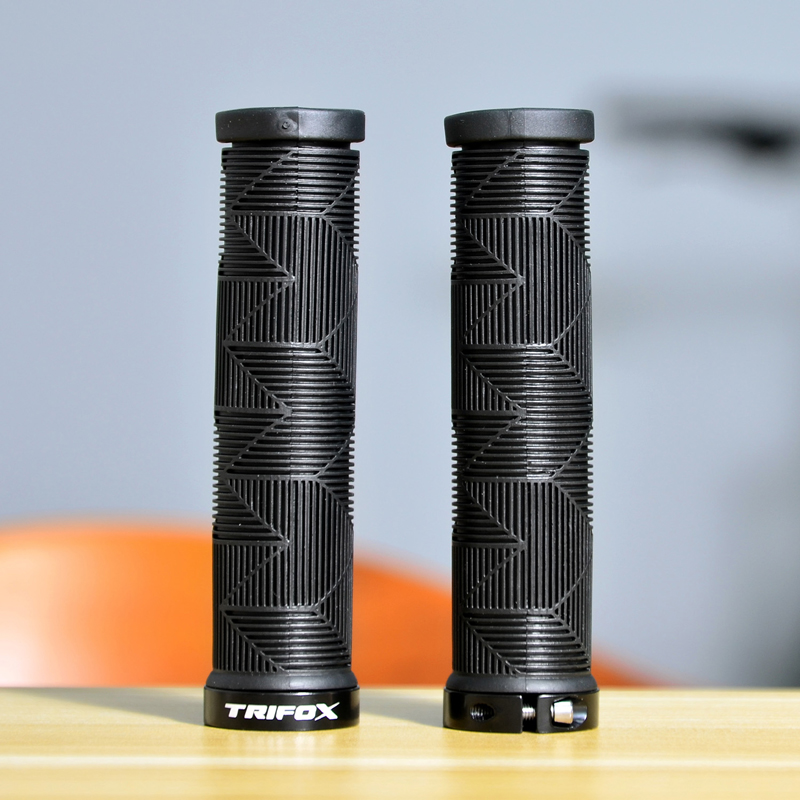
Beyond material, grip attachment type matters. Lock‑on grips use metal or plastic collars tightened with an Allen key to secure the grip. They are easy to install, remove, and swap, and they prevent any rotational slippage under hard riding. Slide‑on grips are lighter and cheaper but require adhesive or friction to stay in place. If you frequently swap parts or ride aggressively, lock‑on grips are strongly recommended. Many of today’s best mountain bike bar grips—including the Trifox MBT100—use a lock‑on design for security and ease of use.
Making Your Choice
There is no single “best” material—only the right material for your riding. For a breakdown by use case:
XC and Light Trail: Silicone foam or high‑quality foam for weight savings and comfort; lock‑on preferred. ← Recommended: Trifox MBT100 silicone grip.
Trail, All‑Mountain, Enduro: Quality dual‑compound rubber with lock‑on for all‑weather reliability. ← Recommended: Trifox MBT100 silicone grip (also suitable here).
Wet / Muddy Climates: Rubber or silicone with aggressive tread pattern; lock‑on mandatory.
Long‑Distance / Bikepacking: Silicone for superior vibration damping and hand fatigue prevention.
Budget Builds: Rubber, lock‑on style for value and durability.
The Trifox MBT100 silicone grip combines a soft, vibration‑damping silicone core with a secure lock‑on system, wide-diameter design, and durable alloy clamps. It delivers the vibration absorption of silicone and the installation confidence of lock‑on collars—an excellent balance for riders tired of hand fatigue. The set includes two lock‑on grips, bar end plugs, and a compact tool for easy installation. For riders seeking a comfortable, secure, and fatigue‑reducing grip upgrade, the MBT100 fits squarely in the “silicone comfort” camp while still offering the security of a lock‑on design.
2026-05-13
Trifox
SHARE:


Comments
Recent Posts
1
1
1
1
1
1
1
1
1
1
1
1
1
1
1
1
1
1
1
1
1
1
1

1



