







Few mechanical failures on a mountain bike are as frustrating as a hub that starts grinding, clicking, or developing play after a single muddy ride. The culprit is rarely catastrophic breakage — it‘s the slow, silent intrusion of water and fine dust past the hub’s seals. Hub seal design is the single most overlooked factor in how your wheels perform over time, especially if you ride in wet or dusty conditions. Understanding seals means fewer ruined bearings, less maintenance, and more time on the trail.
Why Seals Matter More Than You Think
A bicycle hub is not a sealed system. Water, mud, and dust exploit every tiny gap between the axle, bearings, freehub body, and hub shell. When contaminants penetrate the bearings, they mix with lubricating grease, turning it into a gritty abrasive paste. The result is accelerated wear, grinding noises, increased rolling resistance, and eventual bearing seizure.
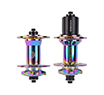
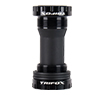
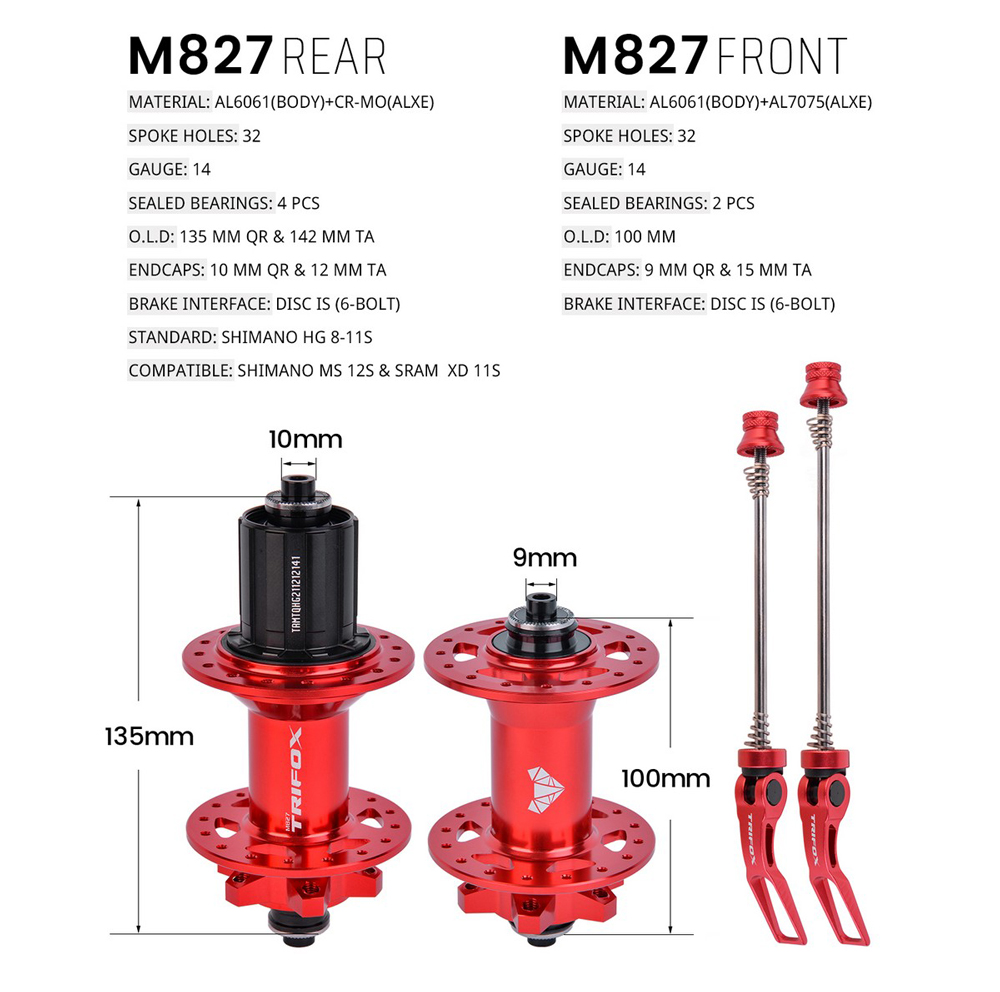
Properly sealed cartridge bearings — often designated as “2RS” or “LLB” — create a physical barrier that protects the internal bearing components. The Trifox M827 uses sealed cartridge bearings: two in the front and four in the rear, keeping grease in and grit out for smooth, long-lasting performance with minimal maintenance. That level of sealing directly translates to longer service intervals and fewer surprise failures mid‑ride.
Contact Seals vs. Non‑Contact (Labyrinth) Seals
Not all seals work the same way. Hub seals fall into two main categories:
Contact seals (lip seals) use a flexible rubber lip that physically touches the rotating surface. They provide excellent contamination protection, but generate friction and heat — which costs you watts and eventually wears the seal itself.
Non‑contact seals — commonly called labyrinth seals use a complex, tortuous path of interlocking grooves that makes it extremely difficult for water and dust to travel inward, without physically touching the rotating part. A labyrinth seal will not damage shafts, has a virtually unlimited life, and is frictionless, which means no power loss.
Many premium hubs now combine both approaches. The M827’s design integrates sealed cartridge bearings with an optimized seal path — protecting against contaminants while keeping drag low.
How Water and Dust Actually Enter Your Hub
Much of the contamination happens not while riding, but when cleaning the bike. High‑pressure water from a garden hose or pressure washer is the fastest way to destroy a hub. Water can penetrate the seal in microseconds, flooding the bearing cavity, washing away grease, and leaving abrasive particles behind as it eventually evaporates.
Visible signs of seal failure include cracked or missing seals on the hub shell, which allow contaminants to wreck bearings directly. Regular inspection is critical: check for cracks, dents, or corrosion on the hub shell, and feel for rough spinning or grinding noises when you rotate the axle.
What to Look for in a Well‑Sealed Hub
When choosing a durable mountain bike hub, examine four key aspects:
1. Bearing specification — Cartridge bearings with proper rubber seals (2RS) are essential. The M827 uses sealed cartridge bearings front and rear.
2. Seal protection — Look for hubs whose seals actively resist water, mud, and contaminant ingress. M827 bearings resist mud and water ingress.
3. Material robustness — Hubs made from corrosion‑resistant alloys with quality finishes help seals seat properly. The M827 is machined from 6061 and 7075 aluminum for strength and lightness.
4. Compatibility — A great hub must also fit your drivetrain. The M827 comes standard with a shimano hg hub freehub body supporting 8- to 12‑speed cassettes, with optional freehub bodies for SRAM XD and Shimano Micro Spline for modern drivetrains.
Why the Trifox M827 Is Built for All‑Weather Durability
The Trifox M827 is engineered for riders who don’t avoid mud, rain, or dust. Its combination of sealed cartridge bearings, robust aluminum construction, and optimized seal path keeps contaminants out without introducing excessive drag. Beyond sealing, the M827 delivers 72 points of engagement from a 6‑pawl driver — immediate power transfer for technical climbing — and convertible end caps that let you switch between QR and thru‑axle standards.
For riders seeking best mountain bike hubs that balance durability, low drag, and long‑term reliability, the M827 is a compelling choice. Well‑designed seals mean fewer workshop hours and more miles of trouble‑free riding — and that‘s the kind of reliability that makes every trail better.
Check out the Trifox M827 hub here to build your next durable wheelset.
2026-05-08
Trifox
SHARE:


Comments
Recent Posts
1
1
1
1
1
1
1
1
1
1
1
1
1
1
1
1
1
1
1
1
1
1
1
1



