








Every pedal stroke is a fight against friction, and the bicycle bottom bracket sits at the heart of this battle. It's the bearing assembly that allows your cranks to spin freely, directly impacting how efficiently your power reaches the drivetrain. When it's time for an upgrade or replacement, one key decision looms: do you stick with the reliable steel bearings found in standard units, or venture into the high-performance realm of ceramic? Understanding the fundamental differences—beyond marketing hype—will help you make the right choice for your riding style and budget.
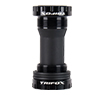
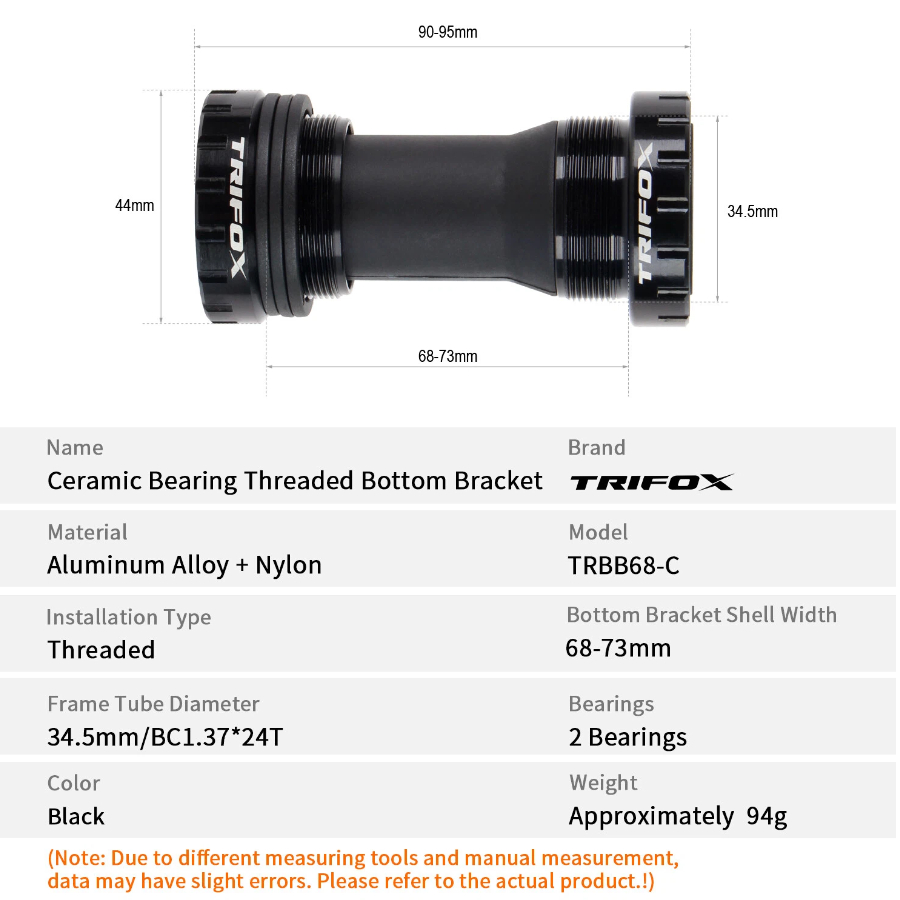
Let's start by examining the workhorse of the cycling world: steel bearings. Made from high-grade chrome steel, these bearings are the standard for a reason. They are incredibly durable, cost-effective, and provide smooth performance for the vast majority of riders. A quality steel bsa bottom bracket, like the standard version of the TRIFOX TRBB68, offers a smooth, quiet, and reliable interface that can last for thousands of kilometers with proper maintenance. Their performance is consistent and predictable, making them the perfect choice for commuters, recreational riders, and those seeking a straightforward, high-value replacement part.
The allure of ceramic bearings lies in their pursuit of marginal gains. Here’s the engineering breakdown:
* Material Superiority: The bearing balls are made from silicon nitride (Si3N4), an advanced ceramic material that is harder, smoother, and rounder than steel. This inherent smoothness is the key to their primary advantage.
* Reduced Friction: Ceramic balls have a lower coefficient of friction and are often paired with high-quality, polished steel or ceramic races. This combination creates less rolling resistance within the bearing itself. The result is a subjectively "smoother" spin and a potential reduction in mechanical drag.
* Durability & Environment: Ceramic is non-corrosive and harder than steel, making it more resistant to pitting from contaminants and water ingress, which can be a benefit for riders in wet conditions.
However, the "feel" of ceramic bearings is often where perception meets reality. The difference is subtle, not transformative. You won't suddenly gain 50 watts. The sensation is often described as a slight increase in "spin-up" speed—the cranks feel like they initiate rotation with a touch less effort. For high-cadence spinners or racers chasing every possible efficiency, this can be a worthwhile psychological and physical edge. It's a premium upgrade for those who have already optimized other aspects of their bike and training.
So, ceramic or steel? Here’s the practical decision matrix for your threaded bottom bracket:
* Choose Steel Bearings if: You are a value-focused rider, need a reliable replacement, ride in varied conditions, or are building a bike on a budget. They deliver 95% of the performance for a fraction of the cost.
* Consider Ceramic Bearings if: You are a competitive racer or enthusiast who has maximized other upgrades (wheels, drivetrain, position), appreciates the pursuit of marginal gains, and understands you are paying for a subtle refinement in feel rather than a massive power boost.
The TRIFOX TRBB68 exemplifies this choice perfectly. It offers both a standard steel-bearing version and a ceramic option, both housed in a lightweight aluminum and nylon shell. This means you can choose the bearing technology that fits your goals, while relying on the same proven bsa bottom bracket shell design and easy installation.
Ultimately, the choice isn't about right or wrong; it's about aligning technology with expectation. For the majority, a high-quality steel bicycle bottom bracket is the smart, no-compromise choice. For the rider who leaves no stone unturned in their quest for efficiency and enjoys the feel of precision engineering, ceramic offers a legitimate, if subtle, enhancement. Invest in the performance that matches your ride.
2026-01-30
Trifox
SHARE:


Comments
Recent Posts
1
1
1
1
1
1
1
1
1
1
1
1
1
1
1
1

1
1
1
1
1
1
1

1



