



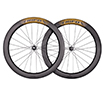
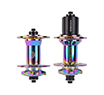





The distinctive click of a coasting mountain bike is the sound of engineering at work—a precise mechanical conversation between your pedaling input and the trail. At the heart of this interaction lies the rear hub's engagement mechanism, a critical component that dictates responsiveness, reliability, and ride feel. For riders looking to upgrade their mountain bike hubs, understanding the differences between ratchet, pawl, and star ratchet systems is key. Let's demystify these mechanisms and see how hubs like the Trifox M821 Boost implement this technology.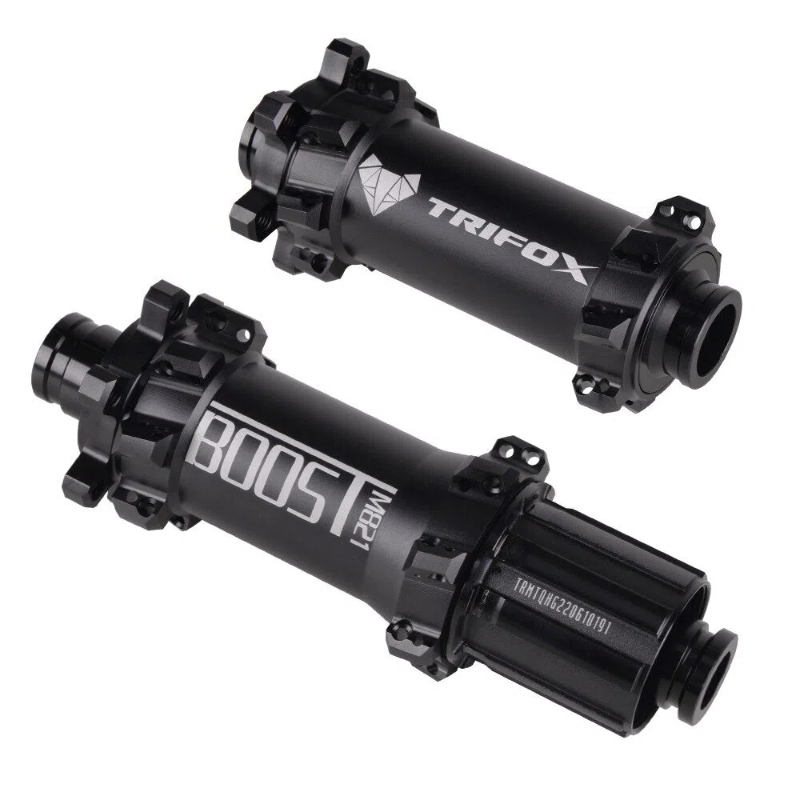
The Fundamentals: Engagement Points and the Pursuit of Zero Lag
The core function of any freehub mechanism is to allow the wheel to spin freely when coasting while instantly transferring power when you pedal. The measure of this instantaneity is called Points of Engagement (POE). A hub with more engagement points has a smaller “dead zone” or free rotation angle before power transfers. For example, a 36-tooth hub engages every 10 degrees, while a 60-tooth hub engages every 6 degrees, offering noticeably quicker pickup. This is the first critical spec to examine in a bicycle wheel hub.
The Mechanism Showdown: Pawls vs. Star Ratchet
1. The Traditional Pawl System
This common design uses small, spring-loaded tabs (pawls) that click outward to engage with a notched ring inside the hub. It can offer very high POE and a classic loud sound, but the small contact area of individual pawls can be a stress point under high torque.
2. The Star Ratchet System
This system, pioneered by brands like DT Swiss, uses two solid, star-shaped ratchet rings pressed together by a spring. It boasts a massive contact area for incredible durability and is typically much quieter. While traditionally offering lower POE, modern versions have significantly increased engagement points.
The Trifox M821 Boost Approach: Precision Pawls, Engineered for Strength
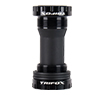
The Trifox M821 Boost Hub employs a high-performance, multi-pawl system that intelligently balances instant engagement with trail-ready durability. Here's why its design stands out:
• High-POE Foundation & Option: The hub comes standard with a 36-tooth ratchet for reliable 10-degree engagement. For riders craving the fastest pickup, an optional 60-tooth upgrade slashes the engagement angle to just 6 degrees.
• Durability First: Instead of using fragile components for high POE, Trifox focuses on robustness. The precision-machined ratchet teeth and strong pawl springs ensure the mechanism withstands repeated trail shocks.
• Premium Construction: The entire hub is crafted from AL7075 aluminum and machined on a 5-axis CNC for perfect tolerances, creating a stiff, reliable platform. Sealed bearings keep everything running smoothly.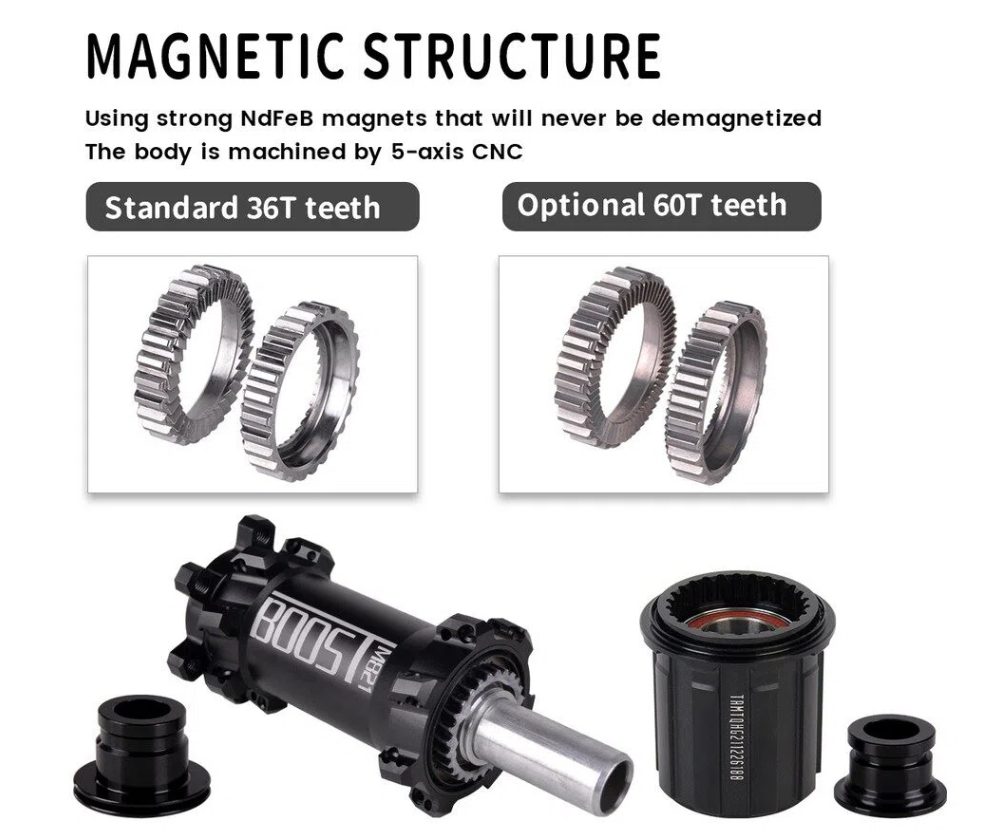
Choosing Your Mechanism: A Rider's Guide
The best hub mechanism for you depends on your riding style:
• Cross-Country & Trail Riders (Prioritizing Responsiveness): Benefit most from higher POE (54T+). The immediate engagement helps with technical climbs and quick power bursts. A quality multi-pawl system like the Trifox M821 with its 60T option is ideal.
• Aggressive Trail & Enduro Riders (Prioritizing Durability): Your priority is a mechanism that survives brutal descents and high torque. A star ratchet system is the gold standard, but a robust, well-made pawl system with a moderate POE (like the 36T standard on the M821) is also an excellent, often more affordable, choice.
• Long-Distance & Bikepacking (Prioritizing Reliability & Maintenance): For remote adventures, simplicity and ease of service are key. A star ratchet system is famously easy to service. A simple, proven 2- or 3-pawl system with sealed bearings also offers great reliability.
Conclusion: The Heart of the Wheel
Your bicycle wheel hub is a precision power-transfer device. Whether you choose the lightning-fast click of a high-POE pawl system or the silent force of a star ratchet, understanding the mechanism inside empowers your choice. The Trifox M821 Boost Hub offers a smart balance: the choice between durable 36-tooth engagement and an ultra-responsive 60-tooth option, all housed in a well-made, lightweight package. It proves you don't need to sacrifice strength for speed, making it a versatile and high-value cornerstone for any serious mountain bike wheelset.
2025-12-11
Trifox
SHARE:


Comments
Recent Posts
1
1
1
1
1
1
1
1
1
1
1
1
1
1
1
1
1
1
1
1
1
1
1
1



