


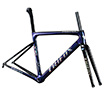
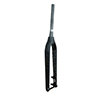
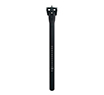
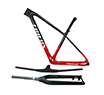
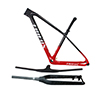
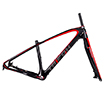





The fork is one of the most important contact points between you and the trail. It influences steering precision, front-end weight, and how much vibration reaches your hands. For riders building or upgrading a hardtail, the choice between a carbon bike fork and an aluminum model can feel like a trade-off between cost, weight, and durability. The Trifox TMK200 is a premium carbon bike fork designed for 29er mountain bikes, but is it the right choice for you? Here's a detailed comparison to help you decide.
Weight: Where Carbon Shines Brightest
The most obvious difference between carbon and aluminum forks is weight. Carbon fiber's exceptional strength-to-weight ratio allows manufacturers to build forks that are remarkably light without sacrificing stiffness.
The Trifox TMK200 boost rigid fork weighs just 507 grams (without the thru-axle). To put that in perspective, many aluminum rigid forks weigh between 800 and 1,200 grams, depending on construction. That's a potential saving of 300 to 700 grams right at the front of the bike—weight that you'll feel on every climb and every acceleration.
Shedding this much weight from the front end transforms how a bike handles. The front wheel becomes easier to lift over obstacles, the bike feels more agile in tight switchbacks, and your shoulders and arms experience less fatigue over long days on the trail. For cross-country racers, bikepackers, or anyone who spends significant time climbing, a carbon fork's weight advantage is a compelling reason to upgrade.
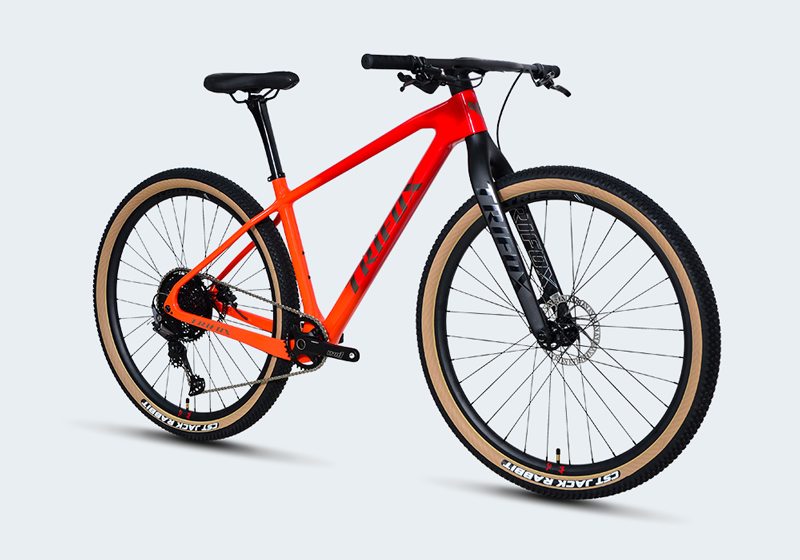
Ride Quality and Vibration Damping
Weight savings are only part of the story. The way a fork handles trail chatter and vibration has a profound impact on comfort and control.
Carbon fiber has natural vibration-damping properties that aluminum simply cannot replicate. When you ride over washboard gravel, root sections, or chattery hardpack, a carbon fork absorbs many of those high-frequency vibrations before they reach your hands. The result is less arm pump, reduced fatigue, and a more connected feel to the trail—you stay fresh and focused longer.
Aluminum, by contrast, transmits vibration more directly. Many riders describe the sensation as "harsh" or "buzzy." While an aluminum fork can be engineered with some degree of compliance, it will never match carbon's ability to filter out trail noise. For riders covering long distances on mixed terrain, the comfort advantage of a carbon bike fork is significant.
Stiffness and Steering Precision
A fork needs to be stiff enough to track precisely through corners and under braking, without flexing or wandering.
High-quality carbon forks like the TMK200 are engineered with unidirectional carbon layups that optimize stiffness in the directions that matter. The result is exceptional lateral rigidity—when you lean the bike into a turn or brake hard on a descent, the fork resists twisting and flexing, providing predictable, confidence-inspiring handling.
Aluminum forks can also be very stiff, but they often achieve that stiffness through thicker tubing, which adds weight. A well-designed carbon fork offers the best of both worlds: race-ready stiffness at a fraction of the weight. The TMK200's tapered steerer tube (1-1/8" to 1-1/2") and Boost 110x15mm thru-axle further enhance steering precision, ensuring the front wheel stays exactly where you point it.
Durability and Impact Resistance
This is where the debate gets nuanced. Both materials are strong, but they fail in different ways.
Aluminum is tough and resistant to abrasion. It can take repeated impacts without sudden failure. However, aluminum does have a fatigue life. Over years of hard riding, the material can develop micro-cracks that eventually lead to failure, often around weld points.
Carbon fiber does not fatigue in the same way. It can theoretically last indefinitely if not damaged. However, carbon is more vulnerable to sharp impacts—a direct rock strike or a crash that pinches the fork against a sharp edge can cause hidden delamination. The good news is that quality carbon forks like the TMK200 are built with robust layups around high-stress zones, and modern epoxy resins offer excellent impact resistance.
For most riders, the durability difference is less about which material is "stronger" and more about how you ride. If you frequently ride in rocky terrain where fork strikes are common, aluminum's toughness may offer peace of mind. If you prioritize weight and ride smoother trails or gravel, carbon's fatigue-free lifespan is a major asset.
Cost and Value
Aluminum forks are generally more affordable, making them a popular choice for budget builds. A decent aluminum rigid fork can cost $50 to $150.
Carbon forks command a premium, but the price gap has narrowed significantly. The Trifox TMK200 is priced at just $109—a remarkably accessible entry point for a T800 carbon fork with Boost spacing, a tapered steerer, and disc brake compatibility. At this price, the value proposition shifts dramatically. You're getting carbon's weight savings, vibration damping, and stiffness for only a modest premium over aluminum.
Which One Is Right for You?
Choose a carbon bike fork like the Trifox TMK200 if:
- You prioritize low weight for climbing and acceleration.
- You ride long distances and want reduced hand fatigue.
- You value precise steering and responsive handling.
- You're building a lightweight XC hardtail, gravel bike, or bikepacking rig.
Choose an aluminum fork if:
- You're on a very tight budget (under $100).
- You frequently ride in extremely rocky terrain where impacts are common.
- You prefer the feel of a stiffer, more direct front end (some riders do).
Final Thoughts
The Trifox TMK200 represents a compelling option for riders seeking a carbon bike fork that delivers on weight, ride quality, and modern standards. At just 507 grams, with T800 carbon construction, Boost 110x15mm spacing, and clearance for tires up to 29×3.0 inches, it's a versatile upgrade for any 29er hardtail. Whether you're upgrading a stock aluminum fork or building a lightweight race bike, the TMK200 offers performance that rivals forks costing two or three times as much. For riders who value a responsive, comfortable, and lightweight front end, this boost rigid fork is an investment that pays off on every ride.
2026-04-23
Trifox
SHARE:


Comments
Recent Posts
1
1
1
1
1
1
1
1
1
1
1
1
1
1
1
1
1
1
1
1
1
1
1
1



