



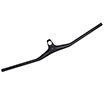
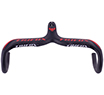
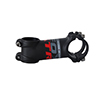





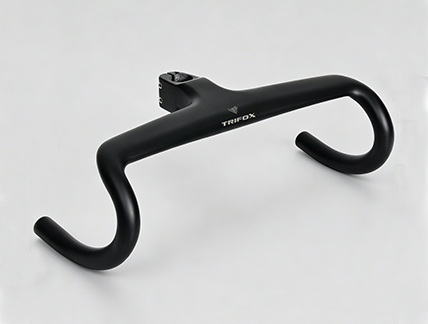
Your mountain bike's front end is where the trail meets your control. Every input you make—steering, leaning, weighting the front wheel—travels through the handlebar. If that connection is compromised by flex, weight, or a less-than-optimal interface, your handling suffers, and so does your confidence. Enter the carbon mtb cockpit upgrade, exemplified by the Trifox RHB100. By fusing the bar and stem into a single, continuous carbon structure, this integrated handlebar delivers measurable improvements in stiffness, weight, and steering precision—all of which translate directly to better handling and stability on the trail.
Enhanced Stiffness: The Foundation of Precision
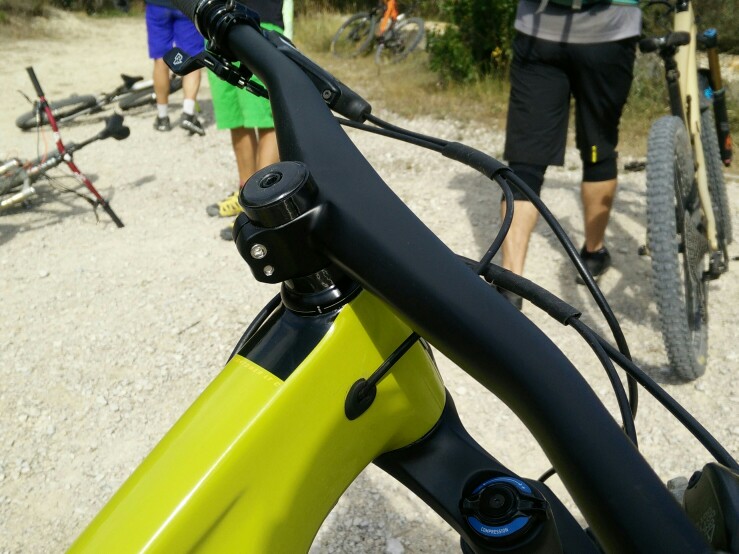
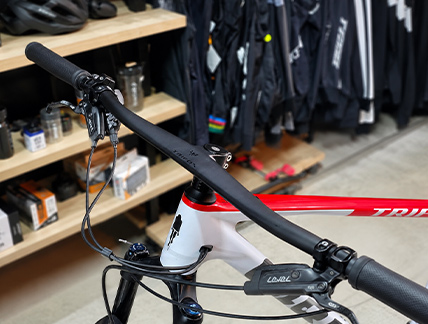
Traditional bar-and-stem combinations have an inherent weak point: the interface where the stem clamps the handlebar. Even with perfect torque, that junction can allow micro-flex under load, dulling steering response and absorbing energy that should be directed to the front wheel. The RHB100 eliminates that weak link entirely. Its integrated, one-piece design (with a 6° rise and 40/50/60/70mm stem length options) creates an exceptionally stiff, direct connection between your hands and the fork. The result is “zero detectable flex” under load—whether you're pulling up for a manual or leaning into a high-speed corner. This rigidity instills confidence, especially on technical descents where precise steering input is critical.
Independent research supports this advantage. One study on integrated cockpits found that a one-piece design increases front-end stiffness by up to 20% compared to a separate bar and stem combination. A stiffer front end means your steering inputs are translated more immediately and accurately, allowing you to hold your line through rock gardens, root sections, and loose corners with greater control and less correction.
Reduced Weight: Agility and Reduced Fatigue
At just 244 grams for the complete bar and stem assembly, the RHB100 represents a significant weight saving over almost any alloy combination. A typical alloy bar and stem setup often weighs over 400 grams; some integrated carbon designs are up to 40% lighter than their aluminum counterparts. This reduction is immediately noticeable when you pick up the bike—and even more so on the trail.
A lighter front end feels more agile and easier to maneuver. It reduces the bike's overall rotational inertia, making it quicker to turn and easier to loft over obstacles. Furthermore, reduced weight at the handlebar contributes to less arm fatigue over long rides. A lighter setup demands less muscular effort to control, helping you stay fresher and more in control during marathon XC races or all-day trail adventures.
Optimized Geometry: Natural Control Position
The RHB100's geometry—6° rise and 6° backsweep—is designed to place your hands in a natural, comfortable position that enhances control. The backsweep aligns your wrists with your forearms, reducing strain and improving leverage when pulling up on the bars or weighting the front wheel. The rise brings the grips to a height that balances an aggressive riding posture with all-day comfort, allowing you to maintain a stable, centered position over the bike.
Clean Cockpit: A Professional, Uncluttered Feel
While aerodynamics are less critical on a mountain bike than a road bike, the RHB100's integrated profile does offer benefits. The lack of a protruding stem faceplate creates a smoother, more aerodynamic surface. More importantly, the clean lines provide a tidy cockpit for mounting a computer or light, contributing to a professional, finished look. The printed alignment marks on the bar also simplify setup and ensure your controls are positioned perfectly.
T800 Carbon Fiber: The Material Behind the Performance
The RHB100 is constructed from premium T800 carbon fiber, which offers an excellent strength-to-weight ratio. T800 carbon provides the rigidity needed for precise steering while offering enough compliance to mitigate trail buzz and fatigue. This balance is critical: you want a handlebar that is stiff enough to transmit steering inputs accurately but compliant enough to absorb high-frequency vibrations that cause arm pump and hand numbness. The result is a ride that is both precise and comfortable, allowing you to ride harder and longer.
Conclusion
Upgrading to an integrated carbon MTB handlebar like the Trifox RHB100 is one of the most effective ways to improve your bike's handling and stability. By eliminating the bar-stem interface, you gain a stiffer, more responsive front end. By shedding significant weight, you gain agility and reduce fatigue. And by optimizing the geometry, you gain a more natural, controlled riding position. For riders seeking a high-performance aero bicycle handlebars upgrade that delivers tangible on-trail benefits, the RHB100 represents a significant and worthwhile step forward.
2026-06-23
Trifox
SHARE:


Comments
Recent Posts
1
1
1
1
1
1
1
1
1
1
1
1
1
1
1
1

1
1
1
1
1
1
1

1



