

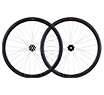
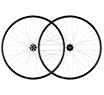





Whether you’re building a new mountain bike from the frame up or simply replacing a worn‑out set of hoops, wheel compatibility is rarely as straightforward as “it’s a 29er.” A modern MTB wheelset must align with your frame’s rear dropout spacing, match your brake rotor mounting standard, and support a tire width that suits your terrain. Overlook any of these three parameters and you risk anything from a subtle rotor rub to a wheelset that simply won’t fit. In this technical deep dive we break down the three pillars of MTB wheel compatibility: the Boost 148 rear hub, the 6‑bolt disc interface, and the 25mm internal rim width. We use the Trifox WM823 bicycle wheel as our reference example because it combines all three modern standards in one durable alloy package.
Hub Spacing: Why Boost 148 Has Become the Norm
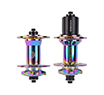
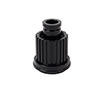
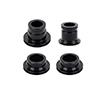
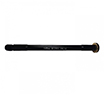
The first and most critical compatibility check is the rear hub’s spacing, today measured by its “Over Locknut Distance“ (OLD). While older mountain bikes used 135mm quick‑release (QR) or 142mm thru‑axle spacing, almost every contemporary trail, enduro and cross‑country frame now requires **Boost 148mm** rear spacing. As the name implies, Boost adds 6mm to the overall hub width—3mm on each side—compared to the older 142mm standard. That seemingly small increase has a big mechanical benefit: it pushes the hub flanges farther apart, which allows the spokes to form a wider bracing angle. The result is a significantly stiffer, stronger rear wheel without adding extra material weight. According to early industry data, a 29˝ wheel built around a 148mm Boost hub achieves the same lateral stiffness as a smaller 27.5˝ wheel with a 142mm hub. Stiffer wheels track more accurately, resist flex under hard cornering and improve pedaling efficiency—exactly what you want on aggressive singletrack. The WM823 hub is built specifically for the **Boost 148x12mm** rear standard (front: 15x110mm), making it a perfect match for any modern hardtail or full‑suspension frame. The WM823’s rear axle attachment is a **thru‑axle**, which further increases stiffness by threading directly into the frame dropout rather than relying on a QR skewer. And if you are currently riding an older QR frame, the WM823 includes optional end caps that convert it to a 9x100mm (front) and 10x141mm (rear) QR, a versatile feature not found on many competing wheelsets.
Rotor Mount: 6‑Bolt Remains the Trail‑Ready Choice
The second major interface is the disc rotor mount. Two standards dominate the MTB world: the traditional **6‑bolt (ISO)** pattern and Shimano’s proprietary **Center Lock** system. While both work perfectly well, each has trade‑offs that affect the mountain bike rider. Center Lock rotors are secured by a single lockring, which makes wheel installation and removal marginally faster, especially on the side of the trail. However, 6‑bolt rotors are far more common (especially at replacement time), generally slightly lighter, and easier to repair on the trail because no special tool is needed to remove a stuck lockring. The WM823 uses a **6‑bolt disc interface**, a choice that aligns perfectly with the demands of cross‑country and all‑mountain riding. The six bolts distribute clamping force evenly around the rotor, and repair is simple: you only need a 5‑mm hex key and an appropriately sized rotor—both can be found at almost any bike shop. The WM823’s braking system also accepts both Shimano and SRAM rotors (and most other brands), so you are never locked into a single component ecosystem.
Rim Width & Tire Compatibility: Matching Tire Profile to Trail
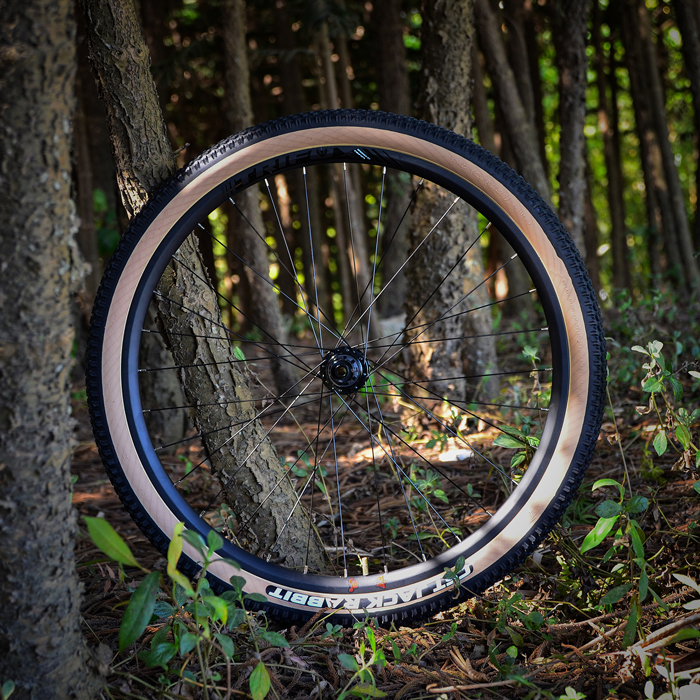
The third compatibility dimension is rim width, which determines how a tire sits once inflated. Too narrow a rim for a given tire will “lightbulb” the tire, rounding the tread contact patch and reducing grip. Too wide a rim can make the tire feel overly square, risking burping on low‑pressure setups. The industry standard for a **29er MTB wheelset** riding 2.2–2.4 inch tires is an internal rim width in the 25–30mm range. The WM823 hits right in the sweet spot with a **25mm internal width** and a **30mm external width**. This profile is engineered to support tires from 1.9 inches (for fast‑rolling XC rubber) up to 2.5 inches (for aggressive trail tread). The low 25mm rim depth further helps you run lower pressures without the risk of rim dings because the tire has a stable, broad platform to rest on. Lower pressure means more traction, better small‑bump compliance, and a much more forgiving ride over roots and rocks—all without adding appreciable weight. The WM823’s alloy rims are tubeless‑ready clinchers, making the switch to tubeless sealant simple and reliable.
Putting It All Together: Building a Compatible MTB Wheelset
Choosing a wheelset that aligns on all three dimensions—Boost spacing, 6‑bolt rotor mount and a modern internal rim width—eliminates most compatibility headaches before they arise. The Trifox WM823 mtb wheelset 29 was conceived as a turn‑key solution for today’s frames: a 148x12mm rear hub, a 15x110mm front hub, a 6‑bolt rotor interface, and a durable 25mm internal rim. The wheelset includes stainless steel Pillar spokes, 32 holes per wheel, and ceramic bearings. Each wheelset is backed by a two‑year warranty and supports rider weights up to 125 kg (275 lb). Ultimately, when you check the three compatibility boxes properly, you stop worrying about spec sheets and start enjoying a ride that is stiffer, more responsive and more capable wherever the trail leads.