









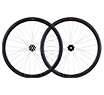
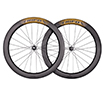







The Unsung Role of the Hub in Road Bike Handling
We obsess over frame materials, gear ratios, and tire choice, often overlooking a component that fundamentally shapes how a bike feels: the humble hub. Tucked away at the center of your wheels, it's far more than a simple spinning part. The hub is the critical anchor point of a complex tension structure—your wheel. Understanding its geometry is the key to unlocking a ride that feels direct, stable, and supremely efficient.
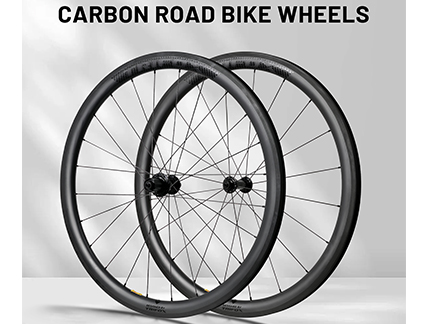
Think of a bicycle wheel as a sophisticated bridge in constant motion. The bicycle rim hub is the central pier, and the spokes are the tensioned cables holding everything together. The hub's design, specifically its flange geometry, dictates how effectively these "cables" can transfer force and maintain the wheel's shape under load.
Flange Diameter: The Lever for Power. The distance from the hub's center to where the spokes attach is like the length of a wrench. A larger flange diameter provides a longer, more effective lever arm for the spokes. This creates a straighter, more direct line of force from the rim to the axle. The result is enhanced lateral stiffness for confident cornering and superior drive stiffness, meaning more of your pedal power goes into acceleration with less wasted in wheel flex. It's the difference between a firm handshake and a weak one.
Flange Spacing: The Foundation for Stability. This is the distance between the left and right spoke flanges. A wider spacing creates a broader, more stable base of support for the entire wheel, similar to standing with your feet apart versus together. This geometry dramatically increases lateral rigidity, ensuring the wheel resists side-to-side deformation when you lean into a turn or battle crosswinds. A wheel built on a hub with optimized flange spacing tracks predictably and inspires confidence.
These abstract principles translate directly into your riding experience. When you carve through a high-speed corner, a wheel with high lateral stiffness from a well-designed hub deforms less, holding your chosen line with tenacity. When you jump out of the saddle to sprint or climb, the immediate, crisp response you feel is the high drive stiffness at work—no spongy delay, just pure power transfer. Ultimately, an efficient hub system minimizes energy lost to microscopic wheel distortions, converting more of your effort into speed.
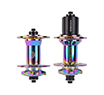
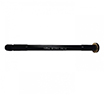
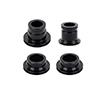
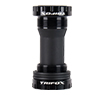
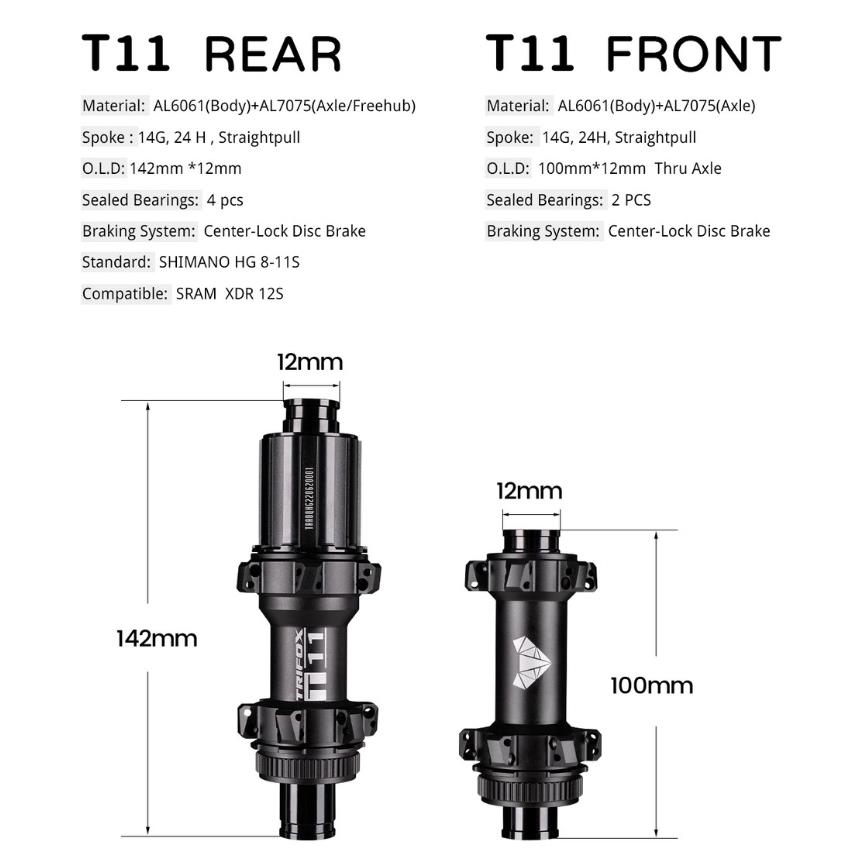
This philosophy guides the design of hubs like the Trifox T11. By prioritizing robust flange geometry and employing quality materials like 6061 aluminum alloy with a 7075 axle, the focus is on creating a reliable, responsive foundation. Its wide compatibility, including a SRAM XDR freehub body for modern 12-speed groupsets, ensures it serves as a versatile core for performance wheels. The goal is singular: to build a hub that disappears into the background of a perfect ride—one where every input is met with precision, every corner feels planted, and every watt is accounted for.
2026-01-15
Trifox
SHARE:


Comments
Recent Posts
1
1
1

1

1

1
1
1
1
1
1

1
1
1

1
1

1

1
1

1
1
1
1

1



