


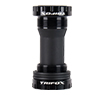





The bottom bracket bearing is the heart of your bike's drivetrain. When it's time for an upgrade, the debate between high-end ceramic and reliable aluminum models is inevitable. Is the premium for ceramic worth it, or is a well-made aluminum bicycle bottom bracket like the Trifox TRBB68 the smarter choice? Let's examine the facts.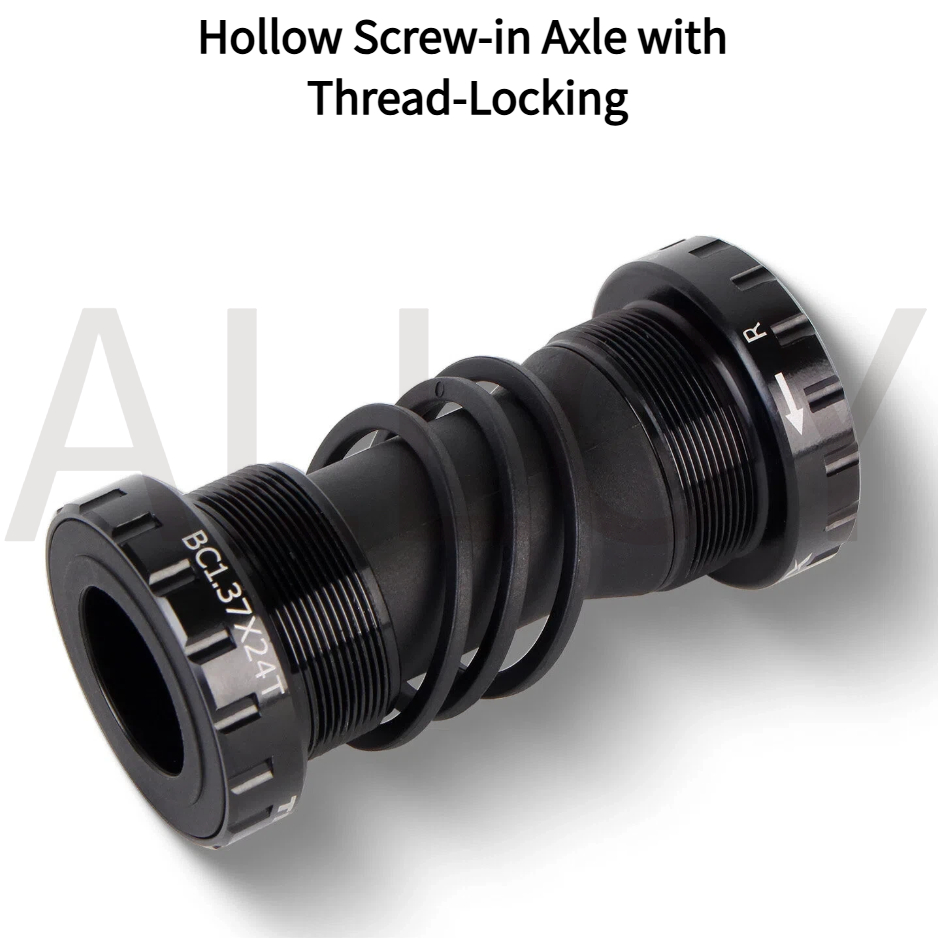
1. Friction & Efficiency: The Core of the Claim
Ceramic bearings boast a lower coefficient of friction—lab tests show up to 25-30% less than steel. However, real-world power savings are subtle, often just 1-3 watts. For most riders, this is imperceptible. A precision-made aluminum bracket with smooth bearings, like the Trifox TRBB68, provides exceptionally efficient performance for nearly all applications, making the ceramic advantage most relevant for elite racers.
2. Durability & Longevity: A Trade-Off
* Corrosion Resistance: Ceramic Wins. Ceramic balls cannot rust, a plus for all-weather riders.
* Impact Resistance: Aluminum/Steel Wins. Under high load or shock (common in MTB), ceramic's hardness can lead to brittleness and cracking. A quality aluminum-shell bracket with steel bearings is generally more robust for real-world riding.
3. Weight: A Negligible Difference
Weight should not be a factor. A standard aluminum 68mm bottom bracket like the Trifox TRBB68 weighs 94-98g. A comparable ceramic model often weighs nearly the same, as the tiny weight saving from the ceramic balls is offset by other components.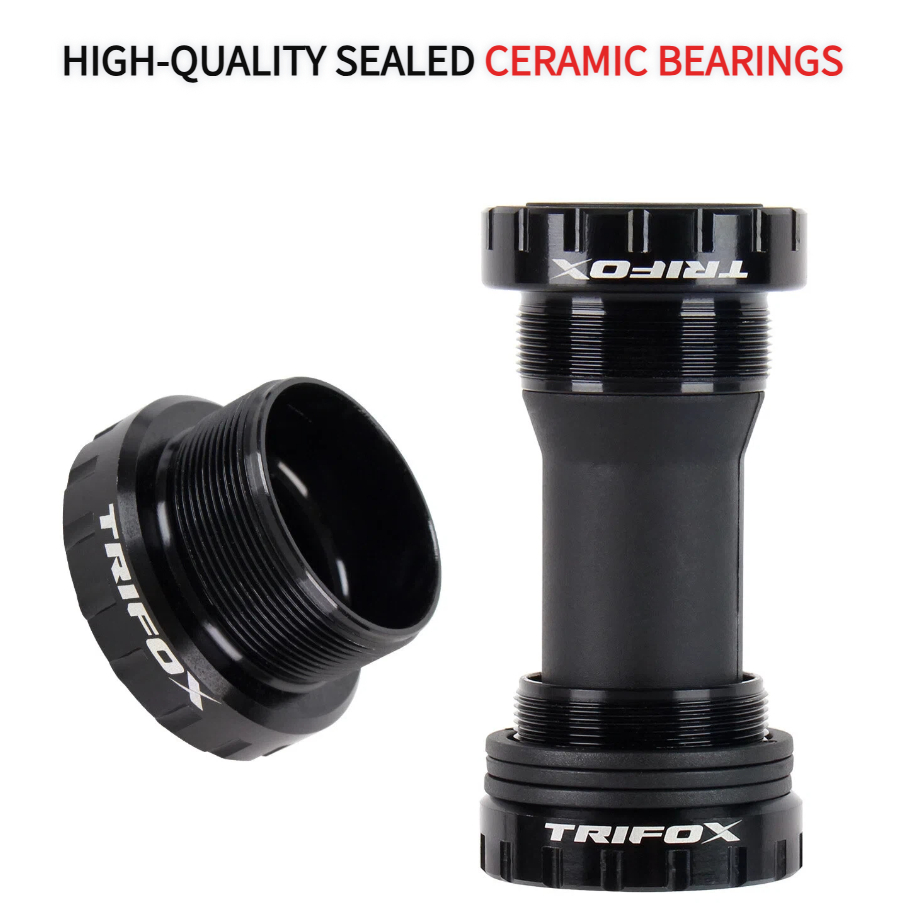
4. Maintenance & Sensitivity: The Hidden Cost
To achieve their potential, ceramic bearings require near-perfect installation alignment and a clean environment. They are less tolerant of misaligned bearing seats. Aluminum brackets with standard bearings are far more forgiving of minor installation variances, making them a more practical choice for home mechanics.
5. Price & Value: The Ultimate Decider
This is the clearest difference. A ceramic bottom bracket can cost 5 to 10 times more than a premium aluminum model.
* Ceramic is for: Elite racers chasing every watt, and enthusiasts who value "marginal gains."
* Aluminum is for: The vast majority of riders. A high-quality option like the Trifox TRBB68 offers outstanding value, precision machining, and reliable sealed bearings, freeing up budget for upgrades with more noticeable returns (like better tires).
The Verdict: Data-Driven Reality
Ceramic's friction advantage is real but minimal for non-racers. When you factor in its higher cost, sensitivity, and durability trade-offs, the value proposition narrows. For a component that must withstand real-world conditions, the balanced performance and exceptional value of a modern aluminum bottom bracket are hard to beat. Products like the Trifox TRBB68 deliver superb smoothness and reliability, letting you focus on the ride, not just marginal gains.
2025-12-12
Trifox
SHARE:


Comments
Recent Posts
1
1
1
1
1
1
1
1
1
1
1
1
1
1
1
1
1
1
1
1
1
1
1
1



