


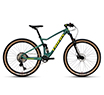
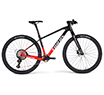
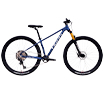

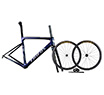
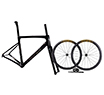
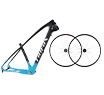
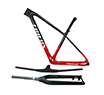
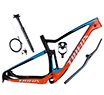
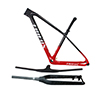
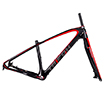





In the world of mountain biking, the choice of frame is dictated by the trail ahead. At opposite ends of the spectrum sit the XC Racer (Cross-Country) and the DH Sled (Downhill). Both are often crafted from premium carbon fiber, but their design philosophies are worlds apart. Understanding this difference is key to choosing a bike that matches your terrain and riding style. And for the vast majority of riders, a modern trail platform like the Trifox MFM100 represents the ideal middle ground.
The XC Racer: Built for Speed and Efficiency
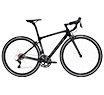
An XC race bike is a scalpel. Its carbon frame is designed to be as light as possible, prioritizing pedaling stiffness and climbing efficiency above all else. You'll find steep seat tube angles (around 74-75°) to put the rider in a powerful climbing position, and steeper head tube angles (69-70°) for quick, responsive steering at lower speeds. Suspension travel is minimal, typically 100-120mm, to keep the bike active on climbs and efficient on rolling terrain. The goal is to convert every watt of rider power into forward momentum as directly as possible. Riders on XC bikes are often found on smoother, less technical trails, racing against the clock. A rider on an xl bike frame in this category would be a tall athlete seeking a lightweight, climbing-focused weapon.
The DH Sled: Built for Gravity and Guts
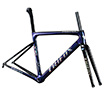
At the other extreme is the downhill bike—a full-on assault vehicle. These frames are built to be absolutely bombproof, prioritizing stability and control at high speeds over light weight. Geometry is drastically slacker, with head tube angles often dropping below 63°, and wheelbases are stretched long to provide a planted feel on the steepest, roughest terrain. Suspension travel is massive, often 200mm or more, to absorb huge impacts. These bikes are not designed for climbing; they are shuttled or pushed to the top to unleash on the descent. A medium mtb frame in this category is built tough for the rider who lives for the gnarliest, most technical downhill tracks.

The Trail Bike: The Perfect Compromise
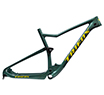
Between these two extremes lies the sweet spot: the trail bike. Frames like the Trifox MFM100 are engineered to offer a balanced blend of climbing capability and descending confidence. They feature modern geometry, such as a 68.5° head tube angle and a 74.7° seat tube angle, which provides stability on descents without sacrificing climbing efficiency. With around 115mm of rear travel (paired with a suitable fork), it can handle technical trail features while remaining an efficient all-day climber.
The MFM100's T800 carbon construction ensures it's lightweight and stiff, but its design—including a Press Fit BB92 bottom bracket and Boost 148mm spacing—is focused on creating a durable, responsive platform for aggressive trail riding. It's a bike that can be ridden up a mountain and then confidently descend, making it the ideal choice for riders who want one bike to do it all. Available in sizes from XS to L, including the popular medium mtb frame size, it caters to a wide range of riders seeking this versatile performance.
In the end, the choice is about where you ride. If your trails are all about going up fast, an XC bike is your tool. If you only point downhill, a DH sled is your ride. But for the rider who wants to experience the full mountain—climbing to earn the descent and descending to enjoy the climb—a modern, balanced trail frame like the Trifox medium mtb frame is the ultimate companion. It's the carbon fiber frame that says yes to the entire trail, not just one part of it.

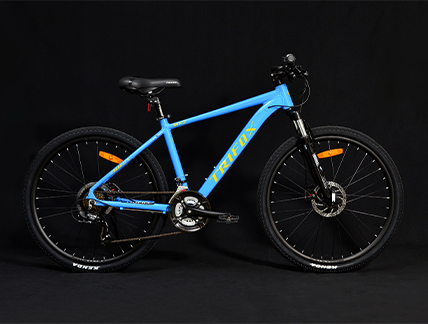
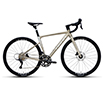
In the world of mountain biking, the journey often begins with a simple, daunting question: "What's the best bike I can get without spending a fortune?" With price tags frequently climbing into the thousands, the market for a genuine, capable entry-level bike under $200 seems like a fantasy. Enter the Trifox Ventura 26 Path, priced at a jaw-dropping $199. This begs the critical question: at this price point, are you getting a toy or a trail-worthy tool? Let's break down exactly what this bike offers and who it's designed to serve.
The Foundation: A True Aluminum Frame
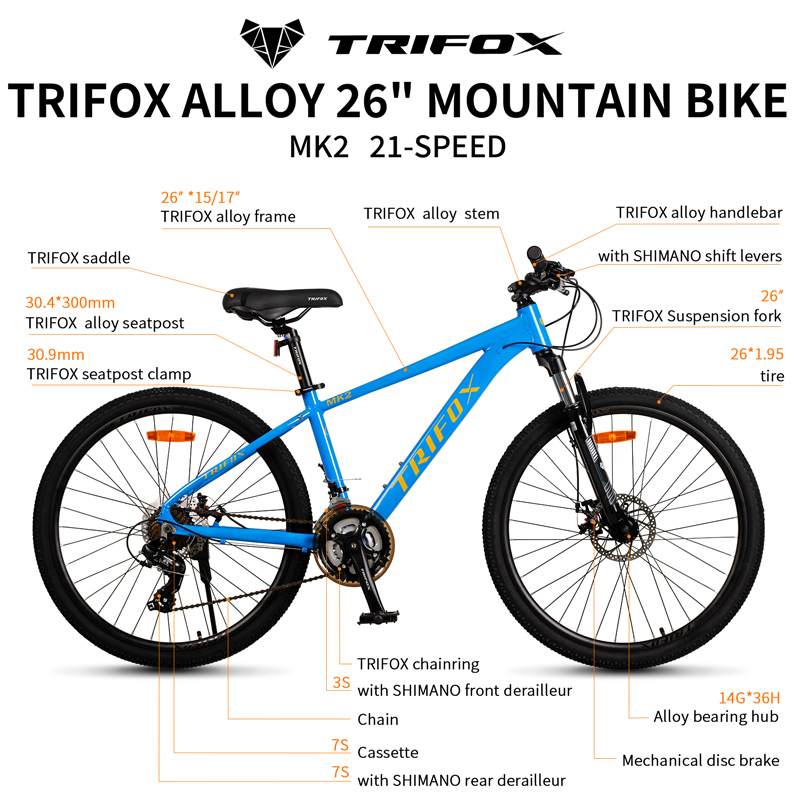
At its core, the Ventura 26 is built on a solid foundation: a lightweight AL6061 aluminum alloy frame. This material choice is significant. Unlike the heavier, more flexible steel frames common on big-box store bikes at this price, the 6061 aluminum mountain bike construction offers a better strength-to-weight ratio and corrosion resistance. It provides a noticeably stiffer and more responsive platform, making the bike feel more agile and connected from the start. The bike comes in two sizes (15" and 17"), squarely targeting teens, smaller adults, and those seeking junior mountain bikes 26 inches in size—a wheel diameter that offers agile handling and is easier to control for newer or younger riders.
Managing Expectations: The Entry-Level Spec
The component spec sheet is where expectations must be carefully managed—this is a $199 bike, after all. The drivetrain is a Shimano Tourney 21-speed (3x7) setup. Tourney is Shimano's most basic, entry-level group, designed for reliability and ease of use rather than high performance. It provides a wide gear range suitable for varied terrain, perfect for learning gear management on park paths, light trails, and neighborhood hills. A notable highlight for safety and control is the inclusion of mechanical disc brakes. At this price, rim brakes are the norm, so having discs—which offer more consistent stopping power in wet or muddy conditions—is a major value-add that boosts confidence for a beginner.
The Verdict: Who Is This Bike For?
So, who is the ideal rider for the Ventura 26? It is not for aggressive trail riders, downhill enthusiasts, or those expecting premium component performance. Its coil-spring fork is basic, and the overall build is for moderate use. However, it is an exceptional value for specific users:
* First-Time Riders & Youths: A perfect, low-risk introduction to mountain biking.
* Casual/Neighborhood Riders: Ideal for paved paths, gravel, and very light dirt trails.
* Parents on a Budget: An excellent choice for a growing teen where a pricier bike doesn't yet make sense.
* Secondary/Utility Bike: Great for campgrounds, college campuses, or quick errands.
Conclusion: Defining "Best Value"
Ultimately, the "best value" is defined by the rider's needs. If you're seeking a lightweight, aluminum-framed bike with reliable gears and the safety of disc brakes to start a riding journey, the Trifox Ventura 26 presents an almost unbeatable argument. It delivers core cycling fundamentals at an astonishing price. For the aspiring rider taking their first pedal strokes off-road, this $199 investment isn't just a bike; it's an accessible, encouraging gateway to the wider world of mountain biking.
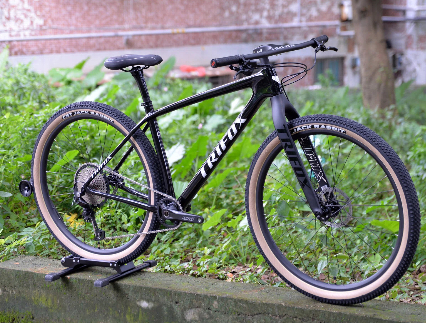
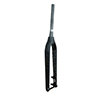
When building or upgrading a mountain bike, every component matters, but the synergy between the lightweight mountain bike frame and the front fork is the most critical. This partnership forms the core of your bike's handling, efficiency, and feel. While many riders invest in a premium carbon frame, they often overlook the front fork. Pairing a frame like the Trifox SDY20 with a purpose-matched 29er boost fork—especially a rigid carbon model—isn't just an upgrade; it's a complete transformation that unlocks the full potential of your carbon chassis.
Unified Stiffness and Precision Handling
The primary benefit of matching a carbon frame to a carbon fork is unified material performance. The T1000 carbon fiber used in the SDY20 frame offers an exceptional stiffness-to-weight ratio, ensuring every watt of pedal power translates into forward motion. When you pair it with a carbon fork, you achieve a harmonized front triangle. This union creates incredibly precise and immediate steering feedback. The inherent stiffness of carbon eliminates unwanted flex under heavy braking or during aggressive cornering, giving you direct control and confidence to hold your line on loose or technical terrain.
Advanced Vibration Damping for Comfort
A carbon fork on a carbon frame also creates a sophisticated vibration damping system. Carbon fiber’s composite nature naturally absorbs high-frequency trail “buzz” that aluminum transmits directly to your hands. While a suspension fork smooths out big impacts, a rigid carbon fork paired with a carbon frame filters out the relentless, fatiguing vibrations from roots, rocks, and chattery ground. This results in a smoother ride that reduces hand and arm fatigue, allowing you to ride longer and with more control without the weight or maintenance of a suspension system. This is the true “magic carpet” feel high-end bikes are known for.
Weight Savings and Preserved Geometry
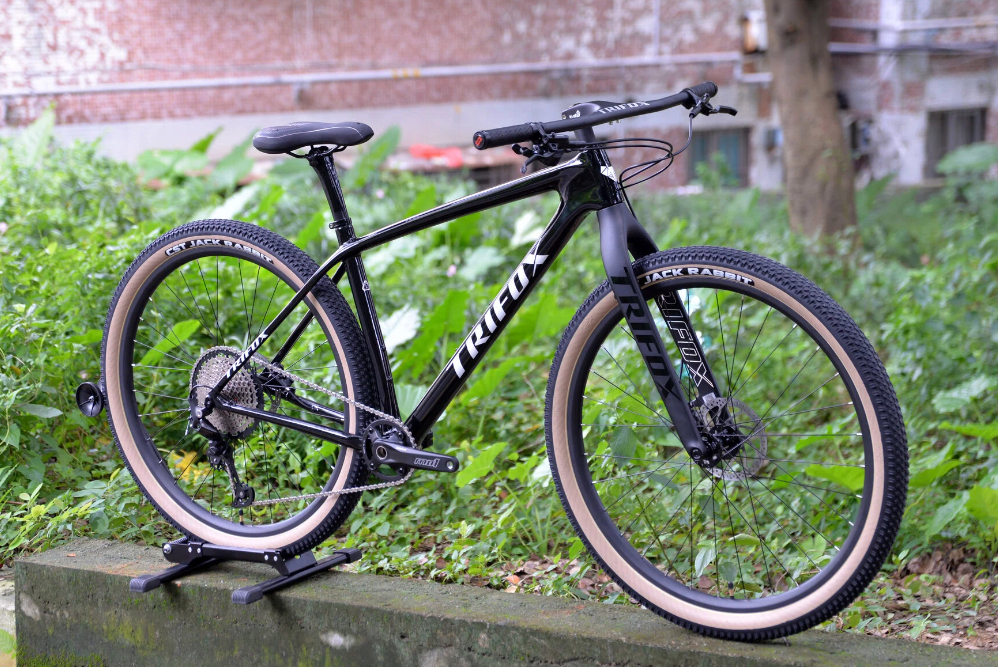
Weight savings and geometry integrity are the final, decisive factors. A quality rigid carbon fork can save over a kilogram compared to a suspension fork, a massive reduction at the front of the bike that dramatically improves agility and climbing response. More importantly, the precise axle-to-crown length of a rigid fork preserves the frame designer's intended geometry. The SDY20 frame, for example, is designed with a specific head tube angle (68.5°) and fork length in mind. A rigid carbon fork with the correct 506mm axle-to-crown measurement will maintain this optimal geometry, ensuring the bike handles exactly as intended—balanced, predictable, and lively.
Making the Perfect Match
Choosing the right fork for the Trifox SDY20 requires attention to key specs: a tapered steerer tube (1-1/8" to 1-1/2"), Boost 110mm hub spacing, and the aforementioned 506mm axle-to-crown length. This ensures perfect compatibility and preserves the frame's handling characteristics. By investing in this perfect pairing, you’re not just bolting on a part; you're creating a cohesive, high-performance system. The result is a bike that feels incredibly connected, efficient, and responsive—a true extension of the rider where the lightweight mountain bike frame and its carbon partner work in flawless harmony to maximize every ride.
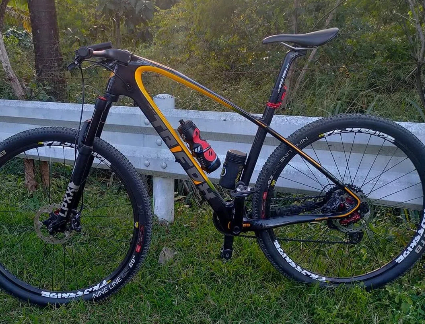
For any rider who's spent hours on the trail, the feeling is all too familiar: the relentless, high-frequency vibration from roots, rocks, and rough ground. This "trail buzz" doesn't just cause discomfort—it fatigues your hands, arms, and core, saps your energy, and can even blur your focus over time. Many riders assume that only a full-suspension bike can solve this. However, the frame material itself plays a profound and often misunderstood role. This is where carbon fiber, particularly in a hardtail like the Trifox M2, transforms the riding experience in a way that aluminum simply cannot.
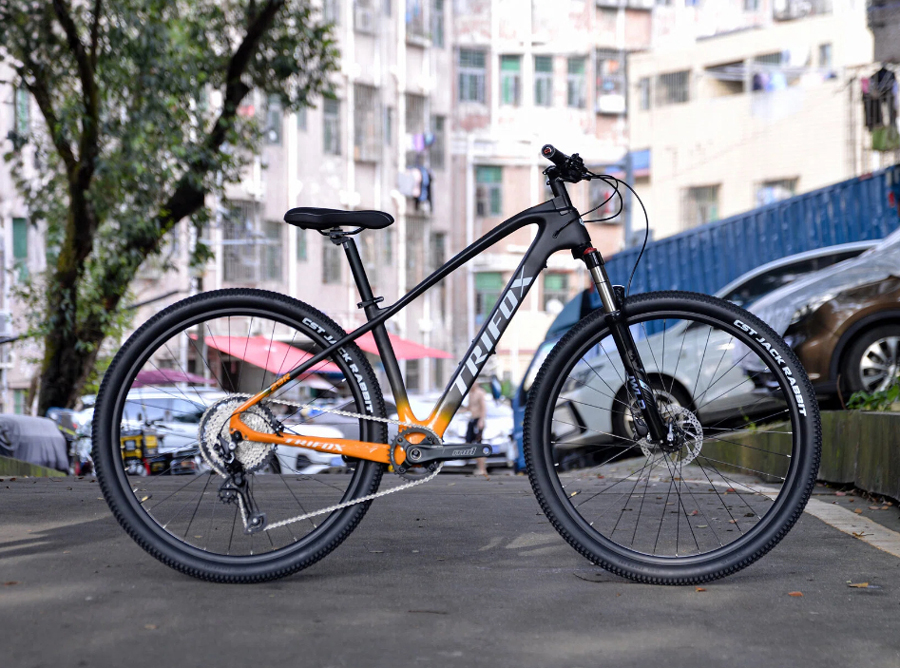
To understand why, we must move beyond simple metaphors of "stiffness" and look at material science. Aluminum is an isotropic material; it reacts uniformly to stress in all directions. When it encounters an impact, it transmits a sharp, high-frequency vibration wave directly through its structure and into the rider. Carbon fiber, in contrast, is a composite anisotropic material. It consists of thousands of individual carbon fibers set in a resin matrix. This structure allows it to be engineered with different properties in different directions. Crucially, the resin matrix acts as a microscopic damping agent. When vibration energy enters the carbon layup, it is dissipated as harmless heat within the resin and between the fiber layers, rather than being transmitted onward.
This isn't about making the frame "soft" or flexible in a way that compromises pedaling efficiency. A well-engineered carbon frame like the M2, built from high-modulus T800 carbon fiber, is exceptionally stiff under the large, powerful loads of pedaling and cornering. This ensures every watt of your effort translates to acceleration. However, its composite nature allows it to selectively filter the small, high-frequency vibrations that cause fatigue. It's the engineering equivalent of a noise-cancelling headphone for your bike—blocking the irritating "noise" of the trail while letting the clear "signal" of your power and control through.
The result on the mtb trail is transformative. On an aluminum hardtail, you often feel every single texture of the ground. On a carbon hardtail like the M2, the harsh edges of those sensations are rounded off. The bike feels plush and connected, not harsh and jarring. This has a direct performance benefit: with less muscle tension required to simply hang on, you have more energy to pedal, brake, and steer precisely. Your grip on the handlebars can be lighter, your vision stays clearer, and you can ride harder for longer.
This is the true magic of a modern carbon mtb bike. It's not just a weight-saving upgrade. It's a holistic improvement in ride quality that redefines what a hardtail is capable of. By mastering the physics of vibration damping, carbon fiber delivers a dual promise: unshakable efficiency when you're putting power down and remarkable comfort that lets you conquer mile after mile of technical terrain. The Trifox M2 embodies this, proving that the right material doesn't just change the bike's specs—it changes the entire experience of the ride.
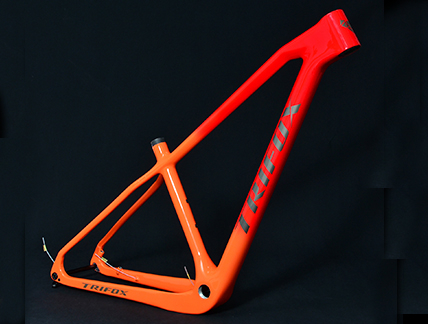
Why Our Internally Routed Frame Rides Stiffer and Lighter
It’s a brilliant question: “If you’re drilling holes in the frame for cables, doesn’t that make it weaker?” It’s a completely reasonable assumption. In the world of modern carbon fiber engineering, however, the answer is a definitive "no." The key is that in a high-performance frame like the Trifox SDY21, these internal channels are not an afterthought or a destructive cut into a finished structure. Instead, they are precisely calculated engineering features integrated from the very first stages of Finite Element Analysis (FEA). Our goal is not to choose between beauty and performance, but to engineer a solution that wins on all fronts: superior aesthetics, enhanced rigidity, and reduced weight.
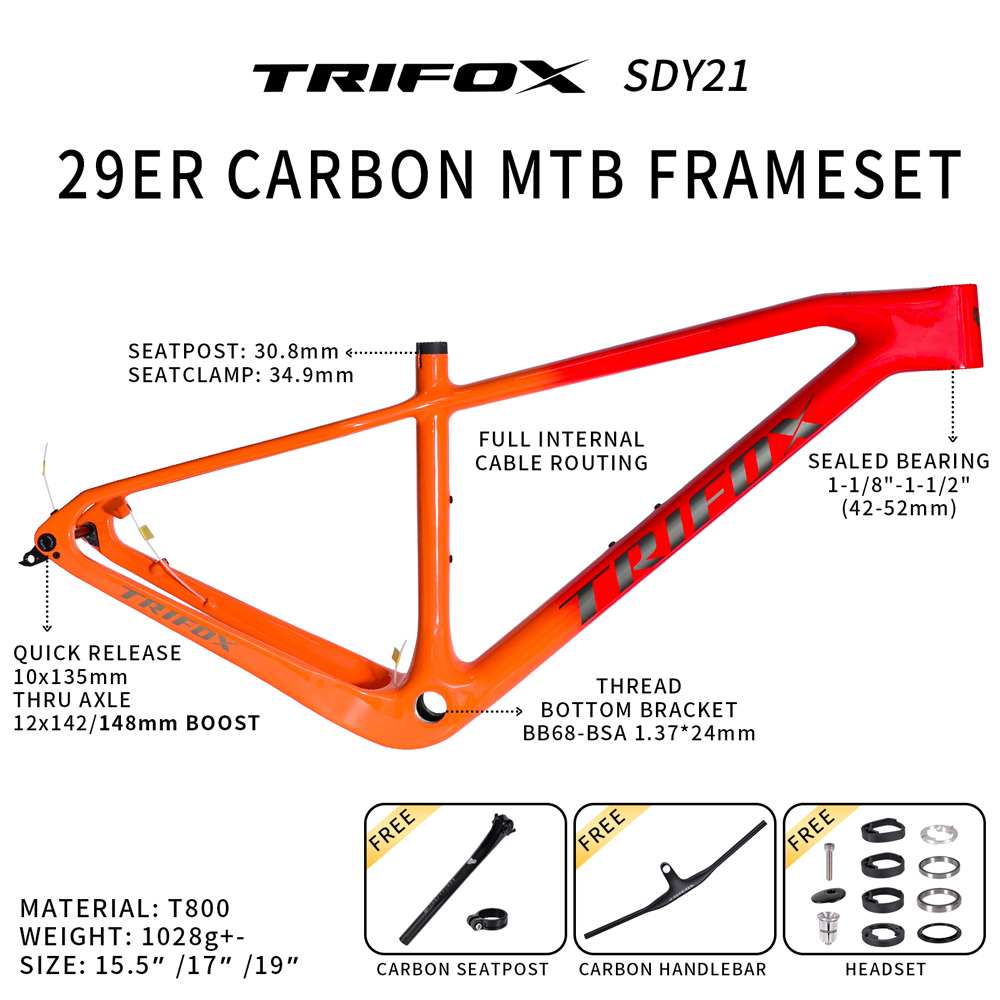
Localized Reinforcement & Structural Design: Think of it like the engineering of a modern building. A window isn't just a hole in a wall; it’s surrounded by a reinforced lintel that redistributes load. Similarly, around every critical entry and exit point in the SDY21 frame—especially the head tube—we apply additional carbon fiber layers and localized reinforcement. We use strategic patches of higher-modulus T800 carbon in these high-stress areas. This targeted reinforcement ensures the structure is actually stronger at its most vulnerable points, turning potential weaknesses into fortified zones. Furthermore, the internal channels themselves are designed with specific, stiffness-enhancing shapes, effectively becoming integrated structural elements rather than simple voids.
Holistic Engineering and Structural Integrity: A high-performance carbon frame is not a collection of tubes; it is a singular, unified monocoque structure. The rigidity comes from the entire shape and the continuous carbon fiber layup. By designing the internal routing paths as an integral part of this holistic structure from the start, we can model and mitigate any localized stress concentration. The frame’s overall stiffness and strength are engineered to meet or exceed rigorous international standards (such as ISO 4210) with the routing channels fully accounted for. This means the SDY21’s structural integrity is validated as a complete system, proving that intelligent design can incorporate functionality without sacrificing robustness.
The proof is in the performance. The Trifox SDY21 isn’t just about a clean look. This rigid frame mtb achieves an exceptional stiffness-to-weight ratio. The compact 19 inch mtb frame size weighs in at just 1075 grams, a benchmark that rivals many premium hardtails. This staggering lightness is achieved without sacrificing the direct, responsive feel that serious XC and trail riders demand. The clean internal routing eliminates external cable drag and snag points, contributing to a more aerodynamic and maintenance-friendly package.
Ultimately, a superior full-internal routing design like that of the SDY21 represents a higher level of engineering sophistication. It moves beyond the old compromise. The result is a frame that is not only sleeker and easier to maintain but also stiffer and lighter—a true triathlon of benefits that elevates your ride. It’s engineering that works smarter, delivering a lightweight hardtail frame where every element, including the cable paths, contributes to the ultimate goal: a faster, more efficient, and more connected ride on the trail.

In the pursuit of mountain bike performance, riders often focus on marginal gains—especially weight savings. But what if the most significant upgrade isn't about shaving grams from your wheels, but about transforming the very foundation of your ride? Starting with a carbon frame and proven alloy wheels isn't a compromise; it's a strategic decision that prioritizes ride quality, durability, and real-world value.
The carbon frame is the heart of your bike's performance. A frame like the Trifox MFM200 29 inch hardtail frame delivers immediate and tangible benefits: exceptional stiffness for efficient power transfer, advanced geometry for confident handling, and carbon's natural vibration damping for reduced fatigue. These characteristics fundamentally change how the bike responds to your input and interacts with the trail. For most off-road riding, the improvements in pedaling efficiency, control, and comfort from a well-designed carbon frame far outweigh the marginal gains from ultra-lightweight wheels.
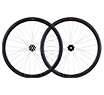
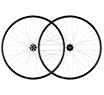
Right now, this performance-optimized combination is incredibly accessible. The Trifox MFM200 carbon hardtail frame paired with a durable WM823 alloy wheelset is available as a complete bundle for just $342 USD with free shipping. Available in multiple colors, this offer makes entering the world of carbon performance more attainable than ever.
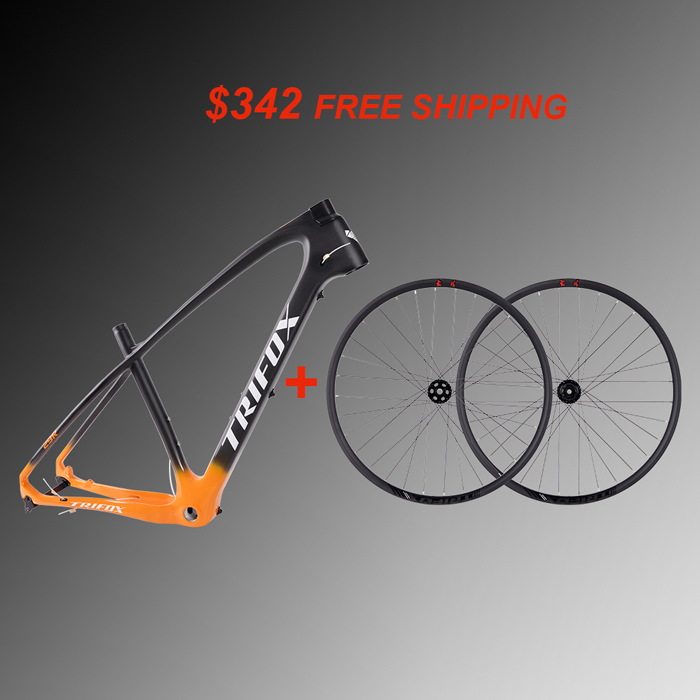
Alloy wheels bring their own set of proven advantages that perfectly complement a carbon frame's performance:
Durability and Strength: Aluminum rims are exceptionally resilient against impacts from rocks, roots, and trail debris. They can take the punishment of aggressive trail riding without the anxiety of damaging expensive carbon rims. This durability lets you ride harder and focus on the trail, not on protecting your equipment.
Maintenance Simplicity: Alloy wheels are easier to maintain and repair. Truing, replacing spokes, and addressing dings are straightforward processes for any bike shop. For disc brake setups, alloy rims also eliminate concerns about heat-related brake performance issues that can affect some carbon rims on long descents.
Budget Allocation Wisdom: By choosing a carbon frame with alloy wheels, you allocate your budget where it makes the most difference. The savings can be invested in other critical components like a better suspension fork, upgraded drivetrain, or personalized cockpit setup—creating a more balanced, capable bike overall.
This combination creates a powerful synergy. The carbon frame provides the efficient, responsive platform, while the alloy wheels deliver reliable, durable performance. The frame's advanced engineering isn't wasted; it's fully expressed through wheels that can handle whatever the trail throws at them. For riders seeking a 29er mountain bike small frame, this approach ensures proportional handling and fit without sacrificing performance or durability.
Ultimately, this pairing is ideal for the practical performance rider: someone who logs serious miles, tackles technical terrain, and values reliability alongside performance. It's not about chasing the lightest possible build; it's about creating a bike that performs consistently, handles confidently, and withstands real-world use. The carbon frame and alloy wheels combination represents intelligent engineering meeting practical wisdom—delivering exceptional ride quality without unnecessary fragility or expense.
With the Trifox MFM200 frame and WM823 wheelset bundle, you're not just buying components; you're investing in a balanced approach to mountain bike performance. Experience how the right foundation transforms every ride, and discover why sometimes the smartest upgrade path is also the most practical one.
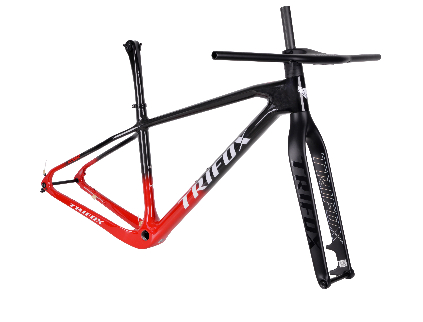
In mountain biking, individual component quality matters—but true performance emerges from how these parts work together. When you pair a premium carbon frame with a purpose-matched carbon fork, you unlock a level of synergy that transforms your entire ride. The combination of Trifox's SDY21 carbon hardtail frame and TMK200 rigid mtb fork 29 creates a unified system where stiffness, weight savings, and responsiveness multiply rather than simply add.
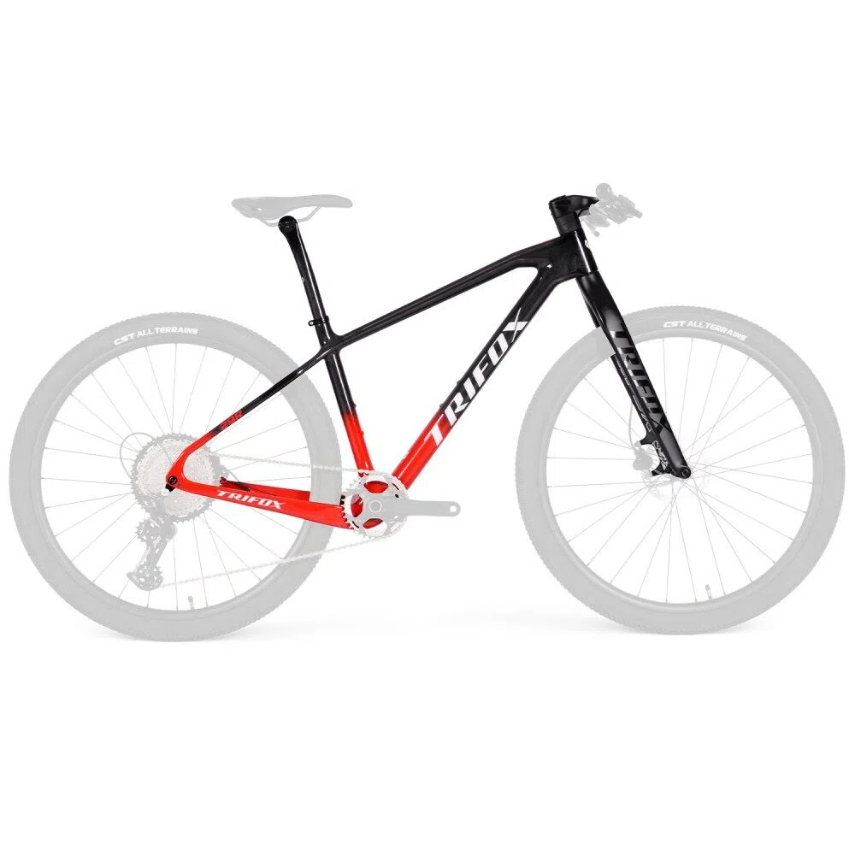
The foundation of this partnership is material harmony. Both the SDY21 frame and TMK200 fork are constructed from high-modulus unidirectional carbon fiber, using compatible resin systems and layup techniques. This shared material DNA ensures consistent flex characteristics and vibration damping throughout the front triangle. When frame and fork speak the same structural language, energy transfer becomes incredibly efficient. Every pedal stroke propels you forward with minimal loss, while trail vibrations are absorbed uniformly, reducing fatigue.
Geometry alignment is equally critical. The SDY21 frame is designed around modern trail metrics—a slack head angle, short chainstays, and optimized front-center measurement. The TMK200 fork complements this with precisely calculated offset and axle-to-crown length. Together, they create handling that's both stable at speed and nimble in corners. This isn't a generic fork bolted to any frame; it's a calibrated pairing where steering precision feels intuitive and predictable.
Weight optimization reaches its peak in this combo. The SDY21 frame utilizes strategic carbon layering to reinforce high-stress zones while trimming material elsewhere. Similarly, the TMK200 is engineered as one of the lightest mountain bike fork options in its category. When combined, the total weight savings at the front end significantly improves maneuverability. The bike feels more willing to change direction, easier to loft over obstacles, and generally more lively on the trail. This synergy makes the whole bike feel lighter than the sum of its parts.
Stiffness synchronization creates another performance multiplier. A stiff frame paired with a flexible fork (or vice versa) creates handling inconsistencies. With the SDY21 and TMK200, both components share similar torsional and lateral rigidity. This means when you lean into a corner or power through a rock garden, the front and rear of the bike respond as one cohesive unit. There's no lag or disconnection—just immediate, faithful tracking that builds rider confidence.
The practical benefits extend to assembly and maintenance. Designed as a matched system, the fork's tapered steerer integrates seamlessly with the frame's head tube. The Boost spacing aligns perfectly, and brake routing follows complementary paths. This compatibility eliminates installation headaches and ensures optimal performance from day one. Additionally, the shared aesthetic—clean carbon textures and minimalist branding—creates a visually unified machine that looks as fast as it rides.
Choosing a frame and fork as an integrated system, like the Trifox SDY21 and TMK200 bundle, represents a smarter approach than mixing and matching components. You're not just buying two separate parts; you're investing in a harmonious relationship engineered from the ground up. The result is a mountain bike that handles with a rare balance of efficiency, control, and pure fun. In the equation of performance, synergy is the ultimate multiplier, transforming capable components into an extraordinary complete bike.

You push hard on the pedals, feeling the burn in your legs. But what happens to all that energy? A well-designed mountain bike frame is the master translator, converting your raw watts into efficient, exhilarating forward motion. It's not about a single "magic" number; it's the intricate interplay of weight, stiffness, and geometry that dictates how much of your effort reaches the trail. A frame like the Trifox SDY20 is engineered to master this conversion, turning your power into pure, responsive speed.
Beyond Simple Math: The Nuanced Impact of Weight
It's tempting to think "lighter equals faster," and while true, the reality is nuanced. Shedding 100 grams from your lightweight mountain bike is beneficial, but its impact is magnified on long, steep climbs and during acceleration. For a typical rider, the weight saving from a 980-gram frame (like the SDY20) is a strategic advantage that accumulates over miles, reducing the energy cost of lifting the bike against gravity time and time again.
The real weight advantage is holistic. A light frame allows you to build a nimble overall bike, making it easier to maneuver, change pace, and tackle technical sections where quick reactions are key. This translates to less overall fatigue, letting you output power for longer—a benefit far exceeding a simple time-saving calculation. 
The Critical Role of Stiffness: Precision in Power Delivery
If weight affects how much energy you expend, stiffness determines how efficiently it's delivered. There are two critical types:
Bottom Bracket Stiffness: This is crucial for pedaling efficiency. A stiff bottom bracket area, like the robust 73mm shell on the SDY20, minimizes flex when you stomp on the pedals, ensuring more power drives the rear wheel directly.
Front-End / Head Tube Stiffness: This affects steering precision and control. A stiff front end, aided by a tapered head tube, provides confident handling through rough corners, allowing you to maintain speed and control where a flexy frame would wander.
However, pure, unyielding stiffness isn't the ultimate goal. A frame that's brutally stiff can be harsh and fatiguing. The art lies in strategic stiffness.
The Trifox SDY20 Design Philosophy: Balanced Performance
The SDY20 exemplifies how modern carbon cycles optimize the "performance triangle" of weight, stiffness, and comfort. It's not about chasing extreme numbers in one area, but creating a harmonious balance for real-world speed.
Targeted Material Use: Utilizing high-grade T1000 carbon fiber, engineers can strategically place stronger, stiffer materials in high-stress zones (like the bottom bracket and chainstays) while using more compliant layups in the seatstays and seat tube. This design delivers efficient power transfer where you need it while absorbing trail buzz to reduce fatigue.
Geometry for Confidence & Power: The frame's modern 68.5-degree head tube angle and balanced reach provide stable, confident handling on descents, allowing you to commit to lines. Meanwhile, a 74-degree seat tube angle positions you optimally over the pedals for effective climbing power. This geometry lets you ride in a powerful, sustainable position longer.
Modern Standards for a Solid Platform: Features like Boost 148mm rear spacing increase wheel stiffness and improve tire clearance, while internal cable routing protects lines and contributes to a clean, aerodynamic profile. Every detail is considered to support efficient power transfer.
Conclusion: The Sum of All Parts
The ultimate measure of a frame's efficiency isn't found in a laboratory test of isolated stiffness. It's measured in the real world: in the confidence to carry speed into a rocky section, the ability to climb in comfort without wasting energy fighting the bike, and the sheer joy of a machine that feels like an extension of your body.
A thoughtfully designed frame like the Trifox SDY20 for trail mountain bikes understands this. By intelligently balancing ultra-low weight with strategic stiffness and rider-focused geometry, it creates a platform where your energy is respected and amplified. The result is a bike that doesn't just feel fast—it actively helps you be faster, mile after rewarding mile. Your watts deserve nothing less than a masterful translator.
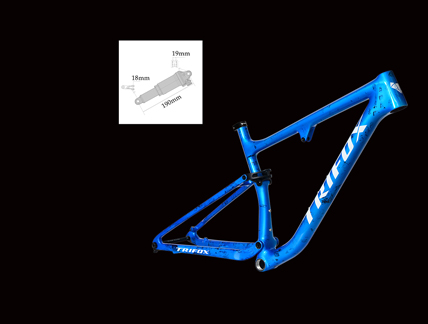
Unlocking the full potential of a modern cross country full suspension bike is an art. A frame like the Trifox Trail II Pro offers a lightweight, stiff carbon platform designed for efficiency, but its rear shock needs precise tuning to match. A poorly tuned shock can make even the best double suspension mtb feel harsh or wallowy. This guide will help you sync your shock with your frame's personality for a ride that’s both fast and forgiving. 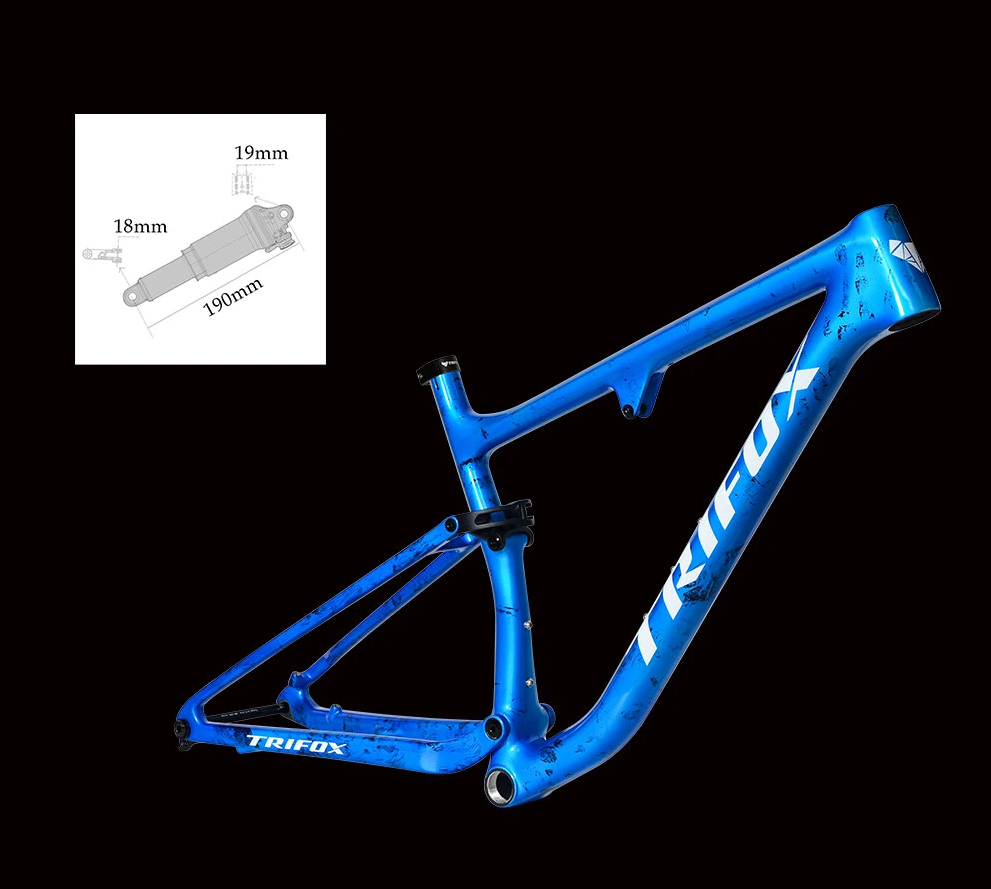
Step 1: Foundation – Setting Sag and Leverage Rate
Every setup begins with sag—the amount your shock compresses under your weight in a neutral riding position. For an XC-focused frame, aim for 20-25% sag. This balances pedaling efficiency with bump absorption.
Why it matters for carbon frames: Carbon’s high stiffness translates pedal input directly. Correct sag ensures the suspension is in its optimal part of the stroke to react to trails without wasting energy.
Pro Tip: Know your frame's leverage ratio. The Trail II Pro is designed with a specific progressive or linear curve. Check the manufacturer's guide; this tells you how the shock feels through its travel. A progressive frame (common in modern designs) helps prevent bottoming out on big hits.
Step 2: Controlling the Motion – Rebound Damping
Rebound damping controls how quickly the shock returns after compression. This is crucial for maintaining traction.
Too Fast: The bike feels springy and can "kick back," losing tire contact.
Too Slow: The shock "packs down" over successive bumps, feeling harsh and reducing travel.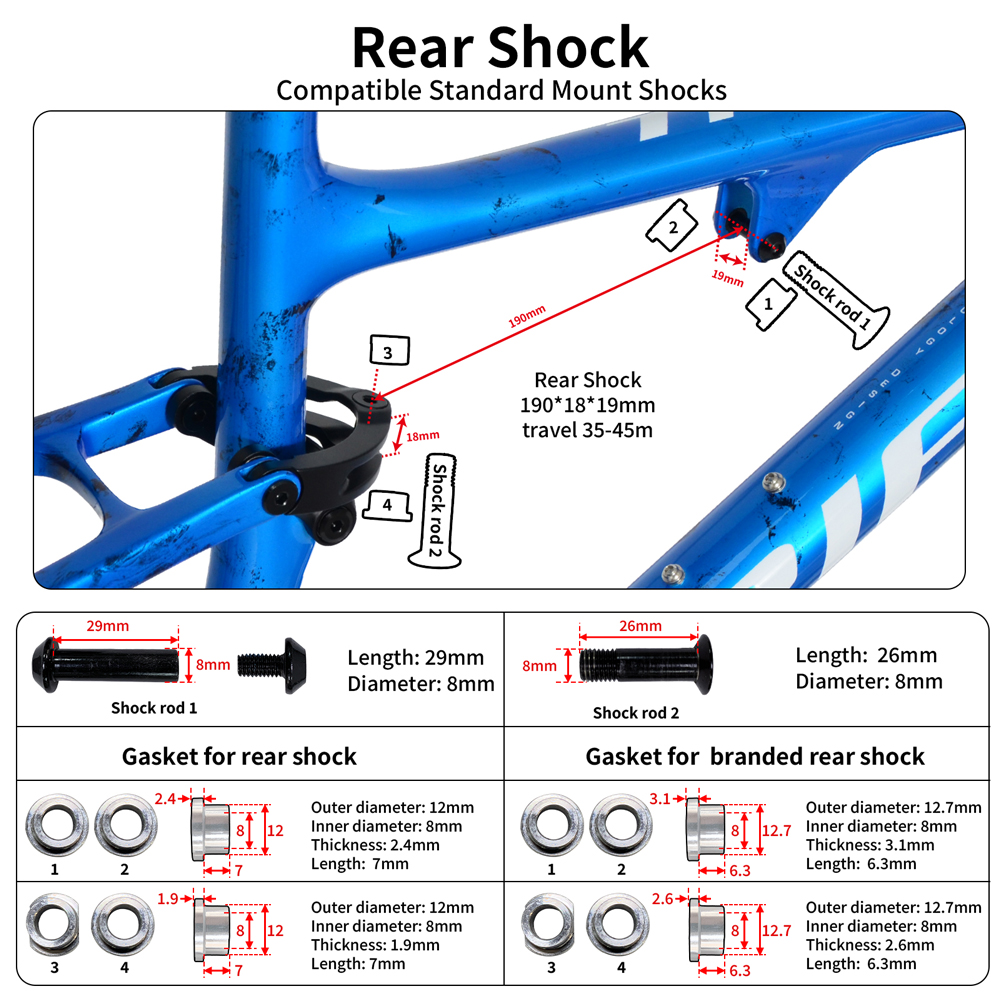
Setting Rebound:
1. Set sag correctly first.
2. Find a bumpy trail or series of curb drops.
3. Start with rebound fully open (fast). Ride and gradually add clicks (slow it down).
The Goal: The rear wheel should recover quickly enough to handle the next bump but not so fast it causes the bike to bounce. The rear should feel "calm" and controlled.
Step 3: Refining the Feel – Compression Damping
Compression damping controls how the shock compresses under force. Most XC shocks have low-speed compression (LSC) for pedaling/platform support.
LSC Tuning: Start with LSC fully open. On a smooth climb or while pedaling hard on flat ground, add clicks until you feel a noticeable reduction in unwanted bob without making the ride feel harsh over small bumps. The goal is a firm, efficient platform that still remains active.
The Critical Link: Frame Bushing & Bearing Care
Your tuning is only as good as the mechanical connection between the shock and frame. Friction from dry or worn pivots destroys sensitivity.
The Trifox Advantage: The Trail II Pro includes a set of premium 190x18mm and 190x19mm replacement bushings, compatible with major shocks from Fox and RockShox. This ensures you always have a perfect-fit, low-friction interface on hand.
Maintenance: Regularly check pivot bolts for proper torque (use a torque wrench!). Annually, or if play develops, inspect bushings and bearings for wear. A well-lubricated, slop-free pivot system allows your finely tuned shock to perform exactly as intended, translating every damping click into a tangible trail feel.
Final Tune: Match Shock to Frame Intent
Understand your frame's design goal. The Trail II Pro is a lightweight XC race machine. Prioritize a setup that favors:
Efficient climbing (firmer LSC, proper sag).
Traction and control on technical, rocky ascents (balanced rebound).
Confidence on descents (enough progression and damping to handle drops).
Don't be afraid to make small adjustments and test. Terrain changes, and so should your setup. Start with manufacturer base recommendations, then use this guide to personalize. When your shock’s dynamics are in harmony with your carbon frame's stiffness and geometry, you’ll experience the true synergy of a modern cross country full suspension bike—where every watt of effort propels you forward, and every trail feature is an opportunity, not an obstacle.



