


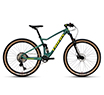
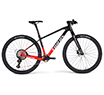
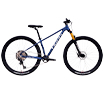

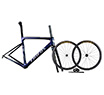
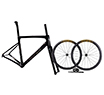
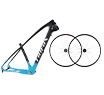
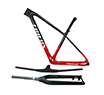





The mountain bike world is full of strong opinions, but few debates run as deep as hardtail vs. full-suspension. Walk into any bike shop or scroll through online forums, and you‘ll hear passionate arguments for both sides. Full-suspension bikes dominate showroom floors and trailheads, while hardtails are often dismissed as “entry‑level” or “budget” machines. But that perception misses the real story. The truth is simpler: there is no universally “better” bike. There is only the bike that matches your terrain, your budget, and your riding style. Whether you're a beginner learning to pick lines, an XC racer chasing efficiency, or a weekend warrior exploring local trails, a well‑chosen hardtail like the Trifox MFM200 bike frame 29er for sale can be the perfect foundation — lightweight, responsive, and surprisingly capable. Let‘s break down the real trade‑offs so you can decide which platform truly suits your ride.
The Hardtail: Lightweight Efficiency and Raw Feedback
A hardtail has suspension only in the front fork, with a rigid rear triangle. This design isn‘t a compromise — it‘s a deliberate choice for riders who value direct power transfer, climbing efficiency, and a pure connection to the trail. Because there‘s no rear shock or linkage to absorb pedaling energy, almost every watt you put into the cranks goes straight to the rear wheel. There‘s no “pedal bob” — that subtle energy loss that can make a full‑suspension bike feel sluggish on smooth climbs. For cross‑country racing, marathon events, or long days on forest paths, that efficiency advantage is real and measurable.
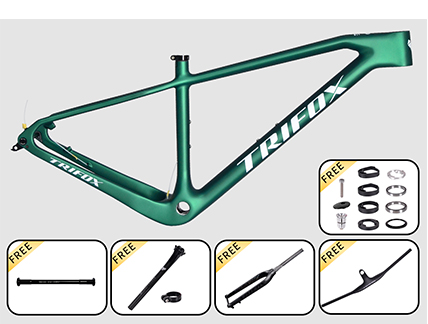
Hardtails are also inherently lighter and simpler. Without a rear shock, pivot bearings, and linkage hardware, a hardtail frame sheds significant weight — often 1‑2 kg less than a comparable full‑suspension bike at the same price point. This weight savings translates directly to easier climbing, quicker acceleration, and a bike that feels lively and eager under power. The MFM200, for example, weighs as little as 1,219 grams (size S), rivaling carbon frames that cost twice as much.
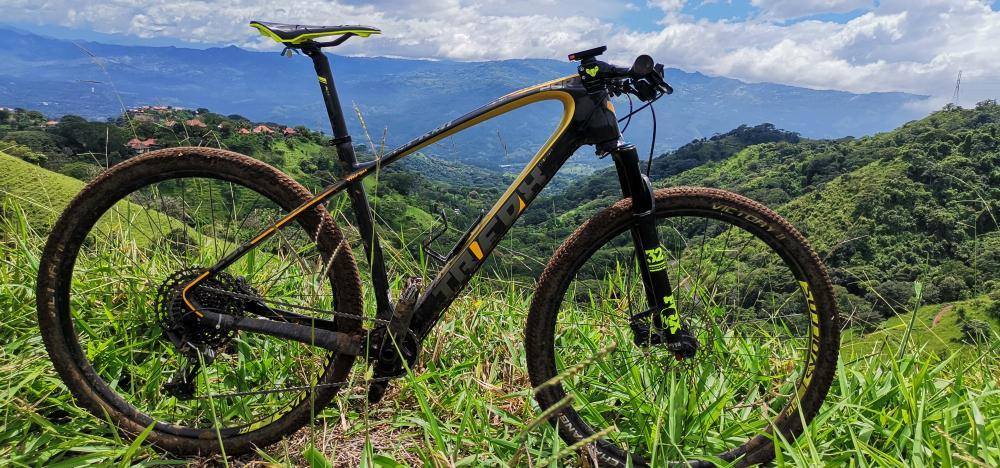
When a Hardtail Shines
Hardtails excel on smoother singletrack, flow trails, gravel paths, and mixed terrain where the surface is predictable. On climbs, the rigid rear end delivers unmatched efficiency, and the lack of rear suspension encourages active riding — you learn to shift your weight, unweight the rear wheel over obstacles, and pick smoother lines rather than relying on the bike to absorb mistakes. Many experienced riders argue that starting on a hardtail builds better technique than jumping straight to a full‑suspension bike.
For taller riders seeking a stable, confidence‑inspiring platform, the MFM200 is available in sizes up to 19”, making it an excellent option for a mens mountain bike xl frame. The frame‘s geometry — a 68° head angle and longer reach — provides stability on descents while keeping the front wheel planted for precise steering. Riders up to 195cm can find a proper fit without compromising the balanced handling that makes this frame so versatile.
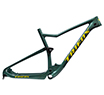
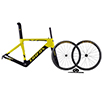
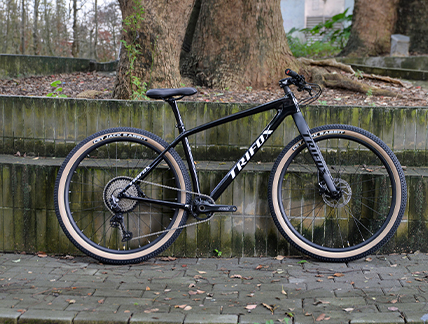
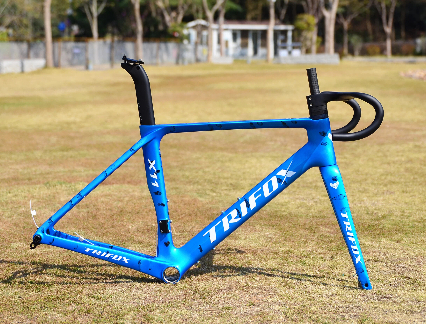
The Trifox MFM200 bike frame 29er for sale at an astonishingly affordable price, proving that you don‘t need a four‑figure budget to experience real carbon performance. Its T800 carbon construction delivers the classic hardtail advantages: featherlight weight (starting at 1,200g), excellent vibration damping that takes the edge off trail chatter, and a stiff bottom bracket that transfers every pedal stroke into forward momentum. The frame also includes modern standards — 142x12mm rear spacing for stiffness, internal cable routing for a clean look, and a threaded BSA bottom bracket for creak‑free reliability and easy maintenance.
The Full-Suspension Case: Comfort, Traction, and Forgiveness
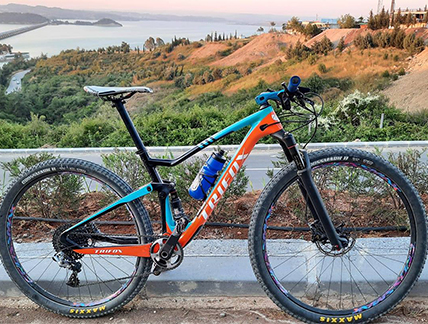
Full‑suspension bikes add a rear shock and linkage, which transforms how the bike handles rough terrain. On rocky, rooty trails or chunky descents, the rear wheel tracks the ground more faithfully, maintaining traction where a hardtail might bounce and lose grip. This also reduces fatigue dramatically — the bike absorbs the trail‘s impacts, so your body doesn‘t have to. Riders with back or joint pain often find full‑suspension bikes significantly more comfortable over long days in the saddle.
Full‑suspension also offers a larger margin for error. If you take a bad line or misjudge a drop, the rear suspension helps save you from a harsh impact. This makes full‑suspension bikes popular for aggressive trail riding, enduro, and bike park use, where speed and forgiveness are prioritized over pure pedaling efficiency.
However, that capability comes with trade‑offs. Full‑suspension bikes are heavier (often 2‑4 lbs more than a comparable hardtail), more expensive to purchase, and require significantly more maintenance — pivot bearings need regular cleaning and greasing, rear shocks require annual servicing, and the added complexity means more parts that can creak, wear out, or fail.
Making Your Choice: Terrain, Budget, and Goals
So, which is right for you? Start with an honest assessment of where you ride most often. If your local trails are smooth singletrack, flowy climbs, and forest paths, a hardtail will feel fast, efficient, and fun. If your terrain is relentlessly chunky, rocky, and steep, full‑suspension will keep you fresher and more in control.
Budget is another critical factor. At the same price point, a hardtail will almost always have better components — a lighter frame, a superior fork, and a higher‑end drivetrain. A $2,500 hardtail often comes with a pro‑level groupset and carbon frame, while a $2,500 full‑suspension bike may use entry‑level components and a heavier alloy frame. The MFM200 mens mountain bike xl frame option, for example, delivers a full T800 carbon chassis at a price that often buys only an entry‑level alloy full‑suspension frame from bigger brands.
Finally, consider your goals. If you‘re new to mountain biking, a hardtail forces you to learn proper technique — line choice, weight transfer, and body positioning — that will make you a better rider when you eventually switch to full‑suspension. If you‘re an experienced rider looking for a second bike for winter training or smoother trails, a hardtail offers a refreshing change of pace. And if you‘re building a bikepacking rig, the simplicity and reliability of a hardtail are hard to beat.
The Verdict: Hardtails Aren‘t Dead — They‘ve Evolved
Hardtails never disappeared from mountain biking. They simply shifted into specialised territory where their simplicity, efficiency, and honesty still make perfect sense. Modern carbon hardtails like the Trifox MFM200 combine featherlight weight, responsive handling, and modern geometry that rivals full‑suspension bikes of just a few years ago. With 29” wheels, and clearance for up to 2.1” tires, the MFM200 is ready for aggressive XC, marathon racing, and all‑day trail adventures. Available in multiple colors and sizes up to 19”, it‘s a versatile platform that delivers the core benefits of carbon — weight savings, power transfer, and trail compliance — at a price that won‘t break the bank.
Ultimately, the right frame is the one that spends the most time on the trails you actually ride. Buy for your home trails, not for a hypothetical mountain you visit once a year. And if you‘re still unsure, the 80/20 rule applies: choose a bike that excels on the terrain you ride 80% of the time. For many riders, that bike is still a hardtail — efficient, engaging, and ready to roll.
2026-06-06
Trifox
SHARE:


Comments
Recent Posts
1
1
1
1
1
1
1
1
1
1
1
1
1
1
1
1
1
1
1
1
1
1
1

1



