


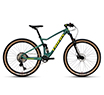
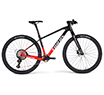
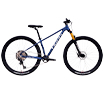
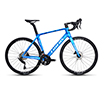
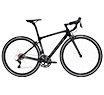
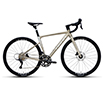
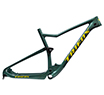
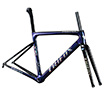
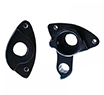
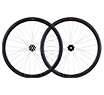
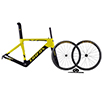
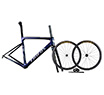
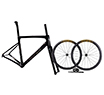
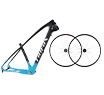
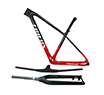
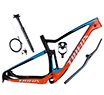
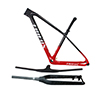
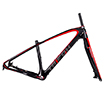





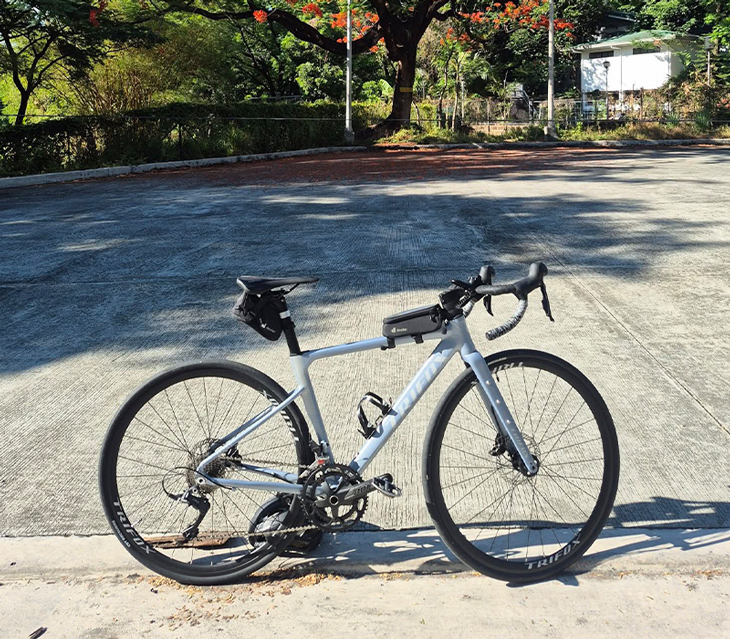
Walk into any bike shop or scroll through Instagram, and you‘d be forgiven for thinking carbon fiber is the only material that matters. Pro pelotons ride carbon, reviews obsess over gram‑saving layups, and the marketing machine whispers that anything less is a compromise. But here’s an uncomfortable truth for the carbon faithful: for a huge number of riders, a modern aluminum road bike isn‘t just “good enough”—it’s genuinely better. And the Trifox R241 is a living example of why.
The Budget Argument: Where Your Money Actually Goes
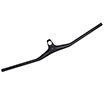
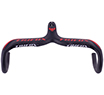
Carbon frames are expensive to manufacture. The material itself costs more, the layup process requires skilled labour, and the tooling is complex. Aluminum is simpler to work with and dramatically cheaper to produce. That‘s not a flaw—it’s an opportunity. A well‑priced alloy bike leaves room in your budget for components that directly impact ride quality: better wheels, a higher‑end groupset, and quality finishing kit. The Trifox R241, priced at just $659.99 (down from $1,399), is a textbook example. It gives you a lightweight 6061 aluminum frame, a full Shimano Tiagra 2×10‑speed groupset, integrated alloy handlebars, and ceramic bearing hubs—all for less than the price of many entry‑level carbon frames alone.
For a first‑time road cyclist, that value proposition is hard to ignore. You‘re not buying a “starter bike”—you’re buying a complete, performance‑ready machine that will feel fast and responsive from the very first pedal stroke. If you‘re searching for an entry level road bike that doesn’t cut corners on the parts that matter, the R241 is a smart place to start.
Durability: Does Aluminum Last Longer Than Carbon?
This is where the debate gets practical. Carbon fibre is phenomenally strong in the directions it‘s designed for, but it’s vulnerable to sharp impacts, overtightened bolts, and hidden cracks that can be invisible to the naked eye. A crash that would simply dent an alloy frame can cause delamination in carbon—damage that may not be obvious until the frame fails without warning. Aluminum is far more forgiving. It bends and dents rather than cracking, and those are almost always visible signs that you need to replace the part. For everyday training, commuting, or riding in groups where the odd tumble is a real risk, that durability advantage is significant.
Manufacturers confirm this: carbon is “more vulnerable to sharp impacts or crashes” and “crack or suffer hidden damage, making careful inspection important after any hard falls,” while aluminum “tends to bend or dent on impact.” Long‑term, an alloy frame is simply a more worry‑free companion.
Vibration Damping: The Surprising Reality
The old reputation of aluminum is that it rides harshly. That‘s outdated. Modern alloy frames, especially those using hydroformed tubes and advanced heat treatments, have closed the comfort gap dramatically. The Trifox R241 uses an AL6061 alloy frame with T4‑T6 heat treatment and triple‑butted tubing—thicker at stress points like the head tube and bottom bracket for stiffness, thinner along the mid‑sections to shed weight and add vertical compliance. The result is a frame that is stiff under power but far more comfortable than the jarring alloy bikes of a decade ago. The carbon fork further absorbs road chatter, and the 25mm tires (with clearance for 28mm) let you run slightly lower pressures for additional cushioning.
For the rider who isn‘t racing 10‑hour epics or chasing KOMs on brutal chipseal, the ride quality difference between a good alloy bike and a mid‑range carbon bike is surprisingly subtle—certainly not worth the price gap.
Practicality: When Aluminum Wins the Day
If you’re buying your first serious road bike, you‘re likely juggling multiple priorities: budget, reliability, and ease of maintenance. Aluminum doesn’t require carbon assembly paste, special torque wrenches, or annual professional inspections for hidden cracks. It‘s a material you can trust without second‑guessing every gravel chip or pothole hit. For the rider who wants to spend time on the saddle rather than in the workshop, that matters.
For cyclists seeking the best budget road bike that delivers real performance without the premium price tag, the Trifox R241 stands out. Weighing 9.75 kg, equipped with reliable Tiagra shifting, and built around a stiff, race‑ready geometry, it‘s a bike that doesn’t apologise for being alloy. It climbs efficiently, descends with confidence, and leaves you with cash left over for a proper bike fit, pedals, and kit.
The Verdict: Better for Who?
Is aluminum better than carbon? For a weight‑weenie racer chasing podiums, probably not. For the rest of us—the weekend warriors, the first‑time buyers, the smart shoppers—aluminum often makes more sense. You get 90% of the performance at 50% of the price, with less anxiety about damage and more room in your budget for the components that truly define a great ride. The Trifox R241 proves that alloy isn‘t a compromise—it’s a choice. And for many riders, it‘s the right one.
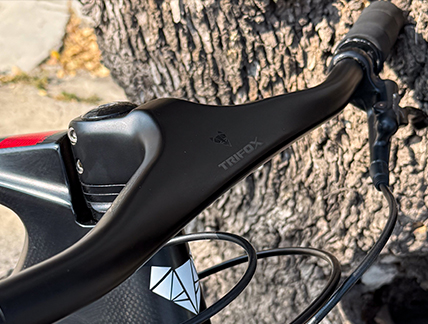
You’ve spent weeks researching, comparing stack heights and reach numbers, and finally settled on the perfect mtb handle bar rise. Then comes the moment of truth — you pull the old cockpit off, pick up a brake hose, and realize the fitting is 2mm too wide to slide through the handlebar’s entry port. The dream pauses. Integrated bars have revolutionized how mountain bike cockpits look and feel, but their neat, cable‑free exteriors hide a critical question: will your hoses and housings actually fit inside? Before you buy, modify, or replace a whole groupset, here’s how to check compatibility — with the RHB600 as your reference.
Know Your Bar: Internal vs. External Routing Options
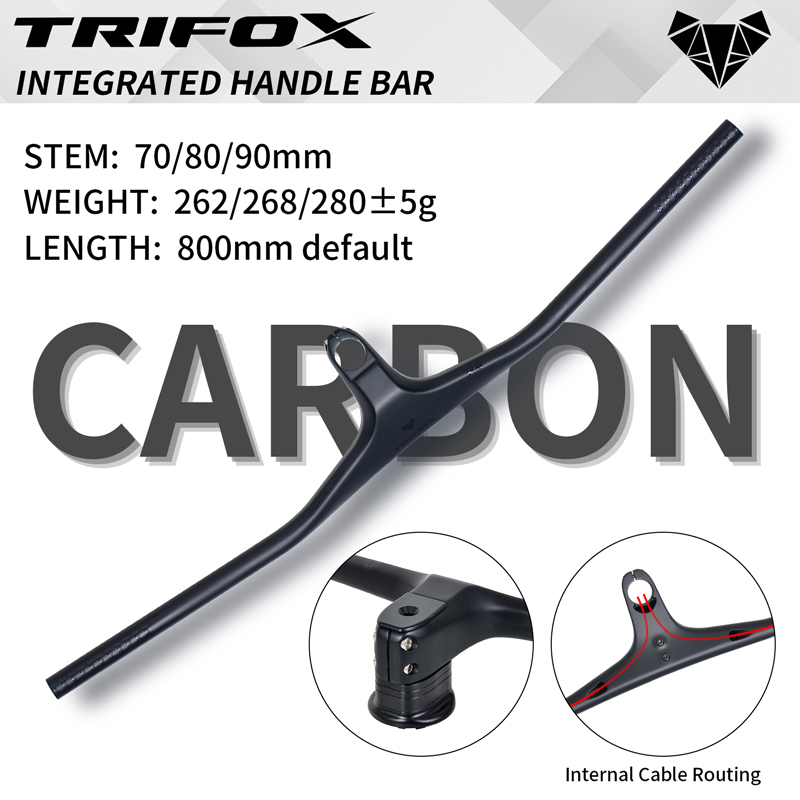
The Trifox RHB600 is available in two distinct routing configurations. The 52mm spacer version is designed for fully internal cable routing — your brake hoses and shifter cables enter the bar at the stem and travel completely inside the carbon structure, exiting at the lever mounting points. This is the cleanest look but the most demanding setup. The 42mm version uses semi‑external routing: cables run along the outside of the bar, tucked under a cover, which simplifies installation and maintenance while still tidying up the front of the bike. Knowing which version you need is step one.
Once you‘ve chosen your routing style, the real compatibility check begins. Hydraulic brake hoses are often the tightest fit. Shimano’s BH‑90 hose, for example, requires an 11.2mm‑wide connector at the lever end, while the BH‑59 uses a 13.2mm fitting — that extra 2mm can mean the difference between passing through or getting stuck. The RHB600’s internal channels are designed to accept most modern hydraulic hoses, but if you’re running SRAM’s Stealth‑a‑matic or Magura’s thicker fittings, you must measure your ferrule and olive outer diameter before installation. Some riders have found that switching to the lower‑profile Shimano OT‑RS900 housing provides a more flexible and slimmer profile, easing the routing process. If your hose fitting is too wide, you may need to replace the entire front hose with one that has a narrower connector — a task best left to a shop if you lack a bleed kit and the right barbs.
Mechanical Shifter Cables: Thinner Isn’t Always Easier
Mechanical shifting cables pose a different challenge. While a bare inner cable slides easily, it’s the compressionless shift housing that determines fit. Standard 5mm shift housing (common on older groups) can be a tight squeeze through integrated bar channels that expect 4mm housing. The RHB600’s internal diameter is engineered to accommodate both, but if you encounter resistance, swapping to Jagwire’s 4mm Pro or Elite Link housing (which uses segmented aluminum links) can dramatically reduce friction and improve bend radius while fitting through narrower ports. Before cutting any housing, run a test pull: feed the housing through the bar without the inner cable and ensure it moves freely from the stem opening to the lever exit. Any binding now will worsen under real‑world steering loads.
Dropper Post and Di2 Wiring: Hidden Clearance Issues
Modern cockpits often carry more than just brake hoses. If you run a dropper post, the remote cable housing follows the same path as your shifter cables — and must share the internal space. The RHB600’s internal channels are designed with enough capacity for one hose and one housing, but trying to squeeze two full‑size compressionless housings plus a hydraulic hose through the same bar can create friction that makes steering feel heavy. For heavy cable loads, consider using a wireless dropper (Reverb AXS, BikeYoke) or routing one of the cables externally through the 42mm spacer version. Di2 or AXS wiring (e‑tube wires) is much thinner and rarely causes issues, but the connectors themselves (e.g., EW‑SD50) are bulkier than the wire — feed the wire through first, then attach the connector, not the other way around.
Bend Radius and Lever Position: The Hidden Fit Factor
Even if your cables fit through the bar, they still need to exit cleanly at the levers. The RHB600’s 7° backsweep and 5° rise create a natural curve that most hoses can follow, but pushing a hose too tightly against a sharp internal edge can lead to long‑term chafing. Always inspect the exit ports for roughness and consider adding a small piece of adhesive‑backed foam or rubber lining where the hose makes contact. A hose that passes a static fit test can still fail after 100 miles of steering back and forth, as the constant micro‑movement saws through the outer layer. One forum user described discovering frayed cables at the point where housing exits the stem — a failure that only appears after hours of riding, not during initial assembly. To avoid this, leave a small loop of housing inside the bar rather than pulling everything taut; slack is your friend when it comes to internal routing longevity.
Tools and Techniques for a Smooth Install
If you‘ve confirmed compatibility but are still nervous, two tools can save you hours of frustration. A cable routing kit (a flexible guide wire with magnetic tips) allows you to pull hoses through blind channels without fishing blindly. And a 5mm or 4mm internal routing liner — essentially a thin plastic tube you slide into the bar first — creates a smooth pathway that you then pull your actual hose through. For extra insurance, wrap the end of your hose in a thin layer of electrical tape to prevent the end from snagging on internal carbon edges. And whatever you do, do not grease the hose: lubricant will attract dirt and eventually gum up the internal channel, making future cable swaps miserable. If you need slip, use a few drops of isopropyl alcohol — it evaporates cleanly.
Making the Final Call
Integrated bars like the RHB600 aren‘t just about looks — they’re about eliminating cable clutter, improving aero, and creating a cockpit that feels like one solid piece of equipment. But that clean profile demands careful preparation. By verifying your hose and housing diameters, using the correct routing version, and investing in a few cheap routing aids, you can avoid the disappointment of discovering incompatibility halfway through a build. The RHB600 is part of a new generation of carbon aero handlebars that make fully integrated cockpits accessible — but only if your cables are ready to take the ride with you.
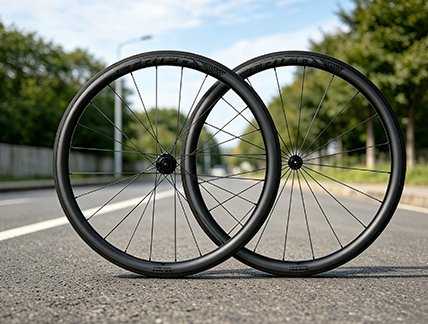
The road cycling world has a new obsession. Not weight, not stiffness — depth. Carbon wheel rim depth has become the single most talked-about variable in performance upgrades, and for good reason. The right depth transforms how your bike accelerates, cuts through the wind, and handles crosswinds. The wrong depth leaves you fighting the bike when you should be flowing. This guide breaks down the three most common depths — 35mm, 45mm, and 50mm — and explains how to choose the one that matches your riding style.
The Physics Beneath the Carbon
A deeper rim presents more surface area to airflow. When engineered correctly — with a modern U or V profile — that surface acts like an aircraft wing, directing air along a longer, more controlled path that reduces turbulent drag. Wind tunnel data consistently shows that upgrading from a 30mm rim to a 50mm rim saves more watts than almost any other equipment change available to an average rider. But deeper rims also catch more crosswind, and the deeper you go, the more you feel lateral gusts. Shallow rims are lighter, which matters on steep climbs where rotational weight penalizes every pedal stroke. The art is finding where those trade-offs balance for the terrain you actually ride.
35mm — The All-Rounder Climber
A 35mm carbon wheel sits at the shallow end of the performance spectrum. It prioritizes weight and responsiveness over pure aero gains. For riders who live in mountainous regions or regularly face 8-12% grades, 35mm depth is often the smart choice. The reduced rotational mass means quicker acceleration out of corners and a lighter feel when standing on the pedals. Crosswind stability is also excellent at this depth — lighter riders or those riding in gusty coastal conditions will appreciate predictable handling that doesn‘t demand constant steering corrections. The compromise is aerodynamic efficiency: at speeds above 35km/h on flat or rolling terrain, a 35mm wheel leaves watts on the table. For the rider who spends 80% of their time climbing and descending, that’s an acceptable trade. For the rider who sees a mix of hills and flats, a slightly deeper wheel is often faster overall.
45mm — The Versatile Sweet Spot
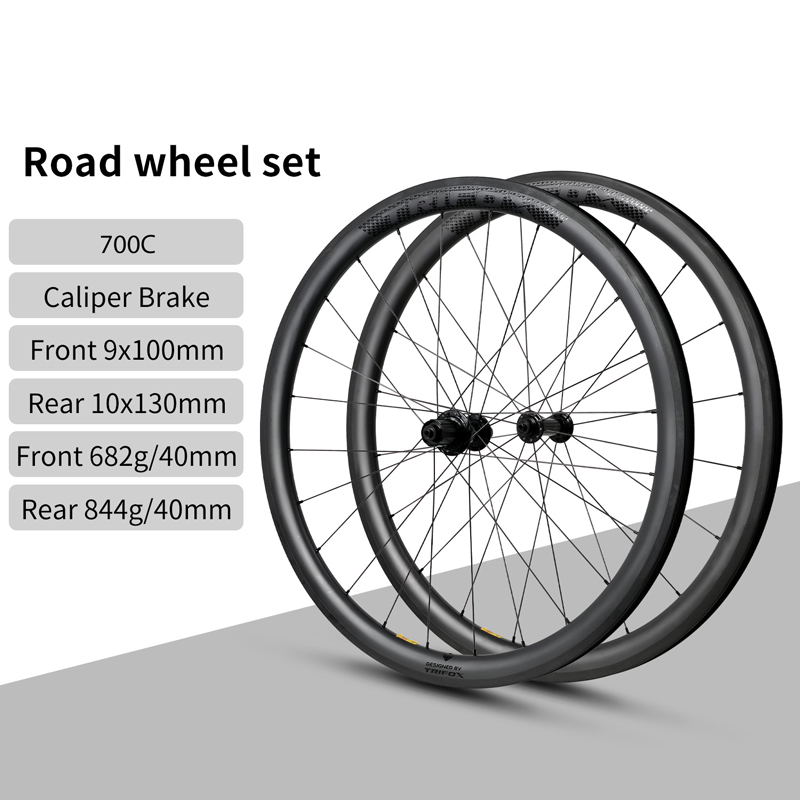
The 45mm depth has emerged as the new standard for riders who want one wheelset for everything. It offers genuine aerodynamic benefit — studies show a 45mm rim can save 5-10 watts at 40km/h compared to a shallow box-section rim — without the weight penalty or crosswind sensitivity of deeper sections. The 45mm WT18 wheels from Trifox weigh just 697g (front) and 862g (rear), making them light enough for serious climbing yet aero enough for fast group rides and flat time trials. This “golden middle” around 40-50mm is now the most recommended range for amateur riders because it works well across almost all terrain. Test data confirms this: at a steady 200 watts, a 50mm wheel delivers roughly 0.6km/h more speed than an alloy box rim; at 290 watts (~37.5km/h), the advantage grows to 1.2km/h. For a century ride, those small per-kilometer gains add up to meaningful time savings without a harsh ride penalty.
50mm — The Aero All-Rounder
A 50mm carbon wheelset has crossed a meaningful threshold. It’s deep enough to provide substantial aerodynamic gains — more than the 45mm version — yet remains manageable for most riders in real-world conditions. The 50mm WT18 wheels weigh only 716g (front) and 878g (rear), just 38g heavier per pair than the 40mm version. That’s a trivial weight penalty for a significant aero improvement. The 45-50mm range has become the default choice for riders seeking one wheelset to handle everything from mountainous gran fondos to fast criteriums. The aerodynamic advantage of a 50mm rim vs an older shallow rim is substantial at speeds above 30km/h, and modern rim profiles have dramatically improved crosswind stability compared to early deep-section designs. For the enthusiast who rides rolling terrain, participates in group rides, and occasionally races, 50mm is the depth that does it all. The 50mm carbon wheelset WT18 from Trifox offers this balance at a price that makes carbon aero wheels accessible to everyday cyclists.
60mm — The Aero Specialist
For completeness, the WT18 also offers a 60mm depth. This is the domain of the aero specialist — time trialists, triathletes, and riders who spend most of their time on flat roads or in fast, aggressive pacelines. The 60mm profile cuts through the wind with exceptional efficiency, delivering measurable speed gains at sustained high speeds. However, crosswind influence is more noticeable, and the weight penalty is real: 744g front, 906g rear. For most road riders, 60mm is best as a second wheelset for race days or specific flat courses, not a daily driver.
Which Depth Should You Choose?
The question isn‘t which depth is “best” — it’s which depth fits your roads. Use this quick guide:
• Choose 35-40mm if you spend most of your time climbing steep mountains, are a lighter rider sensitive to crosswinds, or prioritize quick acceleration over top speed.
• Choose 45-50mm if you ride rolling to moderately hilly terrain, participate in group rides or local races, and want one versatile wheelset that does everything well.
• Choose 60mm if you race time trials, compete on flat courses, or already have a shallower set for climbing days.
Value That Makes Sense
For years, the best budget carbon wheelset was an oxymoron — you could have low price or genuine performance, not both. The WT18 changes that equation. At $399, this is a 100% T800 carbon fiber wheelset with depth options from 40mm to 60mm, Pillar stainless steel spokes, high-quality LLU contact bearings, and a tool‑free quick‑release freehub. The braking surface is engineered for consistent rim brake performance, and the quick-release design (100mm front, 130mm rear) ensures compatibility with classic rim brake frames. Riders who have tested these wheels consistently praise the build quality, noting that they spin true out of the box and stay that way. The value proposition is clear: you‘re getting the same T800 carbon construction found in wheelsets costing twice as much, with no meaningful compromise in stiffness, weight, or ride feel.
The Trifox WT18 best budget carbon wheelset proves that high‑performance carbon wheels are no longer reserved for racers with deep pockets. By selecting the right depth for your terrain, you can unlock genuine aero and weight benefits without breaking the bank. That’s the new math of rim depth — and it‘s a calculation every road cyclist should run.
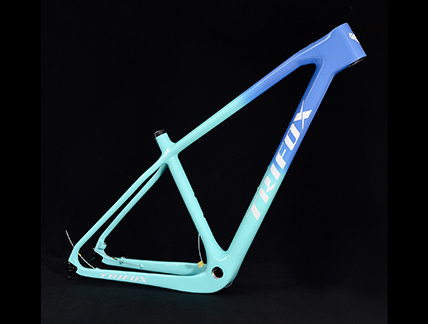
Walk into any mountain bike forum or scroll through group ride photos, and one truth becomes clear: component standards change faster than most of us care to admit. A frame that feels cutting‑edge today can feel hopelessly dated in three seasons — not because the carbon stops working, but because your wheels don’t fit, your hanger is discontinued, and the industry has moved on without you.
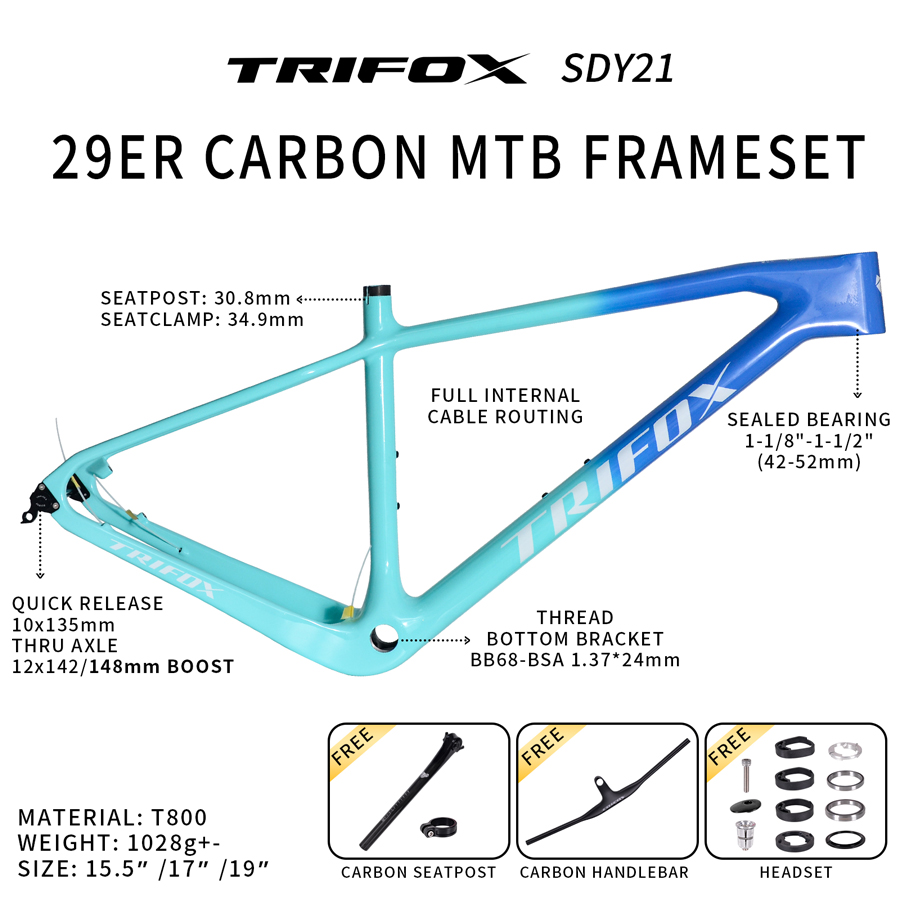
Relevance isn’t about fashion. It’s about compatibility. A truly relevant frame is one that gives you choices: modern stiffness when you want it, classic simplicity when you need it, and the flexibility to swap components without throwing your whole build away. The Trifox SDY21 carbon hardtail frame is built around exactly that philosophy. Its secret isn‘t a single “best” standard — it’s the ability to choose the right standard from the start. The frame is available in three distinct O.L.D (Over Locknut Distance) versions: 135mm Quick Release, 142x12mm Thru‑Axle, and 148x12mm Boost Thru‑Axle. Each is a purpose‑built frame, not a one‑size‑fits‑all hack. That clarity is the first step to keeping your bike relevant for years.
Choose Your Axle, Choose Your Future
Many brands claim versatility by offering adapters or interchangeable dropouts — solutions that often introduce play, creaks, or alignment headaches. The SDY21 takes a cleaner path. When you buy, you select the exact axle version that matches your wheelset and your ambitions.
Boost 148x12mm TA — The current gold standard. Boost spacing widens the hub flanges, which improves spoke bracing angles and creates a stiffer, stronger rear wheel. On the trail, that translates to sharper cornering, less wheel flex under hard pedaling, and better tracking through rock gardens. If you‘re building a modern XC or trail bike with 29” wheels and want maximum stiffness, this is the version to choose. Boost also gives you the widest compatibility with current wheels, forks, and drivetrains — the path of least future resistance.
142x12mm Thru‑Axle — The immediate predecessor to Boost. It offers much of the security and precision of a thru‑axle without the wider flange spacing. For riders who already own a quality 142mm wheelset or prefer a slightly narrower rear end for certain riding styles, this version provides a stiff, rattle‑free interface that improves handling and braking precision over QR. It‘s not the newest standard, but it’s far from obsolete — and it‘s the right answer if your parts bin already points that way.
135mm Quick Release — The traditionalist’s choice. Simple, lightweight, and compatible with a vast range of entry‑level and classic wheelsets. If you‘re building a budget‑conscious hardtail for smooth singletrack, bikepacking, or a singlespeed conversion, QR keeps things affordable and straightforward. Not every ride needs Boost-level stiffness — and that’s fine.
The Frame That Unites Them All
Whichever axle version you select, the core SDY21 DNA remains the same. The frame is constructed from T800 full carbon fiber, offering an exceptional stiffness‑to‑weight ratio. Weighing as little as 1028g in the 15.5” size, it‘s a true lightweight contender — a frame that doesn’t punish you on climbs. The geometry is modern and balanced: a 70° head tube angle and 73° seat tube angle provide confident, capable handling that climbs efficiently and descends with stability.
The SDY21 also features full internal cable routing through the headset, resulting in a sleek, uncluttered appearance while protecting cables from moisture, mud, and abrasion. The frame clears tires up to 29x2.4”, accommodating modern high‑volume rubber for traction and comfort. And it includes a replaceable derailleur hanger, making it compatible with both geared drivetrains and singlespeed setups — a rare touch of versatility at this price point.
The Standards That Matter Beyond the Axle
A relevant frame needs more than just axle choices. It needs to speak the industry‘s evolving language. The SDY21’s Boost 148 versions also embrace the Universal Derailleur Hanger (UDH) standard — the same interface that unlocks SRAM‘s Transmission drivetrains and makes hanger replacement universally easy. The frame uses a threaded BSA 73mm bottom bracket — famously creak‑free, easy to service with simple tools, and a deliberate departure from problematic press‑fit shells that can develop annoying noises over time.
For riders who want a frame that is both visually striking and technically sound, the SDY21 is available in multiple colors, including a vibrant orange mountain bike frame option that stands out without compromising the carbon‘s structural integrity. It’s a frame that performs as well as it looks.
Why This Matters for Your Build
The worst feeling in mountain biking is discovering that your dream build is incompatible with the wheels you already own — or with the wheels you hope to buy next season. By offering three distinct axle versions, the SDY21 puts control back in your hands. You don’t have to force adapters or compromise on your vision. You simply choose the version that aligns with your parts, your budget, and your riding style.
For riders seeking a no‑compromise rigid frame mtb that balances modern performance with practical compatibility, the SDY21 delivers. It‘s a frame that respects where mountain biking has been — and anticipates where it’s going. Build it with Boost and a 12‑speed drivetrain for a race‑ready XC machine. Build it with QR and a singlespeed tensioner for a minimalist trail weapon. Or build it with TA and a reliable 1x11 groupset for an all‑around hardtail that just works.
The right carbon hardtail doesn‘t lock you into a single path. It gives you choices — and the SDY21 gives you three. That’s how you stay relevant.
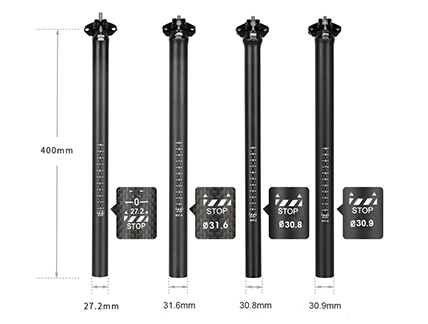
The seatpost is a component most riders overlook—until they notice it. That slight discomfort on rough roads, the creak that develops after a year, or the bike weight that feels just a little too heavy. The choice between a carbon fiber and an aluminum seatpost comes down to balancing weight, comfort, durability, and cost. Here are the seven key differences to help you decide which is right for your ride.
1. Weight
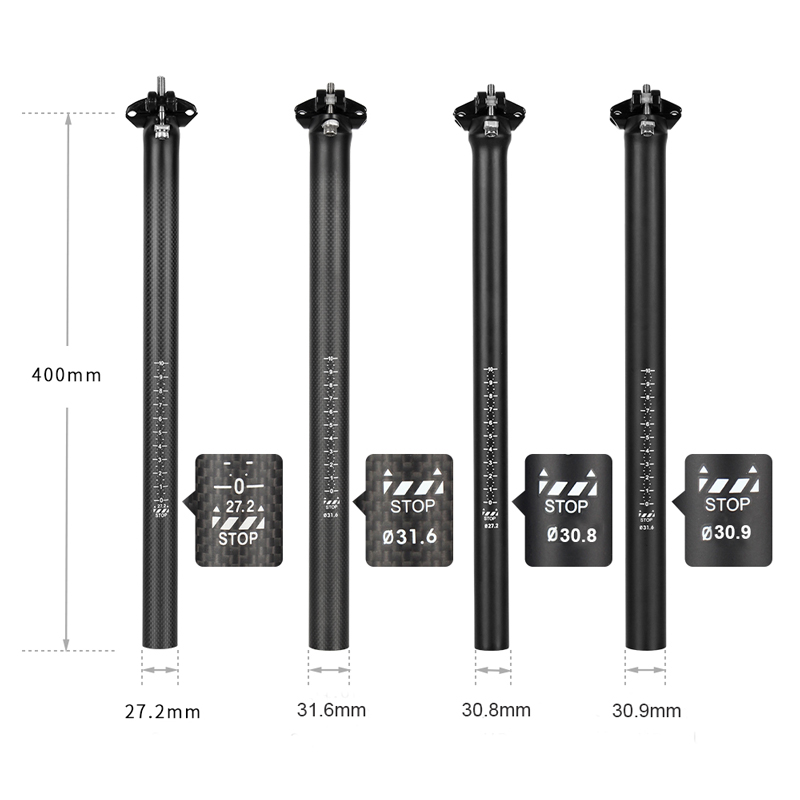
Carbon fiber is significantly lighter. A quality aluminum seatpost can weigh 220-300g. A carbon seatpost like the Trifox SLS21 tips the scale at just 160g (for the 30.8 x 400mm size), offering a weight reduction of 30-40% or more. That savings may seem small, but at the top of the seat tube, it reduces total bike weight and improves the bike’s overall feel.
2. Vibration Damping and Comfort
This is carbon’s strongest advantage. Carbon fiber naturally absorbs high-frequency “road buzz”—the vibration from rough pavement, chip seal, or gravel that causes fatigue over long miles. Aluminum transmits that vibration more directly, which can lead to numbness and discomfort. For long-distance road riders, gravel enthusiasts, or anyone seeking a smoother experience, carbon provides a meaningful increase in ride comfort.
3. Stiffness and Power Transfer
Both materials can be stiff, but carbon offers tunable stiffness. A well-designed carbon post can maintain the rigidity needed for efficient power transfer while still offering vertical compliance to absorb shocks. Aluminum is predictably stiff but cannot offer the same tuned flex characteristics.
4. Durability and Impact Resistance
Here, aluminum has the edge. Aluminum seatposts are tougher and can withstand direct impacts from rocks, crashes, or trail debris. If you regularly ride rocky terrain or subject your bike to hard use, aluminum offers peace of mind. Carbon can be damaged by overtightening or sharp impacts, though modern quality carbon posts are far more durable than early versions.
5. Installation and Maintenance
A carbon seatpost requires careful attention to torque specs and the use of carbon assembly paste (never grease). Carbon paste contains micro-grip particles that increase friction, allowing you to achieve a secure hold at lower torque to prevent slipping without crushing the carbon. An aluminum seatpost can be installed with standard grease and is more tolerant of minor torque variations. That said, an aluminum post in a carbon frame can corrode and seize over time, a problem carbon paste largely prevents. Either way, a torque wrench is recommended for both materials.
6. Aesthetics
Carbon’s UD matte or 3K weave finish looks undeniably premium. Aluminum posts typically have a painted or anodized finish. For builders who care about visual details, carbon offers a distinctive, high-end appearance.
7. Price and Value
Carbon costs more. A quality carbon seatpost typically ranges from $150 to $400, while aluminum options often run $50 to $150. The question becomes: is the weight savings and vibration damping worth the premium? For competitive riders, touring cyclists, or anyone spending long hours in the saddle, the answer is often yes. For casual or budget-conscious riders, aluminum remains a excellent choice.
Making Your Choice
If you prioritize durability and cost, aluminum is a reliable choice. If you value weight reduction, ride comfort, and a premium aesthetic—and you’re willing to install it correctly with a torque wrench and carbon paste—a carbon seatpost like the carbon fiber seatpost SLS21 delivers measurable benefits on every ride. The Trifox SLS21 is available in multiple diameters, including the popular 27.2mm seatpost size for Mtb,road and gravel bikes, and features a 400mm length, T800 carbon construction, and titanium hardware. Upgrading your seatpost is one of the most effective ways to improve both bike performance and rider comfort—without changing how your bike looks from 10 feet away.
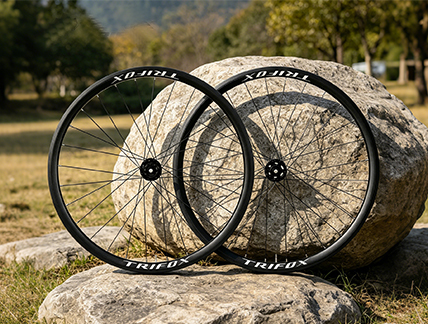
For years, road cyclists believed that narrow tires at sky‑high pressure were the only path to speed. That era is over. Today, riders understand that a wider rim — even by a few millimeters — fundamentally changes how a tire behaves. It reshapes the contact patch, lowers optimal pressure, and transforms ride quality. The Trifox AWT7 alloy disc brake wheelset is a perfect example of this modern philosophy. With its 14mm internal width, it’s engineered to do something simple but powerful: make your tires work better, so you ride faster, safer, and more comfortably. At an affordable price, it’s one of the best cheap bike wheelset options available for riders who want real performance without breaking the bank.
Rim Width Shapes the Tire, Not Just the Wheel
The rim isn’t just a hoop that holds the tire. Its internal width dictates the tire’s profile once inflated. On a narrow rim, a tire bulges into a light‑bulb shape — tall and narrow, with a small contact patch. This shape forces high pressure to keep the sidewalls stable, which translates into a harsh, unforgiving ride. A wider rim supports the tire’s sidewalls more effectively, creating a flatter, wider profile. This shape stabilizes the tread, reduces squirm, and dramatically increases the contact patch. As one industry analysis notes, “when the internal width of a rim reaches 21mm or more,” the contact surface rises considerably, enhancing redistribution of contact pressure and increasing lateral grip during cornering. The result is more predictable handling and better traction, especially on wet or loose surfaces.
The AWT7’s 14mm internal width is purpose‑selected for modern 25‑28mm tires. Rather than forcing a tire to bulge unnaturally, it creates a smooth, continuous surface from the rim to the tread. This profile improves stability when cornering and reduces the vague, wandering sensation that plagues narrow‑rim setups. Riders using the AWT7 on classic road routes have noted the wheels feel “planted” and “predictable” — a direct result of matching rim width to tire shape.
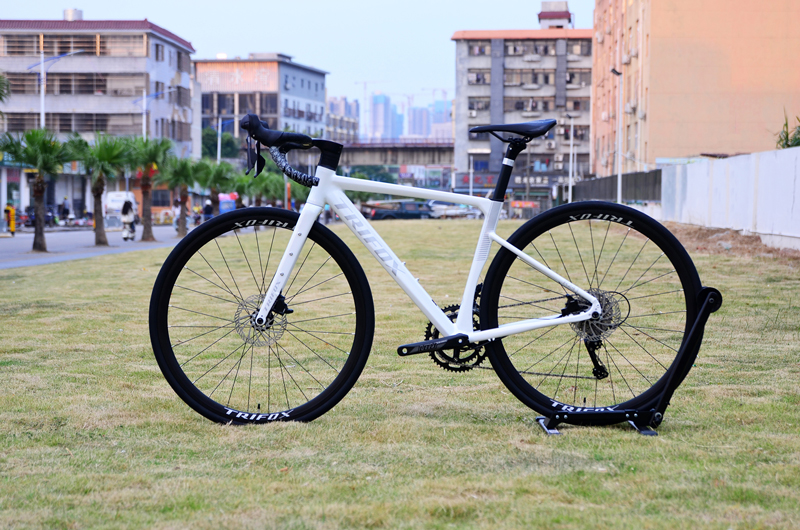
How Width Unlocks Lower Pressure and Higher Comfort
The most direct benefit of a wider rim is what it allows you to do with air pressure. A properly supported tire can be run at significantly lower pressures without risking pinch flats or rim strikes. According to wider rim research, using a 21mm internal width rim allows tires to be run at lower pressures, absorbing road vibrations more effectively and reducing the impact transmitted to the rider’s body and the frame. The AWT7’s 14mm width, while not as extreme as gravel‑oriented rims, hits the sweet spot for road use. It lets you drop pressure from the traditional 100‑120 psi range down to 80‑95 psi, depending on rider weight and tire choice. At these lower pressures, the tire flexes over road imperfections rather than bouncing off them. The result is dramatically reduced hand and saddle fatigue on rough pavement, longer chip seal, and worn asphalt.
This pressure flexibility also helps the tire maintain traction. A tire at lower pressure deforms around irregularities, increasing the effective contact patch. As one manufacturer explains, a wider internal rim maximizes tire support and grip, enhancing stability and comfort, and the lower pressure setup “absorbs road vibrations more effectively, therefore lowering the impact sent to the rider’s body.” That’s the difference between a bike that feels fragile on rough roads and one that inspires confidence mile after mile.
Alloy Efficiency Meets Budget‑Friendly Performance
Carbon wheels get the headlines, but alloy wheels like the AWT7 deliver 95% of the performance at a fraction of the cost. The AWT7’s 30mm rim depth offers a balance of aerodynamics and crosswind stability, while the 28 Pillar stainless steel spokes and welded aluminum construction provide the stiffness needed for efficient power transfer. Weighing approximately 1,956g per pair, the wheels are light enough for climbing yet durable enough for daily training. The 6‑pawl, 120‑point engagement hubs deliver crisp acceleration, and the disc brake compatibility ensures consistent stopping power in all weather. For riders seeking an affordable but capable bicycle disc wheel, the AWT7 represents exceptional value — a wheelset that doesn’t compromise on the fundamentals of ride quality.
The Bottom Line
Rim width isn’t a secondary spec. It’s a primary determinant of how your bike feels on the road. A 14mm internal width strikes a balance: wide enough to support the tire’s sidewalls and enable comfortable lower pressures, yet narrow enough to remain aerodynamically efficient for road use. The Trifox AWT7 alloy disc wheelset capitalizes on this design principle, delivering a ride that is stable, grippy, and noticeably more comfortable than traditional narrow‑rim wheelsets. For cyclists on a budget who refuse to sacrifice ride quality, the AWT7 is a smart upgrade that proves modern alloy engineering can rival carbon’s best traits — without the premium price tag.
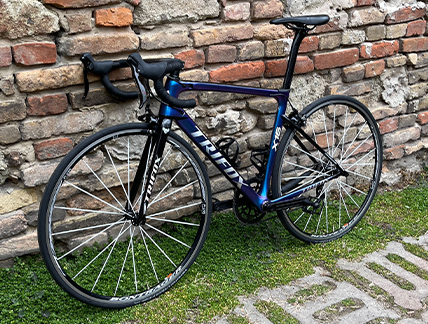
You've invested in a beautiful new carbon frame – the Trifox X16TA, with its stunning chameleon blue and purple finishes, built for both men and women. It’s light, stiff, and fast. You carefully install the bottom bracket, route the cables, and fit the groupset. Then, you reach for your hex key to tighten the seatpost clamp. "Just a little extra for safety," you think. That single moment of over‑enthusiasm could be the beginning of the end for your expensive frame. Here’s why.
The Fragile Nature of Carbon Fiber
Carbon fiber is an anisotropic composite material. It is phenomenally strong in the directions it was designed for – typically along the length of the tubes to withstand pedaling and impact forces. But it is surprisingly weak and vulnerable to forces it wasn't designed for, such as the concentrated, crushing pressure of a clamp or a bolt head. While aluminum or steel bolts will stretch and deform before breaking, giving you a tactile warning, carbon fiber is rigid and unforgiving. As an engineer explains, carbon is “more susceptible to crushing and cracking when improperly set up. Simply put, the margin for error is much smaller”. It doesn't bend or give; it cracks, and once cracked, its structural integrity is compromised, often catastrophically and without warning.
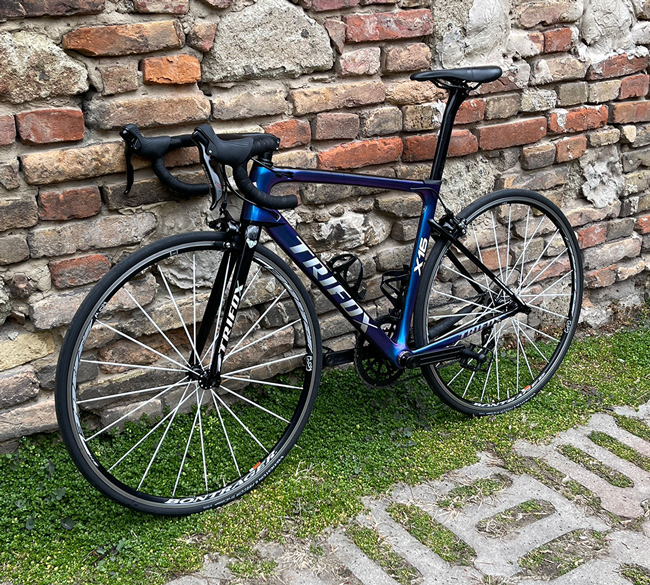
The Risky Clamps and Bolts on Your Frame
Every bolt on your carbon bike has a precise torque specification, typically measured in Newton-meters (Nm). Ignoring these specs is a gamble. The most common points of failure include:
• The Seatpost Collar: This is the most frequent victim. Most manufacturers specify a torque of 4–6 Nm for seatpost clamps. Over-tightening it can crush the carbon seatpost itself, leading to a slipping saddle or a sudden, dangerous collapse. One mechanic notes that “a chronically slipping seatpost (even after tightening it down numerous times) is often the result of overtightening the clamp, damaging the carbon”.
• The Stem Faceplate and Steerer Tube: The stem bolts that clamp your handlebars and the steerer tube of your fork are also highly vulnerable. A stem-to-steerer clamp torque of 5–7 Nm is common. Over-torquing the stem bolts on a medium bike frame can crush the carbon steerer tube, leading to a loss of steering control. This is exacerbated by using an incorrectly sized or too-short expander plug, as the stem’s pinch bolts then have no internal support, making the steerer tube easy to crack.
• Bottle Cage Bolts: Even seemingly insignificant bolts pose a risk. Over-tightening a bottle cage bolt on a down tube can create a “stress riser.” This is a small area of intense localized stress that, over time and with road vibration, can propagate into a crack that travels through the carbon layers, potentially splitting the frame tube.
How to Build and Ride with Confidence
Protecting your investment in a high‑performance ladies bike frame or any carbon bike requires a change in mindset and technique.
• Invest in a Quality Torque Wrench: This is non‑negotiable. A “click‑type” torque wrench is the most common and user‑friendly option, providing an audible and tactile click when the set torque value is reached. As one industry expert warns, “overtightening components could result in damaging the carbon or even breaking the bolt” and using a torque wrench is vital for the weekend mechanic. For critical parts of a carbon frame, it's simply not worth the risk to work by feel alone.
• Use Carbon Assembly Paste: Never grease seatposts, handlebars, or steerer tubes. Grease lubricates the interface, artificially reducing friction and causing you to need to tighten the bolt more to achieve the same hold. Carbon assembly paste contains tiny abrasive particles that increase friction between two carbon surfaces, allowing you to achieve a secure, non-slip hold at a much lower torque. Ritchey, a leading component manufacturer, notes its friction-enhancing paste can “allow tightening torque to be reduced by up to 30%”.
• Clamp the Bike Correctly: When working on your bike in a repair stand, never clamp it directly by the frame tubes. A carbon tube “can be crushed if it's over-tightened”. Always secure your bike by clamping the seatpost. If you have a carbon seatpost, use a work-stand adaptor or a sacrificial alloy post.
Conclusion
The Trifox X16TA is a masterpiece of modern carbon engineering, offering a lightweight and responsive ride in a range of sizes and colors to fit a diverse range of riders, from those seeking a medium bike frame to those looking for a ladies bike frame. But its ultimate longevity and safety are in your hands. The immense strength of a carbon frame is precisely engineered. By respecting torque specifications, investing in the right tools, and using correct assembly compounds, you can ensure that your dream bike remains a source of speed and joy for many thousands of miles, not a heartbreaking lesson in mechanical sympathy.
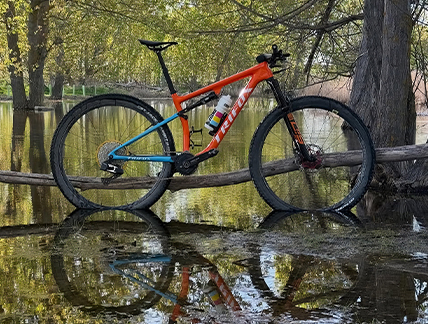
The mountain bike industry has a habit of changing standards just when you think you’ve settled on a dream build. Rear axle spacing, derailleur hangers, tire widths—all have shifted over the past decade, often leaving older frames incompatible with newer, better components. If you’re investing in a disc brake bike frame today, you want to be sure it can accept tomorrow’s drivetrains, wheels, and tires. The Trifox TRAIL II PRO is engineered with three key modern standards: Boost 148mm spacing, a Universal Derailleur Hanger (UDH), and generous tire clearance. Here’s why those specs matter for the future.
Boost 148: The Foundation of Future Wheel Stiffness
Boost 148x12mm rear spacing has rapidly become the industry benchmark for mountain bikes. By widening the hub flanges compared to older 142mm or 135mm standards, Boost creates a significantly stiffer rear wheel through improved spoke bracing angles. This isn‘t just a performance upgrade—it’s a compatibility necessity. Nearly every modern frame, fork, and wheelset uses Boost spacing today, and the standard is likely to remain dominant for years. Choosing a non-Boost frame means limiting your wheel and hub options. The TRAIL II PRO’s Boost 148mm thru-axle dropout ensures you’ll have access to the best wheels on the market now and in the foreseeable future, from lightweight XC race hoops to rugged trail builds.
UDH: Your Gateway to Next-Generation Drivetrains
The Universal Derailleur Hanger (UDH) is arguably the most important future-proofing feature on any modern frame. Originally developed by SRAM, the UDH standardizes the derailleur mounting interface across all bikes. This has two profound benefits. First, it eliminates the hunt for frame-specific hangers—replacements are now universal. Second, and more critically, the UDH is the mandatory interface for SRAM’s revolutionary Transmission and Full Mount drivetrains. These next-generation systems mount the derailleur directly to the frame, bypassing a traditional hanger entirely for unmatched shift precision and crash durability. A frame with a UDH is compatible with all current derailleurs and ready for whatever full‑mount systems the future holds. The TRAIL II PRO’s UDH dropout ensures you won‘t be left behind as drivetrain technology evolves.
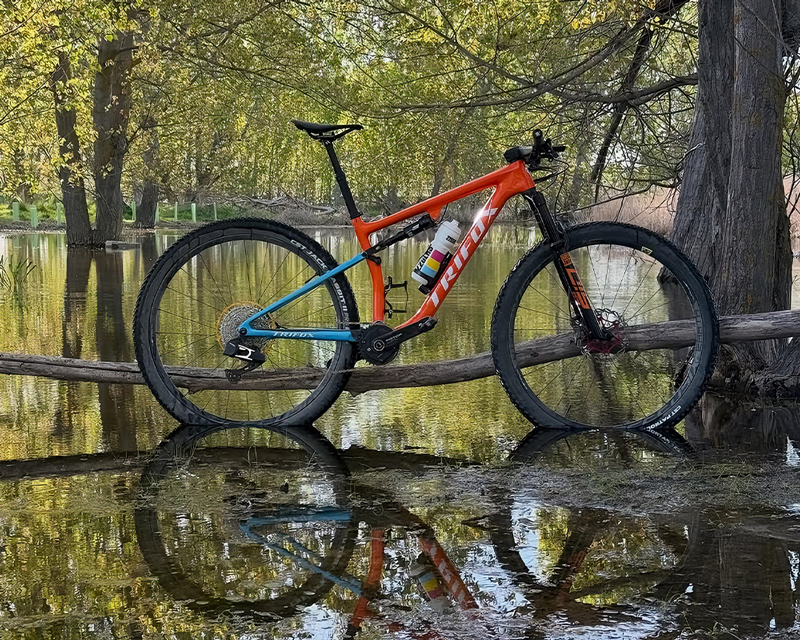
Tire Clearance: Room to Grow as Rubber Expands
Tire widths have been steadily increasing across all mountain bike disciplines. XC race tires that were once 2.1” are now routinely 2.4”, with 2.6” options appearing for more aggressive terrain. The TRAIL II PRO is designed with 29 x 2.25” as its official clearance, but real-world experience shows the frame can accommodate a 2.3” tire in dry conditions, and some owners have successfully mounted 2.4” rubber on standard rims. This generous clearance means you’re not locked into narrow tires as the industry trend toward wider, more capable rubber continues. Whether you want the grip of a 2.4” for loose races or the volume of a 2.6” for trail adventures, the TRAIL II PRO has the breathing room to adapt.
Built for Tall Riders Too: The 19‑Inch Frame Option
The TRAIL II PRO is available in 17” and 19” sizes. For taller riders, the 19 inch bike frame provides a roomy reach (470mm) and taller stack (606.1mm), accommodating riders from 175–190cm without compromising the frame’s progressive 67.5° head tube angle. Importantly, the future-proofing benefits—Boost, UDH, and tire clearance—scale across both sizes, ensuring tall riders enjoy the same long-term compatibility as their shorter counterparts.
Why These Standards Matter for Your Wallet
Buying a frame that anticipates future standards isn’t just about performance; it’s about value. A frame that can accept new drivetrains, wider wheels, and larger tires won’t become obsolete quickly. You can upgrade components piecemeal over years, breathing new life into the bike without replacing the chassis. The TRAIL II PRO’s T800 carbon construction, internal routing, and threaded BB68 bottom bracket further enhance its longevity. When you invest in this disc brake bike frame, you’re not just buying a bike for this season—you’re buying a platform that will remain competitive and compatible for seasons to come. Future-proof your build today.
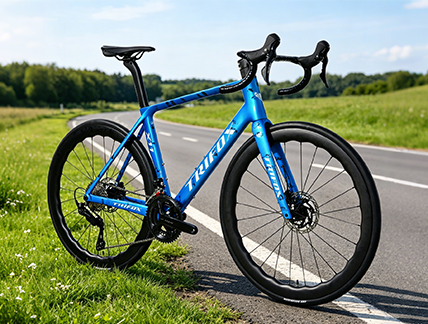
Walk into any bike shop and the advice is almost universal: “Buy complete. It’s cheaper.” And in many cases, that’s true. Manufacturers buy components in massive volumes, so they can offer a fully built bike for less than the sum of its parts — often by hundreds of dollars. A 2025 analysis found that sourcing all components individually for a mid-range mountain bike cost about $876 more than buying the complete version. So why would anyone buy just a frameset? Because the full story is more complicated, and for many riders, buying a frameset actually saves money in ways that aren’t immediately obvious.
The “Cheaper to Buy Complete” Myth Needs Context
The conventional wisdom is correct if you intend to ride the bike exactly as it comes from the factory. But how many enthusiasts actually do that? The moment you swap the saddle, change the handlebars, replace the wheels, or fit different tires, you‘re paying for parts twice — the stock components you never wanted and the upgrades you actually ride. One forum user described this reality perfectly: “Having bought a complete bike and replacing every single part except the fork, I say just buy the frame. it’s less work and you won’t save all that much because you‘ll have to sell the take off parts for less than what people can get them online for”. Sell those “new take‑off” parts on eBay, and you’ll recoup maybe 50‑70% of their retail value. That hidden loss is money you never see again.
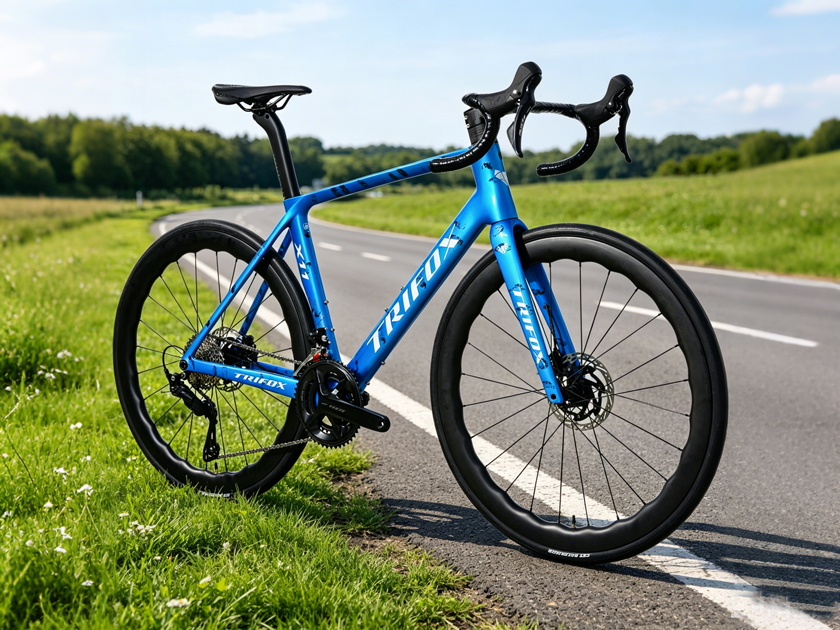
Customization Isn’t a Luxury — It’s a Performance Upgrade
The real value of a frameset isn‘t just about cost — it’s about getting exactly the bike you want. Buying a complete bike means accepting someone else‘s choices: their saddle, their stem length, their crank arms, their handlebar width. For many riders, this is fine. But for serious cyclists, the ability to select every component transforms the riding experience. As one builder noted, “I’m small and I like weird things like 38cm bars and 165mm cranks. Those are hard to find stock on a bike. I‘m also a big tubeless fan, so I’m probably switching wheels. Again, stock wheels often get replaced right away”. Building from a carbon road bike frame disc brake means you choose your favorite crank length, your preferred cassette range, the exact handlebar width, and the saddle that fits your anatomy — not the one the factory spec’d to save $15.
The Hidden Costs of “Cheap” Complete Bikes
Complete bikes often hide compromises in components you can’t easily see: heavy OEM wheels, low‑spec finishing kit, basic tires, and budget brake rotors. Upgrading these items later costs significantly more than buying quality parts upfront. Building from a carbon fiber road bike frame 54cm lets you allocate your budget exactly where it matters — premium wheels, a reliable drivetrain, and contact points that fit you. One experienced builder confirmed that for high‑end builds, “It’s cheaper to build up from a frameset than it is to buy the high end stuff like S‑Works, etc. Plus you can select which components you really want and not waste anything”. That’s the overlooked math: buying a frameset isn’t about paying less; it’s about wasting less on parts you’ll replace anyway.
Frameset Economics: Spread the Cost, Buy Better Components
Another financial advantage of starting with a frameset is the ability to spread your investment over time. A complete bike requires a single large payment. Building from a frameset allows you to buy the frame now, wheels next month, and the groupset the month after. One buyer noted this flexibility: “I can buy parts as I obtain the budget for them, rather than wait a long time to build up a budget and then spend it all at once. That allows me to get better components than I‘d otherwise be able to get”. This approach also lets you shop sales aggressively, securing premium components at discount prices — something a complete bike purchase rarely allows.
Quality Control and Frame First — Everything Else Follows
Starting with a frameset also ensures your most critical component — the frame itself — is exactly what you want. The frame determines geometry, weight, stiffness, and ride feel. Everything else is replaceable. By investing in a quality carbon road bike frame disc brake up front, you build on a foundation that won’t become obsolete. When components wear out or technology advances, you upgrade individual parts, not the entire bike. This long‑term thinking is how experienced riders build bikes that last for years.
When Does Buying a Frameset Make the Most Sense?
A frameset purchase is ideal for riders who:
- Already own quality components (wheels, groupset, saddle) from a previous bike.
- Have strong opinions about fit and component selection.
- Plan to ride the bike for years and want a platform that grows with them.
- Are building a mid‑to‑high‑end bike where OEM parts would likely be replaced anyway.
The Trifox X11: A Frameset Worth Building Around
The Trifox X11 exemplifies everything a modern frameset should offer. Its T800 carbon fiber construction delivers exceptional stiffness‑to‑weight, while the full internal cable routing creates a clean, aerodynamic profile. The UDH derailleur hanger future‑proofs the frame for next‑generation drivetrains, and the T47 threaded bottom bracket ensures creak‑free reliability. Sizes from XS to L accommodate a wide range of riders, including the popular 54cm option for heights 175‑188cm. And the included full‑carbon fork, integrated handlebar, and seatpost eliminate the need to source these components separately — a meaningful value addition that further reduces the hidden costs of a custom build.
The bottom line: buying a complete bike is often cheaper upfront, but building from a frameset is often the smarter long‑term investment. You get exactly the bike you want, you don‘t pay for parts you’ll replace, and you build on a foundation designed to last. Sometimes the best way to save money is to spend it on what actually matters — starting with the frame.



