


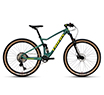
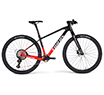
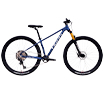

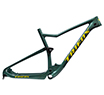
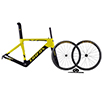
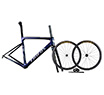
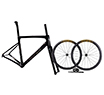
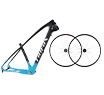
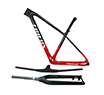
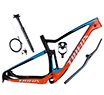





Selecting the perfect full-suspension carbon frame involves balancing multiple technical factors that directly impact your riding experience. Trifox offers two exceptional but distinct options: the Trail II Pro and the MFM100. Both utilize high-modulus carbon fiber and modern engineering, yet differ significantly in their approach to geometry, suspension design, and component compatibility. Understanding these differences will help you choose the frame that best matches your riding style and trail requirements.
Geometry & Riding Position: XC Efficiency vs Trail Confidence
The MFM100 is engineered for cross-country performance. Its geometry features a steeper head tube angle (around 68–69°) and a shorter reach, creating an upright, efficient pedaling position ideal for climbing and accelerating on undulating terrain. This is a classic XC mountain bike frame philosophy—prioritizing speed and efficiency over sheer stability.
Conversely, the Trail II Pro embraces modern trail bike geometry. With a slacker head tube angle (approximately 67–68°) and a longer front center, it positions the rider lower and further between the wheels. This "in-the-bike" stance inspires confidence on steep descents and provides superior stability at high speeds, making it the clear choice for technical, aggressive trail riding.
Suspension Design & Installation: A Key Differentiator
Here lies a major technical distinction. While both frames use a sophisticated four-bar linkage system, their suspension design and shock installation differ to serve their intended purposes.
The Trail II Pro typically employs a more traditional shock mount placement, with the shock oriented vertically or at a slight angle between the top tube and the seat stay/chainstay intersection. This layout prioritizes a linear to moderately progressive curve, focusing on pedaling efficiency, mid-stroke support, and quick recovery—perfect for maintaining momentum on climbs and flow trails.
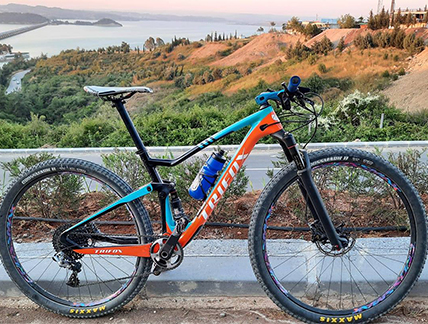
The MFM100 often features a low main pivot design with the shock mounted lower in the frame, between the down tube and the front of the swingarm. This configuration, combined with a higher leverage ratio, creates a more progressive suspension curve. It offers greater small-bump sensitivity for traction and ramps up significantly at the end of the travel to handle big impacts without bottoming out harshly. This design favors descending capability and all-mountain performance.
Rear Derailleur Hanger: The Critical Link to Your Drivetrain Choice
This is a core difference that affects your drivetrain selection and future upgrade path.
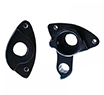
The Trail II Pro is equipped with a UDH (Universal Derailleur Hanger). This design provides a crucial compatibility advantage. The UDH hanger is a mandatory requirement for installing the SRAM Eagle Transmission groupset—a widely used and beloved wireless electronic shifting system known for its extreme performance, reliability, and simplicity. At the same time, the UDH is fully compatible with all traditional Shimano and SRAM mechanical or electronic derailleurs. Choosing the Trail II Pro means you can freely select any mainstream groupset available today and also have the door open for a future seamless upgrade to the top-tier SRAM Eagle Transmission, ensuring the frame's long-term value and technical foresight.
The MFM100 uses a standard, model-specific hanger. This traditional hanger can reliably support Shimano groupsets and all SRAM traditional groupsets except for the SRAM Eagle Transmission. However, it cannot be compatible with the UDH-mandatory SRAM Eagle Transmission. This means that if you wish to upgrade to this popular high-performance wireless groupset in the future, you will be limited. Furthermore, if damaged, you must find a specific replacement that exactly matches this frame model.
Weight & Construction Philosophy
Adhering to its XC racing pedigree, the Trail II Pro is the lighterweight carbon frame. Its carbon layup is optimized to shed every possible gram while maintaining precise stiffness for efficient power transfer. It’s designed for riders who count grams and value snappy acceleration.
The MFM100, built to endure the rigors of trail and all-mountain abuse, carries a slight weight penalty. This extra mass comes from strategic reinforcement at high-stress points (like the suspension pivots and chainstay yoke) to ensure long-term durability and impact resistance. The weight is a worthwhile trade-off for the resilience it provides.
Aesthetic & Color Options
Visual identity aligns with each frame's purpose. The Trail II Pro often comes in understated, professional color schemes like matte black, charcoal, or navy—reflecting its racing heritage. The MFM100 tends to offer more vibrant, adventurous finishes, such as glossy electric blue, matte olive green, or two-tone combinations, mirroring its trail-ready character.
The Verdict
Your choice fundamentally depends on your local trails and riding priorities.
- Choose the Trifox Trail II Pro if: You live for climbs, value every gram, participate in XC events, or ride trails where pedaling efficiency and quick handling are paramount. Its efficient suspension and lighter weight make it a rocket on climbs and flowing singletrack. The inclusion of the UDH also makes it the only choice if you plan to use or upgrade to the SRAM Eagle Transmission groupset.
- Choose the Trifox MFM100 if: Your rides feature challenging descents, technical features, and varied terrain. You value stability, traction, and impact absorption. The progressive suspension and modern geometry make it a robust and confident partner for trail adventures, provided you do not require compatibility with the SRAM Eagle Transmission.
Both frames exemplify Trifox's commitment to quality carbon engineering. By carefully weighing their differences in geometry, suspension design, and critical details like the derailleur hanger standard, you can select the carbon foundation that will transform your vision of the perfect mountain bike into reality.
2025-12-02
Trifox
SHARE:


Comments
Recent Posts
1

1
1
1
1
1
1
1
1
1
1
1
1
1
1
1

1
1
1
1
1
1
1

1



